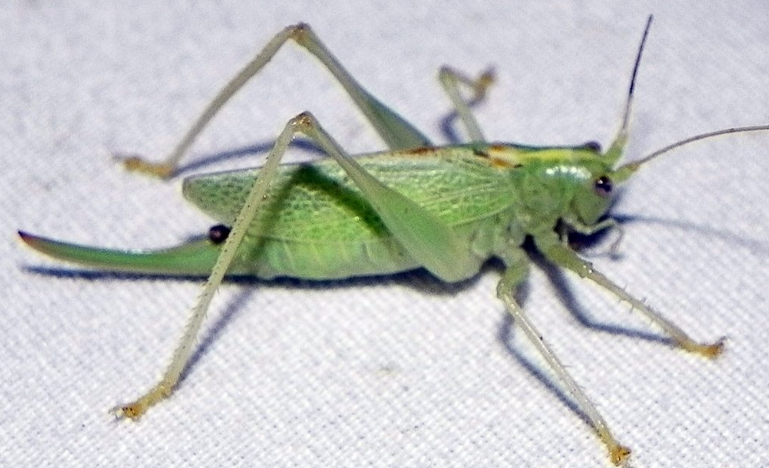
Drumming Katydids are a specialized group of insects within the family Tettigoniidae, commonly referred to as bush crickets or katydids. Unlike many of their relatives that produce sound through wing stridulation (rubbing wings together), drumming katydids communicate by rhythmically tapping or “drumming” parts of their body against leaves, stems, or other surfaces. This unique behavior is primarily used by males to attract mates and establish territory.
These insects are typically found in wooded edges, shrubs, and dense vegetation, where their leaf-like appearance provides excellent camouflage. While they are generally considered minor plant feeders, drumming katydids are more often appreciated as part of natural ecosystems rather than treated as significant pests.
Quick Facts
- Family: Tettigoniidae
- Order: Orthoptera
- Habitat: Forest edges, shrubs, gardens, and tall vegetation
- Diet: Leaves, flowers, and occasionally small insects
- Status: Minor plant pest / occasional nuisance
Taxonomy and Classification
Drumming katydids belong to the order Orthoptera, which includes grasshoppers, crickets, and related insects. Within this order, they are part of the family Tettigoniidae, a large and diverse group characterized by long antennae and often leaf-like wings.
Katydids are closely related to katydids and share many characteristics with grasshoppers, though they differ in behavior, sound production, and habitat preferences.
Identification
Drumming katydids can be identified by several distinctive features:
- Body Shape: Slender, elongated bodies resembling leaves
- Antennae: Extremely long, thread-like antennae often exceeding body length
- Coloration: Typically green, brown, or mottled for camouflage
- Wings: Leaf-like wings that blend seamlessly into foliage
Unlike many other orthopterans, their sound is not produced by wing rubbing. Instead, males create rhythmic tapping sounds by striking their abdomen or body against surfaces—giving rise to the name “drumming katydids.”
The nymphs resemble smaller versions of adults but lack fully developed wings.
Distribution and Habitat
Drumming katydids are widely distributed across North America and other temperate regions. They thrive in environments with dense vegetation, including:
- Forest edges and woodland margins
- Shrubs and hedgerows
- Gardens and ornamental landscapes
- Tall grasses and meadow habitats
Their excellent camouflage allows them to remain hidden among leaves during the day, making them more often heard than seen.
Behavior and Life Cycle
Drumming katydids undergo incomplete metamorphosis, progressing through three primary life stages:
- Egg: Deposited on plant stems, leaves, or bark
- Nymph: Wingless juvenile that molts multiple times
- Adult: Fully developed with wings and reproductive capability
The most distinctive behavior of these insects is their acoustic communication. Males produce rhythmic drumming patterns to:
- Attract females
- Establish territory
- Communicate with other males
This drumming differs from chirping and may sound like faint tapping or ticking noises in vegetation, especially during warm evenings.
Feeding and Damage
Drumming katydids are primarily herbivorous, feeding on plant material such as:
- Leaves
- Flowers
- Tender stems
Some species may also consume small insects, making them omnivorous under certain conditions.
Damage caused by feeding is usually minimal and includes:
- Small holes in leaves
- Minor chewing along leaf edges
- Occasional cosmetic damage to ornamentals
In most cases, plants recover easily, and infestations rarely reach levels that cause significant harm.
Pest Status
Drumming katydids are considered minor plant pests. While they may feed on foliage, their populations are typically low and do not cause serious economic or structural damage.
They are more commonly regarded as part of the natural insect community and contribute to ecosystem diversity.
Prevention
Preventative measures are generally unnecessary, but basic landscape management can reduce potential activity:
- Maintain healthy, well-watered plants
- Monitor foliage for chewing damage
- Reduce excessive dense vegetation near structures
- Encourage birds and beneficial predators
Control
Control is rarely required. When necessary, management typically involves:
- Manual removal of visible individuals
- Pruning heavily affected foliage
- Encouraging natural predators such as birds and spiders
Chemical control is generally discouraged due to the minor nature of the damage and the ecological role of these insects.
Ecological Importance
Drumming katydids play a role in food webs as both herbivores and prey. They serve as a food source for:
- Birds
- Reptiles
- Small mammals
- Predatory insects
Their presence contributes to biodiversity and the overall balance of natural ecosystems.
Related Articles
Conclusion
Drumming katydids are fascinating insects known for their unique communication methods and excellent camouflage. While they may occasionally feed on plant foliage, they are generally harmless and contribute positively to ecological systems. Their rhythmic tapping sounds are a subtle but important part of the natural soundscape in vegetated environments.