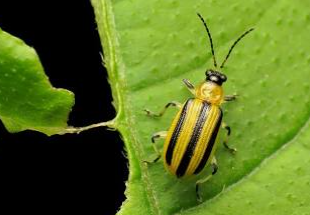
Dorsal-Striped Leaf Beetles are a group of plant-feeding insects within the family Chrysomelidae, recognized by the distinct longitudinal stripe running along the back of their wing covers. These beetles are commonly found feeding on a wide range of plants in gardens, agricultural systems, and natural vegetation.
While many species are considered minor pests, population outbreaks can result in noticeable foliage damage, particularly in ornamental plantings and crop systems where plant appearance or yield is important.
Quick Facts
- Common Name: Dorsal-Striped Leaf Beetles
- Family: Chrysomelidae
- Order: Coleoptera
- Habitat: Gardens, agricultural fields, natural vegetation
- Diet: Leaves and foliage
- Status: Plant pest
Taxonomy and Classification
Dorsal-striped leaf beetles belong to the large and diverse family Chrysomelidae, commonly referred to as leaf beetles. This group includes thousands of species worldwide, many of which are specialized feeders on specific plant hosts.
Like other beetles, they undergo complete metamorphosis, developing through egg, larva, pupa, and adult stages.
The “dorsal-striped” designation is a descriptive term rather than a strict taxonomic classification and may apply to multiple species with similar markings.
Identification
Dorsal-striped leaf beetles are generally easy to recognize due to their patterned coloration.
- Size: Small to medium-sized beetles
- Shape: Oval and slightly convex
- Coloration: Often yellow, green, brown, or black with distinct stripes running lengthwise along the back
The larvae are:
- Soft-bodied and grub-like
- Typically found feeding on leaf surfaces
- Sometimes covered with protective secretions in certain species
Adults are usually visible on plant foliage, especially during warm months.
Distribution and Habitat
Dorsal-striped leaf beetles are widely distributed across many regions where host plants are present.
Common habitats include:
- Home gardens and ornamental landscapes
- Agricultural fields and crop systems
- Grasslands and natural vegetation
- Weedy or disturbed areas
Their distribution is closely linked to the availability of suitable host plants.
Behavior and Life Cycle
These beetles follow a typical complete life cycle:
- Egg: Laid on or near host plant leaves
- Larva: Feeds actively on foliage
- Pupa: Develops in soil or plant debris
- Adult: Emerges to feed and reproduce
In many species, multiple generations may occur during the growing season, particularly in warm climates.
Both larvae and adults are active feeders, which can increase the extent of damage during heavy infestations.
Feeding and Damage
Dorsal-striped leaf beetles feed on plant foliage, often producing characteristic damage patterns.
Common symptoms include:
- Irregular holes in leaves
- Skeletonization (leaf tissue eaten between veins)
- Ragged or chewed leaf edges
Damage may vary depending on species, plant type, and population density.
In severe cases, feeding can:
- Reduce photosynthesis
- Weaken plant growth
- Lower crop yield or ornamental value
Pest Status
Dorsal-striped leaf beetles are classified as plant pests, though most species are considered minor to moderate threats.
They become more problematic when:
- Populations increase rapidly
- Plants are stressed or young
- Natural predators are limited
Management and Control
Management typically relies on integrated pest management (IPM) strategies.
| Strategy | Purpose | Benefit |
|---|---|---|
| Monitoring | Detect early infestations | Prevents severe damage |
| Mechanical Control | Remove beetles or larvae | Immediate reduction |
| Biological Control | Encourage predators | Natural population control |
| Cultural Practices | Improve plant health | Reduces susceptibility |
In most cases, chemical control is unnecessary unless infestations become severe.
Prevention
- Inspect plants regularly for early signs of feeding
- Remove and dispose of infested leaves
- Encourage beneficial insects such as lady beetles and predatory wasps
- Maintain healthy plants through proper watering and fertilization
Preventative care helps reduce the likelihood of large infestations.
Related Articles
Conclusion
Dorsal-striped leaf beetles are common plant-feeding insects that can impact a wide range of vegetation. While often minor pests, their feeding can become noticeable and problematic under favorable conditions.
Through regular monitoring, proper plant care, and integrated pest management strategies, their impact can be minimized, allowing plants to remain healthy and productive.