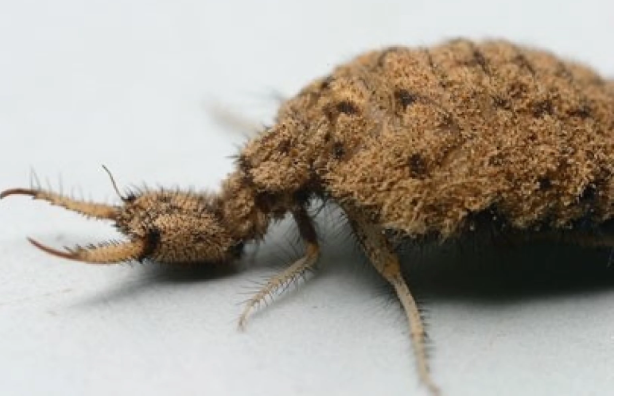
Doodlebugs is the common name for the larval stage of Antlions (family Myrmeleontidae). These fascinating insects are best known for their unique hunting strategy—digging conical, funnel-shaped pits in dry, dusty soil to trap ants and other small insects. While the larval stage is a highly specialized predator, the adult antlion is a delicate, harmless flying insect that resembles a damselfly.
Doodlebugs are considered beneficial insects because they help control populations of ants and other small arthropods. They pose no threat to humans, pets, or plants and are often regarded as interesting and educational insects to observe.
Taxonomy and Classification
Antlions, including their larval form known as doodlebugs, belong to the order Neuroptera (net-winged insects) and the family Myrmeleontidae. This group also includes lacewings and owlflies.
They undergo complete metamorphosis, progressing through egg, larva, pupa, and adult stages. The larval stage is the longest and most active phase, focused on feeding and growth, while the adult stage is relatively short-lived and primarily dedicated to reproduction.
Physical Description
The doodlebug larva is the most recognizable stage. It has a stout, oval-shaped, hump-backed body with a rough, bristly texture that helps it blend into sandy environments.
- Larval Appearance: Brownish-gray coloration for camouflage
- Mandibles: Large, sickle-shaped, hollow jaws used to capture and consume prey
- Movement: Moves awkwardly, often backward through loose soil
- Size: Typically grows up to about 1/2 inch (12–15 mm) long
The adult antlion is much different in appearance. It is slender and soft-bodied, with two pairs of long, transparent wings marked by intricate veins.
- Adult Appearance: Resembles a damselfly but with long, clubbed antennae
- Flight: Weak and somewhat clumsy
- Behavior: Nocturnal or crepuscular in many species
Distribution and Habitat
Antlions are found worldwide, particularly in warm, dry climates. Doodlebug larvae require specific environmental conditions to thrive.
- Dry, loose, sandy or dusty soil
- Sheltered locations such as under eaves, porches, or overhangs
- Areas protected from rain and strong wind
These habitats allow larvae to construct and maintain their distinctive pitfall traps without disturbance.
Behavior and Life Cycle
The doodlebug larval stage can last 1 to 3 years, depending on food availability and environmental conditions. During this time, larvae spend most of their lives in ambush.
Their most remarkable behavior is pit construction. The larva moves backward in a circular pattern, flicking sand outward with its head and mandibles to create a steep-sided funnel-shaped pit. It then buries itself at the bottom, leaving only its jaws exposed.
When an insect falls into the pit:
- The loose sand prevents escape
- The larva throws sand to dislodge climbing prey
- The prey is captured and pulled beneath the surface
- Digestive enzymes are injected to liquefy internal tissues
- The larva consumes the prey’s fluids
After completing development, the larva spins a spherical cocoon made of silk and sand particles. Pupation occurs within this structure, and the adult emerges to mate and continue the lifecycle.
Feeding and Ecological Role
Doodlebugs are ambush predators that primarily feed on ants, although they will capture other small ground-dwelling insects.
Their feeding provides important ecological benefits:
- Natural control of ant populations
- Reduction of small pest insect numbers
- Contribution to food webs as both predator and prey
Adult antlions may feed on nectar, pollen, or may not feed at all, depending on the species.
Signs of Activity
- Small, conical pits in dry soil or sand
- Presence of hidden larvae at the bottom of pits
- Clusters of pits in sheltered, dusty locations
These pits are the most recognizable sign of doodlebug activity.
Management and Prevention (IPM)
Doodlebugs are beneficial and require no control measures. Instead, they should be preserved and protected.
- No Treatment Needed: They do not harm plants, structures, or people
- Habitat Protection: Avoid disturbing dry sandy areas where they live
- Observation: Safe to observe for educational purposes
They are often used as educational examples of predator behavior and natural pest control.
Conservation and Research
Antlions are valuable for scientific study due to their unique hunting strategies and behavioral adaptations. Research often focuses on:
- Physics of pit construction
- Ambush predation strategies
- Energy efficiency in feeding behavior
Their presence is generally an indicator of a healthy, undisturbed microhabitat.
Conclusion
Doodlebugs, the larval stage of antlions, are fascinating and beneficial insects known for their pitfall hunting technique. Their role as predators helps control small insect populations, while their harmless nature makes them ideal for observation and study. Rather than being pests, doodlebugs are an important part of natural ecosystems and should be preserved wherever they occur.