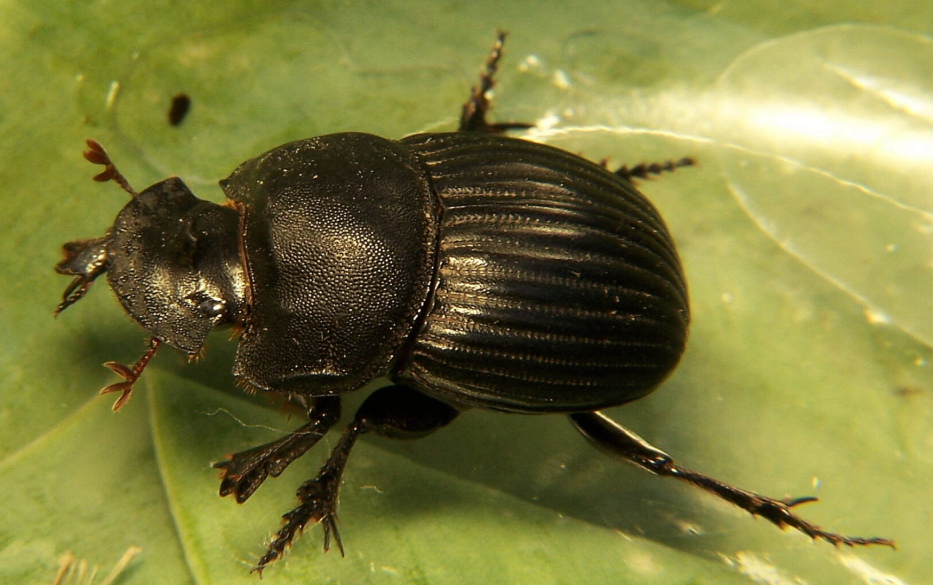
Donkey Dung Beetles are a group of specialized scavenger beetles within the family Scarabaeidae that rely on animal manure—particularly from grazing animals such as donkeys—as their primary food source. Like other dung beetles, they play a critical ecological role by breaking down waste, recycling nutrients, and improving soil structure.
Rather than being pests, these insects are highly valued as beneficial decomposers in agricultural systems, rangelands, and natural ecosystems. Their activity helps maintain pasture quality and reduces pest populations associated with manure.
Quick Facts
- Common Name: Donkey Dung Beetles
- Family: Scarabaeidae
- Order: Coleoptera
- Habitat: Grasslands, farms, ranches, open landscapes
- Diet: Animal dung
- Status: Beneficial decomposer
Taxonomy and Classification
Donkey dung beetles belong to the family Scarabaeidae, a diverse group commonly referred to as scarab beetles. Within this family, many species are classified as dung beetles due to their specialized feeding and nesting behaviors.
They are part of a broader ecological group of decomposer insects, which are essential for breaking down organic material and maintaining ecosystem health.
Dung beetles are often grouped behaviorally into:
- Rollers: Shape dung into balls and roll it away for burial
- Tunnelers: Dig beneath dung pats and bury portions underground
- Dwellers: Live and reproduce directly within the dung
Identification
Donkey dung beetles share common features typical of dung beetles:
- Body Shape: Rounded or oval, compact and sturdy
- Color: Usually black, brown, or dark metallic; some species show green or bronze iridescence
- Legs: Strong, spiny legs adapted for digging and moving dung
- Size: Varies widely by species, from a few millimeters to several centimeters
Some species may also have horn-like projections used for competition and mating.
They are closely related to other beetles that play important ecological roles.
Distribution and Habitat
Donkey dung beetles are found wherever grazing animals are present, including:
- Farms and ranches
- Grasslands and open fields
- Pastures and livestock enclosures
- Wild habitats with large herbivores
Their presence is closely tied to the availability of fresh manure, which they locate quickly using a highly developed sense of smell.
Behavior and Life Cycle
Dung beetles undergo complete metamorphosis with four life stages:
- Egg
- Larva
- Pupa
- Adult
Key behaviors include:
- Adults locate fresh dung shortly after it is deposited
- Dung is collected, shaped, or buried depending on species behavior
- Females create brood chambers containing dung as a food source for larvae
- Eggs are laid within these chambers
The larvae develop entirely within the dung, feeding and growing until they pupate and emerge as adults.
Ecological Role and Benefits
Donkey dung beetles provide significant environmental and agricultural benefits:
- Nutrient Recycling: Break down manure and return nutrients to the soil
- Soil Improvement: Increase aeration and water infiltration through tunneling
- Fly Control: Reduce breeding sites for nuisance flies
- Parasite Reduction: Limit the spread of parasites associated with dung
- Pasture Health: Prevent buildup of manure that can smother vegetation
These benefits make dung beetles essential contributors to sustainable agriculture.
Pest Status
Donkey dung beetles are not pests. They are considered highly beneficial insects and are often encouraged in farming and land management practices.
Their presence is typically a sign of a healthy, functioning ecosystem.
Management and Conservation
Rather than controlling these beetles, efforts should focus on protecting and supporting their populations.
| Strategy | Purpose | Benefit |
|---|---|---|
| Reduced Chemical Use | Protect beetle populations | Maintains ecosystem balance |
| Livestock Management | Limit harmful parasiticides | Improves larval survival |
| Habitat Preservation | Maintain natural environments | Supports biodiversity |
Certain livestock treatments can pass through manure and harm dung beetle larvae, so careful product selection is important.
Prevention
No prevention is necessary. Instead, landowners are encouraged to:
- Maintain healthy grazing systems
- Avoid excessive pesticide use
- Support natural biodiversity
Control
Control is not recommended, as these beetles provide valuable ecological services and do not pose any threat to humans, structures, or crops.
Related Articles
Conclusion
Donkey dung beetles are vital components of both natural ecosystems and agricultural environments. Their ability to process and recycle manure supports soil health, reduces pest populations, and enhances overall land productivity.
Far from being pests, these beetles are essential allies in maintaining ecological balance and should be protected and encouraged wherever they occur.