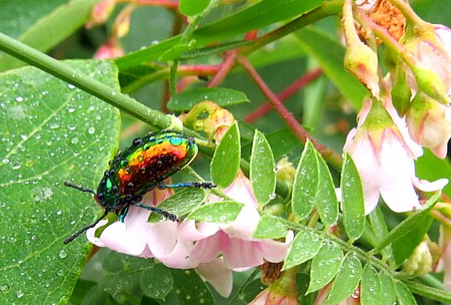
Dogbane Beetles (Chrysochus auratus) are strikingly beautiful leaf beetles known for their brilliant metallic coloration, which can shimmer in shades of blue, green, and copper. Commonly found on dogbane plants and related species such as milkweed, these beetles are a familiar sight in fields, gardens, and roadside habitats across North America.
Despite their vivid appearance, dogbane beetles are generally considered minor plant pests and are more notable for their ecological role and unique chemical defenses than for any significant plant damage.
Quick Facts
- Common Name: Dogbane Beetle
- Scientific Name: Chrysochus auratus
- Family: Chrysomelidae
- Order: Coleoptera
- Habitat: Fields, gardens, roadsides with dogbane plants
- Diet: Leaves of dogbane and related plants
- Status: Minor plant pest
Taxonomy and Classification
Dogbane beetles belong to the family Chrysomelidae, commonly known as leaf beetles. This large family includes many plant-feeding species, some of which are serious agricultural pests.
The genus Chrysochus contains species that are often associated with toxic host plants. Like other beetles, they undergo complete metamorphosis consisting of egg, larva, pupa, and adult stages.
Identification
Dogbane beetles are easily recognized by their vivid coloration and smooth, oval shape.
- Size: Approximately 6–10 mm long
- Shape: Oval and slightly elongated
- Color: Iridescent metallic blue, green, or copper
Their coloration often appears to shift depending on lighting conditions, giving them a jewel-like appearance.
This bright coloring serves as a warning signal (aposematism) to predators. Dogbane beetles accumulate toxic compounds from their host plants, making them distasteful or harmful to potential predators.
Distribution and Habitat
Dogbane beetles are found throughout much of North America, particularly in areas where their host plants are present.
Common habitats include:
- Fields and meadows
- Gardens and landscaped areas
- Roadsides and disturbed land
- Natural areas with dogbane or milkweed
Their presence is closely tied to the availability of dogbane (Apocynum) plants, which serve as their primary food source.
Behavior and Life Cycle
Dogbane beetles undergo a complete life cycle with four distinct stages:
- Egg: Laid near host plants
- Larva: Develops in the soil and feeds on plant roots
- Pupa: Forms in the soil
- Adult: Emerges to feed on leaves and reproduce
Adults are most active during warm months and are often seen feeding or mating on host plant leaves.
The larvae remain largely hidden underground, making them less visible than adults.
Feeding and Damage
Dogbane beetles feed primarily on the leaves of dogbane and related plants.
Typical feeding damage includes:
- Small holes or irregular chewing patterns on leaves
- Minor defoliation of host plants
In most cases, the level of damage is cosmetic and does not significantly affect plant health.
Their association with toxic plants allows them to safely consume foliage that many other herbivores avoid.
Pest Status
Dogbane beetles are considered minor plant pests. They rarely reach population levels high enough to cause significant economic or structural damage.
They are generally viewed as part of a healthy ecosystem and are often appreciated for their striking appearance.
Management and Control
Control is usually not necessary, as populations are naturally regulated by environmental factors and predators.
| Strategy | Purpose | Benefit |
|---|---|---|
| Habitat Management | Reduce host plants | Lowers beetle populations |
| Biological Control | Encourage predators | Maintains ecological balance |
| Monitoring | Observe population levels | Prevents unnecessary treatment |
Because they rarely cause serious damage, aggressive control measures are typically unnecessary and discouraged.
Prevention
- Remove or manage dogbane plants if populations become excessive
- Encourage natural predators such as birds and insects
- Maintain balanced plant communities in gardens and landscapes
Preventative measures are generally only needed in managed landscapes where plant aesthetics are a priority.
Related Articles
Conclusion
Dogbane beetles are among the most visually striking insects found in North America. Their metallic coloration, specialized diet, and chemical defenses make them a fascinating part of the natural world.
While they may cause minor feeding damage, they are generally harmless and play a role in plant-insect interactions within ecosystems. In most cases, they should be appreciated rather than controlled.