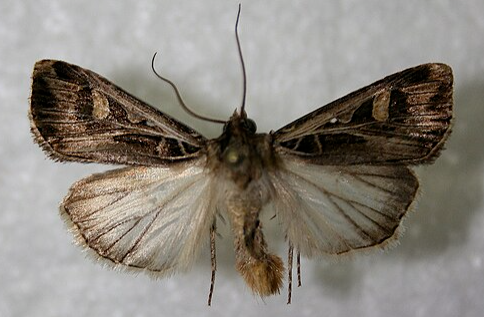
Dingy Cutworm Moths (Feltia jaculifera) are nocturnal insects whose larval stage, commonly known as cutworms, are destructive pests of young plants. These caterpillars are especially problematic in gardens and agricultural systems because they feed at or just below the soil surface, often severing seedlings at ground level.
Although the adult moths are harmless and primarily serve reproductive functions, the larvae can cause significant economic damage by reducing crop establishment and destroying newly planted vegetation.
Quick Facts
- Common Name: Dingy Cutworm Moth
- Scientific Name: Feltia jaculifera
- Family: Noctuidae
- Order: Lepidoptera
- Habitat: Fields, gardens, grassy landscapes
- Diet: Seedlings, stems, and low-growing plants
- Status: Agricultural pest
Taxonomy and Classification
Dingy cutworm moths belong to the family Noctuidae, commonly known as owlet moths. This large family includes many economically important agricultural pests.
The larval stage falls within the broader group of plant-damaging caterpillars, many of which feed on crops and ornamental plants.
Members of this group are characterized by their nocturnal habits and soil-dwelling larval stages, which make early detection difficult.
Identification
Dingy cutworm moths and their larvae have distinct physical traits that help in identification:
- Adult Moths: Brownish-gray with subtle mottled patterns for camouflage
- Size: Medium-sized moths with moderate wingspan
- Behavior: Nocturnal and attracted to light
The larvae (cutworms) are:
- Thick-bodied and smooth
- Gray, brown, or dull-colored
- Typically curl into a C-shape when disturbed
They are most often found in soil or hiding beneath plant debris during daylight hours.
Distribution and Habitat
Dingy cutworm moths are widely distributed across North America and are especially common in agricultural regions.
Typical habitats include:
- Crop fields
- Vegetable gardens
- Lawns and grassy areas
- Weedy or disturbed landscapes
They prefer areas where vegetation is abundant and soil conditions support larval development.
Behavior and Life Cycle
Dingy cutworm moths undergo complete metamorphosis with four life stages:
- Egg
- Larva (cutworm)
- Pupa
- Adult
Key aspects of their life cycle include:
- Females lay eggs on vegetation or plant debris
- Larvae hatch and begin feeding on nearby plants
- Larvae remain active at night and hide during the day
- Pupation occurs in the soil
- Adults emerge and continue the reproductive cycle
There may be one or more generations per year depending on climate and environmental conditions.
Feeding and Damage
The larval stage is responsible for all plant damage.
Common feeding behaviors include:
- Cutting seedlings at the soil line
- Feeding on stems and lower leaves
- Damaging newly planted crops
Typical signs of infestation include:
- Seedlings cut off near ground level
- Missing or wilted young plants
- Irregular plant spacing due to plant loss
Damage is often sudden and severe, particularly in newly planted gardens or crop rows.
Pest Status
Dingy cutworms are considered serious agricultural pests because they can destroy large numbers of seedlings in a short period of time.
They are especially problematic in:
- Vegetable gardens
- Row crops
- Seedling nurseries
Their hidden feeding habits and nocturnal activity make them difficult to detect until damage is already visible.
Management and Control
Effective management relies on early detection and prevention.
| Strategy | Purpose | Benefit |
|---|---|---|
| Monitoring | Detect larvae early | Prevents major crop loss |
| Physical Barriers | Protect seedlings | Reduces feeding damage |
| Cultural Control | Remove habitat | Lowers population levels |
| Biological Control | Encourage predators | Natural suppression |
Birds, ground beetles, and parasitic insects can help reduce cutworm populations naturally.
Prevention
- Remove plant debris and weeds before planting
- Use collars around seedlings to prevent stem cutting
- Till soil before planting to expose larvae
- Monitor garden beds regularly during early growth stages
Preventative measures are most effective when implemented before planting or during early seedling development.
Related Articles
Conclusion
Dingy cutworm moths are a significant concern in agriculture and gardening due to the destructive feeding habits of their larvae. By targeting young plants at their most vulnerable stage, cutworms can cause rapid and extensive losses.
Through proper monitoring, preventative practices, and integrated pest management strategies, their impact can be minimized and plant health preserved.