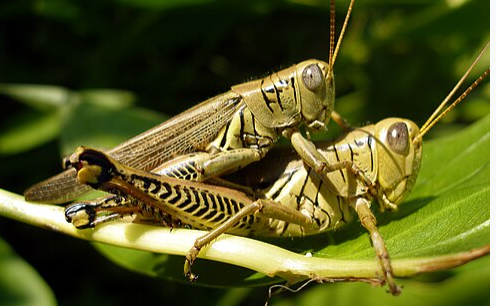
Differential Grasshoppers (Melanoplus differentialis) are large, highly recognizable plant-feeding insects commonly found in agricultural areas, grasslands, and gardens across North America. They are among the most significant grasshopper pests due to their size, feeding capacity, and ability to form damaging populations under favorable conditions.
These insects are capable of causing substantial economic losses by feeding on crops, ornamental plants, and natural vegetation. When populations surge, they can rapidly defoliate plants and reduce yields in both commercial agriculture and home gardens.
Quick Facts
- Common Name: Differential Grasshopper
- Scientific Name: Melanoplus differentialis
- Family: Acrididae
- Order: Orthoptera
- Habitat: Grasslands, farms, gardens, roadside vegetation
- Diet: Leaves, grasses, crops, and ornamental plants
- Status: Agricultural and garden pest
Taxonomy and Classification
Differential grasshoppers belong to the family Acrididae, which includes short-horned grasshoppers and related species such as locusts. They are part of the genus Melanoplus, a large group of North American grasshoppers that includes several economically important pest species.
Unlike locusts, differential grasshoppers do not typically form migratory swarms, but their populations can still reach damaging densities locally.
Identification
Differential grasshoppers are among the larger grasshopper species and are easily identified by their size and markings.
- Size: Approximately 1.5 to 2 inches long
- Color: Yellowish, olive, or brown
- Markings: Distinctive dark chevron (V-shaped) patterns on hind legs
- Wings: Fully developed and extend beyond the abdomen
They possess strong hind legs for jumping and are capable of short flights when disturbed. Nymphs resemble smaller versions of adults but lack fully developed wings.
Distribution and Habitat
Differential grasshoppers are widely distributed across the United States and southern Canada, with especially high populations in the Midwest and Great Plains.
They are commonly found in:
- Agricultural fields
- Grasslands and prairies
- Gardens and landscapes
- Roadside and weedy areas
They thrive in environments where abundant vegetation provides a consistent food source.
Behavior and Life Cycle
Differential grasshoppers undergo incomplete metamorphosis, progressing through three life stages:
- Egg
- Nymph
- Adult
Key aspects of their life cycle include:
- Eggs are laid in soil during late summer in pods
- Eggs overwinter and hatch in spring
- Nymphs pass through several molts, gradually developing wings
- Adults appear in mid to late summer
There is typically one generation per year, but favorable weather conditions can lead to population increases.
Feeding and Damage
Differential grasshoppers are generalist feeders, consuming a wide variety of plant material.
Common feeding targets include:
- Soybeans and corn
- Alfalfa and forage crops
- Vegetables and garden plants
- Grasses and weeds
Damage symptoms include:
- Chewed leaves and stems
- Defoliation of crops and plants
- Reduced plant growth and yield
In severe infestations, large populations can strip plants of foliage and significantly impact agricultural productivity.
Pest Status
Differential grasshoppers are considered a serious agricultural and garden pest due to their:
- Large size and high feeding capacity
- Wide host range
- Ability to build high populations in favorable conditions
They are especially problematic in regions with extensive crop production and unmanaged vegetation nearby.
Management and Control
Effective control relies on early detection and integrated pest management strategies.
| Strategy | Purpose | Benefit |
|---|---|---|
| Monitoring | Track population levels | Allows timely intervention |
| Cultural Control | Reduce habitat and food sources | Limits population growth |
| Biological Control | Encourage predators | Natural population suppression |
| Targeted Treatments | Apply controls when necessary | Prevents severe outbreaks |
Natural predators such as birds, spiders, and other insects help regulate populations in many ecosystems.
Prevention
- Remove tall weeds and unmanaged vegetation near crops
- Encourage birds and beneficial predators
- Maintain healthy, well-managed landscapes
- Monitor populations early in the growing season
Preventative measures are most effective when implemented before populations become established.
Related Articles
Conclusion
Differential grasshoppers are one of the most impactful plant-feeding insects in North America, capable of causing serious damage to crops and vegetation when populations rise. Their strong feeding habits and adaptability make them a persistent concern in agricultural and garden environments.
With proper monitoring and integrated management strategies, their impact can be minimized, helping protect both crops and landscapes from significant damage.