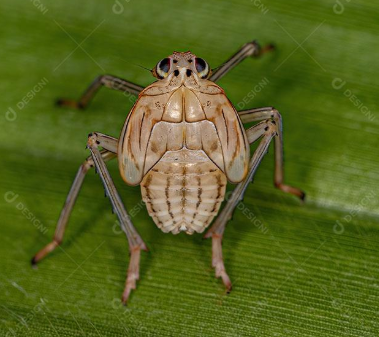
Dictyopharid Planthoppers (family Dictyopharidae) are sap-feeding insects belonging to a distinctive group of true bugs known for their elongated heads and wedge-shaped bodies. These insects are commonly found on grasses, shrubs, and a wide variety of host plants where they feed on plant fluids using piercing-sucking mouthparts.
While most dictyopharid species are considered minor pests, they can occasionally become noticeable in gardens, landscapes, and agricultural settings when populations increase. Their unusual appearance and slow, deliberate movement often make them more noticeable than their actual level of damage would suggest.
Quick Facts
- Common Name: Dictyopharid Planthoppers
- Family: Dictyopharidae
- Order: Hemiptera
- Habitat: Fields, gardens, shrubs, grasses, and vegetation
- Diet: Plant sap
- Status: Minor plant pest
Taxonomy and Classification
Dictyopharid planthoppers belong to the order Hemiptera, commonly referred to as true bugs. Within this order, they are part of the superfamily Fulgoroidea, which includes various planthoppers known for their plant-feeding behavior.
The family Dictyopharidae is distinguished by its members’ elongated head structures and their association with herbaceous plants and grasses. They are closely related to other sap-feeding insects such as leafhoppers and treehoppers.
Identification
Dictyopharid planthoppers are easily recognized by their distinctive body shape and posture.
- Body Shape: Slender, wedge-shaped
- Head: Extended forward into a pronounced, elongated structure
- Color: Typically green, tan, or brown for camouflage
- Wings: Held roof-like over the body when at rest
The nymphs resemble smaller, wingless versions of the adults. As they develop, they gradually form wings through successive molts.
Their elongated head (sometimes called a “snout”) is one of the most distinctive features, setting them apart from other plant-feeding insects.
Distribution and Habitat
Dictyopharid planthoppers are found throughout North America and in many temperate regions worldwide. Their distribution is closely tied to the availability of host plants.
They are commonly found in:
- Fields and grasslands
- Gardens and ornamental landscapes
- Shrubs and low vegetation
- Agricultural crops and weedy areas
These insects prefer environments with dense plant growth where they can feed and remain concealed from predators.
Behavior and Life Cycle
Dictyopharid planthoppers undergo incomplete metamorphosis, meaning they develop through three primary stages:
- Egg
- Nymph
- Adult
Females lay eggs on or near host plants. After hatching, nymphs begin feeding immediately and pass through several growth stages (instars) before reaching adulthood.
Unlike some other insects, they do not have a pupal stage. Development is gradual, with each molt bringing the insect closer to its adult form.
Adults are relatively slow-moving and may hop or fly short distances when disturbed.
Feeding and Damage
Dictyopharid planthoppers feed by inserting their mouthparts into plant tissues and extracting sap.
Typical effects of feeding include:
- Minor leaf discoloration
- Reduced plant vigor in high populations
- Occasional wilting or stress in sensitive plants
In most cases, the damage is cosmetic or minimal, especially when populations are low.
Unlike some related species, dictyopharid planthoppers are not commonly known as major disease vectors, which limits their overall economic impact.
Pest Status
Dictyopharid planthoppers are generally classified as minor plant pests. They rarely cause significant economic damage but may become noticeable when present in large numbers.
They are most often encountered in:
- Gardens with dense vegetation
- Weedy or unmanaged areas
- Agricultural settings with suitable host plants
Their presence is often more of a visual nuisance than a serious threat to plant health.
Management and Control
Control is rarely necessary, as natural ecological balance typically keeps populations in check.
| Strategy | Purpose | Benefit |
|---|---|---|
| Monitoring | Observe population levels | Prevents unnecessary treatment |
| Biological Control | Encourage predators | Maintains natural balance |
| Weed Management | Reduce host plants | Lowers population density |
Natural predators such as spiders, birds, and predatory insects typically help regulate their numbers.
Prevention
- Remove excess weeds and unmanaged vegetation
- Encourage beneficial insects and predators
- Monitor plants during warm growing seasons
- Maintain healthy, vigorous plants
Preventative measures are usually sufficient to keep populations at manageable levels.
Related Articles
Conclusion
Dictyopharid planthoppers are distinctive sap-feeding insects that are commonly found in vegetated environments. While they may occasionally appear in noticeable numbers, they are typically minor pests that cause limited damage.
Through natural predation and basic landscape management, their populations can usually be kept under control without the need for aggressive intervention.