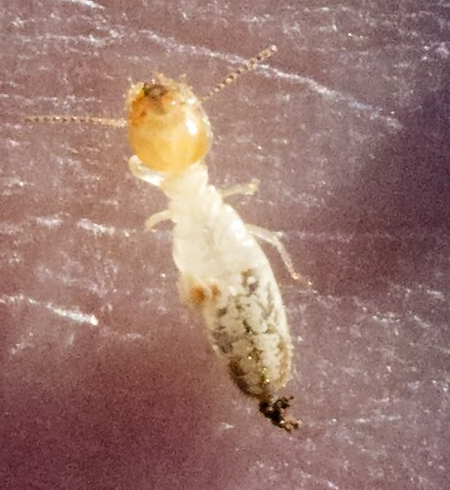
Desert Termites are a group of termite species adapted to the harsh, dry environments of the Southwestern United States and northern Mexico. Common examples include Gnathamitermes perplexus and species within the genus Amitermes. Unlike typical subterranean termites, desert termites are uniquely equipped to forage above ground and survive in low-moisture conditions. They are considered important ecological decomposers, playing a critical role in breaking down dry plant material in desert ecosystems.
While they can occasionally affect wood structures, desert termites are generally less destructive than subterranean termites. Their most noticeable impact is the presence of visible mud-like structures on soil surfaces, sidewalks, or landscape features.
Taxonomy and Classification
- Common Name: Desert Termites
- Order: Blattodea
- Family: Termitidae
- Genera: Gnathamitermes, Amitermes
- Type: Desert-adapted subterranean termite
Desert termites are eusocial insects, meaning they live in organized colonies with distinct castes including workers, soldiers, and reproductives. They undergo incomplete metamorphosis, developing gradually through life stages.
Unlike wood-destroying termites that focus on structural timber, desert termites primarily consume dry grasses, plant debris, and cellulose material found on the soil surface.
Physical Description
Desert termites have the typical caste system seen in termite colonies.
- Workers: Small (3–5 mm), soft-bodied, pale or creamy white, blind and wingless
- Soldiers: Larger head with strong mandibles; often darker in color
- Alates (Swarmers): Winged, dark brown to black, responsible for reproduction
Soldiers of certain species, particularly Gnathamitermes, may produce a sticky defensive secretion to deter predators.
A defining visual feature is the construction of carton tubes or sheeting, made from soil, saliva, and fecal material. These structures are often seen covering ground surfaces or plant debris.
Distribution and Habitat
Desert termites are found in arid and semi-arid regions, including:
- Sonoran Desert
- Mojave Desert
- Chihuahuan Desert
They establish colonies deep within the soil but forage extensively on the surface. Their habitat includes:
- Open desert landscapes
- Grasslands and scrub areas
- Urban desert environments
- Landscaped yards with mulch or plant debris
Their ability to construct protective coverings allows them to forage above ground while maintaining the humidity required for survival.
Behavior and Life Cycle
Desert termite colonies are long-lived and active year-round, with activity peaking during warm conditions.
- Foraging: Primarily occurs on the soil surface, especially at night or during cooler periods
- Tube Construction: Build sheet-like mud coverings over food sources
- Swarming: Occurs after rainfall when winged reproductives emerge to form new colonies
Their most distinctive behavior is the construction of sheeting tubes, which may cover large areas of ground, plant material, or even concrete surfaces.
These tubes protect termites from:
- Dry air
- Extreme heat
- Predators
Feeding and Ecological Role
Desert termites are primarily detritivores, feeding on dead organic material.
- Dry grasses
- Dead weeds
- Mulch and plant debris
- Occasionally low-lying wood
Their ecological contributions include:
- Nutrient Recycling: Breaking down plant matter into usable soil nutrients
- Soil Improvement: Enhancing soil structure and fertility
- Carbon Cycling: Contributing to decomposition in arid ecosystems
In desert environments, where decomposition is slow, their activity is especially important.
Damage and Conflict
Desert termites are generally low-risk structural pests compared to other termite species.
- Limited Structural Damage: Rarely attack sound structural wood unless moisture is present
- Landscape Impact: May feed on fence posts, landscape timbers, or dead shrubs
- Aesthetic Issues: Mud sheeting on sidewalks, walls, and patios can be unsightly
Serious structural damage typically occurs only when:
- Wood is in direct contact with soil
- Moisture levels are elevated near the foundation
Management and Control
Control strategies focus on habitat modification and prevention rather than eradication.
| Strategy | Purpose | Benefit |
|---|---|---|
| Remove Plant Debris | Eliminate food sources | Reduces termite attraction |
| Maintain Clearance | Keep a 12-inch gap around foundation | Prevents termite access |
| Moisture Control | Fix leaks and improve drainage | Reduces structural risk |
| Physical Removal | Brush away mud tubes | Improves appearance |
| Targeted Treatment | Use termiticides if necessary | Controls severe infestations |
Chemical treatment is rarely necessary unless termites begin affecting structural components.
Prevention
- Keep wood and mulch away from foundations
- Remove dead vegetation regularly
- Ensure proper drainage around structures
- Inspect for mud tubes and remove them
- Avoid excessive irrigation near buildings
Preventative measures are usually sufficient to minimize termite activity near structures.
Related Articles
Conclusion
Desert termites are specialized insects that thrive in arid environments and play an essential role in breaking down plant material. Although they can occasionally cause minor structural or aesthetic issues, they are generally beneficial and far less destructive than other termite species.
By managing moisture, removing food sources, and maintaining proper landscaping practices, homeowners can effectively minimize conflicts while allowing these important decomposers to continue supporting desert ecosystems.