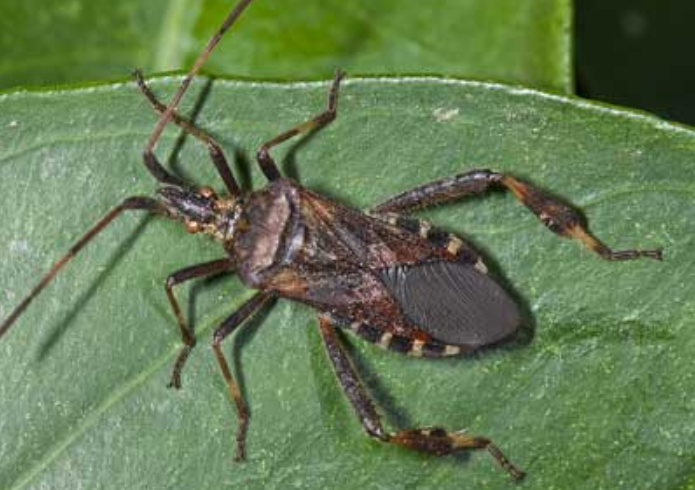
Desert Leaf-Footed Bugs (family Coreidae) are sap-feeding insects commonly found on plants in warm and arid regions. They are named for the distinctive leaf-like expansions on their hind legs, which are one of their most recognizable features. These insects feed on plant juices from fruits, seeds, and stems, and are considered plant pests in gardens, orchards, and agricultural settings.
Although they are not typically destructive in small numbers, larger populations can cause fruit deformities, discoloration, and reduced crop quality, especially in soft fruits and developing seed pods.
Quick Facts
- Common Name: Desert Leaf-Footed Bugs
- Family: Coreidae
- Order: Hemiptera
- Habitat: Gardens, orchards, deserts, and agricultural fields
- Diet: Plant sap, fruits, and seed pods
- Status: Plant pest
Taxonomy and Classification
Desert leaf-footed bugs belong to the family Coreidae within the order Hemiptera, also known as the true bugs. Members of this group are characterized by their piercing-sucking mouthparts, which they use to extract fluids from plants.
They are closely related to other sap-feeding insects such as stink bugs and share similar feeding habits and plant-host relationships.
Unlike beetles or moths, leaf-footed bugs undergo incomplete metamorphosis, progressing from egg to nymph to adult without a pupal stage.
Identification
Desert leaf-footed bugs are medium to large insects with a distinctive body shape and leg structure.
- Body Shape: Elongated and somewhat flattened
- Color: Brown, gray, or mottled for camouflage
- Legs: Hind legs with flattened, leaf-like expansions
- Antennae: Long and segmented
Key identifying features include:
- The leaf-like hind legs, which give the group its common name
- A narrow head and long proboscis (feeding tube)
- Strong odor when disturbed (in some species)
Nymphs resemble smaller versions of adults but lack fully developed wings and may appear more brightly colored or patterned.
Distribution and Habitat
Desert leaf-footed bugs are widely distributed across warm regions of North America, particularly in the southwestern United States where desert and semi-arid conditions prevail.
They are commonly found in:
- Home gardens and landscaping
- Orchards and vineyards
- Agricultural crop fields
- Native desert vegetation
They prefer areas with abundant host plants, especially those producing fruit or seeds.
Behavior and Life Cycle
Desert leaf-footed bugs follow a simple life cycle typical of true bugs:
- Egg Stage: Eggs are laid in clusters on leaves, stems, or fruit
- Nymph Stage: Young bugs feed and grow through several molts
- Adult Stage: Fully developed insects reproduce and continue feeding
Nymphs are often found in groups, especially shortly after hatching, and may remain clustered as they feed.
Adults are mobile and can fly between plants, spreading infestation across a garden or crop field.
Feeding and Damage
Leaf-footed bugs use their piercing mouthparts to inject enzymes into plant tissue and suck out nutrients.
This feeding causes several types of damage:
- Fruit Deformities: Misshapen or uneven growth
- Discoloration: Yellowing or spotting of fruit
- Seed Damage: Reduced viability or quality
- Premature Drop: Fruit falling before maturity
Common host plants include:
- Tomatoes
- Pomegranates
- Citrus
- Melons
- Various ornamental plants
Damage is often cosmetic but can significantly reduce the marketability of produce.
Pest Status
Desert leaf-footed bugs are considered moderate to significant plant pests, depending on population size and crop type.
They are particularly problematic when:
- Populations build early in the growing season
- Fruit crops are developing
- Weedy host plants are abundant nearby
While they rarely kill plants, they can cause economic losses in agriculture and noticeable damage in home gardens.
Management and Control
Effective management relies on early detection and integrated pest control strategies.
| Strategy | Purpose | Benefit |
|---|---|---|
| Monitoring | Detect early infestations | Prevents population growth |
| Hand Removal | Remove egg masses and nymphs | Reduces population quickly |
| Weed Control | Eliminate alternate hosts | Limits breeding areas |
| Barrier Methods | Protect vulnerable plants | Reduces feeding damage |
Targeting early nymph stages is the most effective approach, as adults are more mobile and harder to control.
Prevention
- Inspect plants regularly during warm months
- Remove egg clusters and young nymphs promptly
- Control weeds and unmanaged vegetation nearby
- Maintain healthy plants to reduce susceptibility
Preventative care can significantly reduce the likelihood of heavy infestations.
Related Articles
Conclusion
Desert leaf-footed bugs are distinctive sap-feeding insects that can impact both ornamental plants and agricultural crops. Their feeding behavior leads to cosmetic and economic damage, particularly in fruit-producing plants.
Through consistent monitoring, early intervention, and habitat management, their populations can be controlled effectively, helping maintain healthy and productive landscapes.