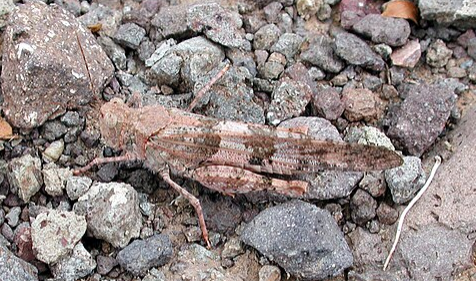
Desert Grasshoppers are plant-feeding insects in the family Acrididae that are well adapted to arid and semi-arid environments. They are commonly found in deserts, rangelands, agricultural fields, and irrigated landscapes where vegetation provides both food and shelter. While many species are an important part of natural ecosystems, large populations can become destructive plant pests, feeding on leaves, flowers, and tender shoots.
In outbreak years, desert grasshoppers can cause significant damage to gardens, crops, and ornamental plants, particularly in the southwestern United States where warm conditions favor rapid population growth.
Quick Facts
- Common Name: Desert Grasshoppers
- Family: Acrididae
- Order: Orthoptera
- Habitat: Deserts, grasslands, agricultural fields, and gardens
- Diet: Leaves, grasses, flowers, and plant stems
- Status: Plant pest
Taxonomy and Classification
Desert grasshoppers belong to the family Acrididae, the largest group of short-horned grasshoppers. They are closely related to locusts, which are essentially grasshoppers capable of forming large migratory swarms under certain conditions.
They are also related to other Orthopteran insects such as crickets, sharing similar body structures and jumping abilities.
Unlike beetles or flies, grasshoppers undergo incomplete metamorphosis, developing through egg, nymph, and adult stages.
Identification
Desert grasshoppers are well camouflaged for dry environments.
- Color: Tan, brown, gray, or mottled
- Body Shape: Elongated with strong hind legs
- Wings: Fully developed in adults for short flights
- Antennae: Relatively short compared to crickets
Key features include:
- Powerful hind legs for jumping long distances
- Ability to fly when disturbed
- Excellent camouflage against soil and vegetation
Nymphs resemble smaller, wingless versions of adults and gradually develop wings as they mature.
Distribution and Habitat
Desert grasshoppers are widespread throughout arid and semi-arid regions of North America, particularly in the southwestern United States.
They are commonly found in:
- Deserts and scrublands
- Rangelands and open grasslands
- Agricultural fields
- Home gardens and landscaped areas
Their populations are strongly influenced by rainfall and vegetation growth, which provide food resources and breeding conditions.
Behavior and Life Cycle
Desert grasshoppers have a life cycle adapted to seasonal conditions.
- Egg Stage: Eggs are laid in soil in clusters called egg pods
- Nymph Stage: Wingless young hatch and begin feeding immediately
- Adult Stage: Mature grasshoppers develop wings and reproduce
Nymphs pass through several growth stages, called instars, before reaching adulthood.
Population surges can occur when:
- Weather conditions favor egg survival
- Vegetation is abundant
- Predator pressure is low
Feeding and Damage
Desert grasshoppers are herbivores that feed on a wide range of plant materials.
- Leaves: Chewed and skeletonized
- Flowers: Consumed or damaged
- Stems: Chewed, especially in young plants
Common damage symptoms include:
- Irregular holes in leaves
- Defoliation of plants
- Reduced plant growth
- Loss of flowers or fruit
In high numbers, grasshoppers can:
- Strip vegetation quickly
- Reduce crop yields
- Damage ornamental landscapes
Pest Status
Desert grasshoppers are considered significant plant pests when populations increase.
They can impact:
- Vegetable gardens
- Field crops
- Ornamental plants
- Native vegetation
Outbreaks can lead to widespread feeding damage, especially during warm, dry seasons.
Management and Control
Effective management focuses on early intervention and habitat management.
| Strategy | Purpose | Benefit |
|---|---|---|
| Monitoring | Detect early populations | Prevents large outbreaks |
| Habitat Reduction | Remove weeds and unmanaged vegetation | Reduces breeding areas |
| Physical Barriers | Use row covers or netting | Protects vulnerable plants |
| Biological Control | Encourage birds and predators | Natural population control |
Early-stage control of nymphs is generally more effective than attempting to manage adults.
Prevention
- Reduce unmanaged vegetation near planting areas
- Maintain clean garden borders
- Encourage natural predators such as birds
- Protect young plants during peak activity periods
Preventative measures help limit population buildup before damage becomes severe.
Related Articles
Conclusion
Desert grasshoppers are common herbivores in arid landscapes that can shift from natural ecosystem components to damaging pests under favorable conditions. Their ability to rapidly increase in number makes them a concern for gardeners and agricultural producers alike.
With proper monitoring, habitat management, and early intervention, their impact can be minimized, helping to protect both crops and ornamental plants in desert environments.