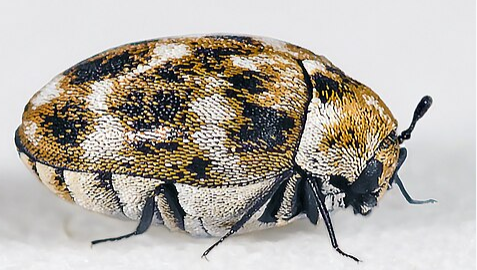
Dermestid Beetles (family Dermestidae), commonly known as skin beetles, carpet beetles, larder beetles, or hide beetles, are a diverse group of insects that are major stored-product and fabric pests worldwide. They are unique in their ability to digest keratin, allowing them to feed on animal-based materials such as wool, silk, fur, feathers, leather, and dried meat.
These pests are commonly found in homes, museums, warehouses, and food processing facilities. While some species are beneficial in controlled environments (such as taxidermy), most are considered destructive pests due to their ability to damage valuable materials and stored goods.
Taxonomy and Classification
- Common Name: Dermestid Beetles
- Family: Dermestidae
- Order: Coleoptera
- Type: Stored-product and fabric pest
Common pest genera include:
- Anthrenus: Carpet beetles
- Dermestes: Larder and hide beetles
- Trogoderma: Includes the highly destructive khapra beetle
Dermestid beetles undergo complete metamorphosis (egg, larva, pupa, adult).
Identification
Adult dermestid beetles are small and often inconspicuous.
- Size: Typically 2–12 mm long
- Shape: Oval or elongated
- Color: Dark brown or black; some species have mottled patterns of white, yellow, and brown scales
- Antennae: Short with clubbed tips
The larval stage is the most destructive and easiest to identify:
- Shape: Elongated, tapered body
- Covering: Dense hairs or bristles
- Color: Reddish-brown
- Distinctive Feature: Tufts or tail-like hairs at the rear
A key sign of infestation is the presence of shed larval skins, which are often found near feeding sites.
Distribution and Habitat
Dermestid beetles are found worldwide and thrive wherever suitable food sources are available.
Common indoor habitats include:
- Carpets and upholstered furniture
- Clothing and storage areas
- Pantries and food storage spaces
- Museums and taxidermy collections
- Wall voids containing dead insects or rodents
They are particularly attracted to protein-rich and animal-derived materials.
Behavior and Life Cycle
Dermestid beetles typically produce one or more generations per year, depending on environmental conditions.
The lifecycle includes:
- Egg Stage: Eggs are laid directly on or near food sources
- Larval Stage: Larvae feed extensively on organic materials
- Pupal Stage: Pupation occurs in sheltered areas, often away from the feeding site
- Adult Stage: Adults emerge and disperse to new locations
Larvae are light-averse and often migrate to hidden areas to pupate, sometimes boring into wood or structural materials for protection.
Feeding and Damage
Dermestid beetles cause damage to a wide range of materials.
- Fabric Damage: Irregular holes in wool, silk, fur, and leather
- Fiber Damage: Larvae may chew through synthetic materials to reach natural fibers
- Stored Food Damage: Infestation of dried foods, pet food, and cereals
- Contamination: Presence of frass, shed skins, and dead insects
- Structural Impact: Minor boring damage when larvae seek pupation sites
Damage is often discovered after materials have been significantly compromised.
Management and Control
Effective control requires thorough cleaning and elimination of all food sources.
| Strategy | Purpose | Benefit |
|---|---|---|
| Sanitation | Remove infested materials and organic debris | Eliminates breeding sources |
| Vacuuming | Clean carpets, edges, and hidden areas | Removes eggs, larvae, and food sources |
| Proper Storage | Use airtight containers for fabrics and food | Prevents infestation |
| Targeted Treatments | Apply insecticides in cracks and crevices | Controls hidden populations |
Pheromone traps are also useful for monitoring adult beetle activity.
Prevention
- Regularly clean and inspect susceptible materials
- Store fabrics and food in sealed containers
- Remove dead insects and animal remains
- Maintain clean storage areas
- Inspect items before long-term storage
Preventative practices are critical for avoiding infestations in homes and storage facilities.
Related Articles
Conclusion
Dermestid beetles are highly adaptable pests capable of damaging a wide range of materials, especially those derived from animal products. Their hidden feeding habits and long larval stage make infestations difficult to detect early.
Through proper sanitation, storage, and monitoring, these pests can be effectively managed, protecting valuable fabrics, stored goods, and collections from long-term damage.