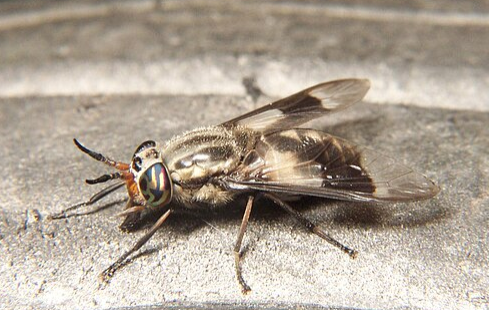
Deer Flies (genus Chrysops) are aggressive, blood-feeding insects belonging to the family Tabanidae, which also includes horse flies. These flies are well known for their painful bites and persistent behavior, making them a major nuisance to humans, pets, and livestock. Only the female deer fly feeds on blood, which is required for egg development, while males feed on nectar and pollen.
Deer flies are not only irritating but can also play a role in disease transmission. In North America, they are considered mechanical vectors of pathogens such as tularemia and anthrax. In parts of Africa, related species transmit the parasitic disease Loiasis (African eye worm), making them medically significant in certain regions.
Taxonomy and Classification
- Common Name: Deer Flies
- Scientific Genus: Chrysops
- Order: Diptera
- Family: Tabanidae
- Type: Blood-feeding biting fly
Deer flies undergo complete metamorphosis (egg, larva, pupa, adult). They are closely related to horse flies (Tabanus), but are generally smaller and more colorful, especially in their eye patterns and wing markings.
They are classified as pool feeders, meaning they cut the skin and lap up the blood that pools at the wound, rather than piercing like mosquitoes. This feeding style contributes to their extremely painful bite.
Physical Description
Adult deer flies are medium-sized flies with distinctive features that make them relatively easy to identify.
- Size: Approximately 1/4 to 1/2 inch long
- Body Color: Black, gray, or brown
- Eyes: Large, iridescent eyes with green, gold, or striped patterns
- Wings: Clear with dark bands or zigzag markings
Their flight is fast, erratic, and highly persistent. Once a host is targeted, they often circle repeatedly before landing to bite.
The larvae are:
- Whitish to yellowish maggots
- Aquatic or semi-aquatic
- Found in moist soil, mud, or shallow water
Larvae are predatory, feeding on small invertebrates in their environment.
Distribution and Habitat
Deer flies are found worldwide, particularly in warm, humid environments. They are most abundant in areas with access to water and moist soil.
Common habitats include:
- Wetlands and marshes
- Edges of ponds, lakes, and streams
- Forested areas and open fields
- Pastures and agricultural land
Larvae develop in wet, muddy environments, while adults disperse into nearby areas to seek hosts.
Behavior and Life Cycle
Deer flies typically have one generation per year, although development time may vary based on environmental conditions.
- Egg Stage: Females lay clusters of eggs on vegetation near water
- Larval Stage: Larvae drop into moist soil or water and develop over several months
- Pupal Stage: Pupation occurs in soil
- Adult Stage: Adults emerge in late spring to early summer
Adult populations usually peak during mid-summer. Females are diurnal (active during the day) and are especially attracted to:
- Movement
- Dark colors
- Carbon dioxide from breathing
- Warm-blooded hosts
They commonly target the head, neck, and shoulders of humans and animals.
Feeding and Impact
Only female deer flies feed on blood, while males feed on plant nectar.
- Bite Mechanism: Cuts skin and feeds on pooled blood
- Pain: Immediate sharp pain followed by itching and swelling
- Reaction: Red welts and irritation are common
Impacts include:
- Human Discomfort: Persistent biting can disrupt outdoor activities
- Livestock Stress: Reduced feeding, weight gain, and milk production
- Disease Transmission: Mechanical transfer of pathogens such as tularemia and anthrax
In high populations, deer flies can significantly affect livestock health and productivity.
Management and Control
Controlling deer flies is challenging due to their wide range and aquatic breeding sites.
| Strategy | Purpose | Benefit |
|---|---|---|
| Protective Clothing | Wear long sleeves and light-colored fabrics | Reduces bites |
| Sticky Traps | Use blue or black adhesive traps | Captures adults effectively |
| Head Net or Hat Traps | Protect head and neck areas | Prevents common attack sites |
| Repellents | Apply DEET-based products | Provides partial protection |
Repellents are often less effective against deer flies than other biting insects, making physical barriers and trapping more reliable methods.
Prevention
- Avoid areas near standing water during peak activity
- Limit outdoor exposure during mid-day when flies are most active
- Wear protective clothing when in infested areas
- Use traps around outdoor living spaces
- Reduce attractants such as dark clothing
Because breeding sites are widespread and difficult to treat, prevention focuses on minimizing exposure rather than eliminating populations.
Related Articles
Conclusion
Deer flies are persistent and painful biting insects that pose both a nuisance and a potential health risk. Their aggressive daytime behavior and attraction to movement make them particularly difficult to avoid in outdoor environments.
While complete control is rarely feasible, the use of protective clothing, traps, and avoidance strategies can significantly reduce their impact, allowing people and livestock to coexist more comfortably with these insects.