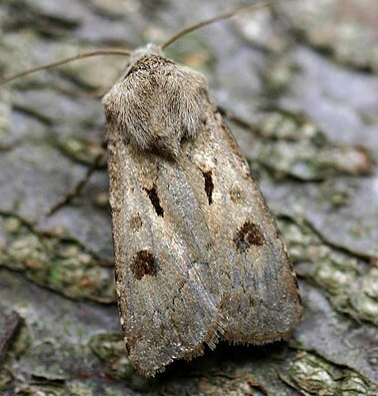
Dart Moths are a large and diverse group of moth species within the family Noctuidae, one of the most widespread families of moths globally. Many species in this group are known for their rapid, darting flight and nocturnal activity. While the adult moths are often harmless and even beneficial as pollinators, their larval stage—commonly referred to as cutworms or armyworms—can be highly destructive to crops and garden plants.
This dual role makes dart moths an important species group in pest management: beneficial as adults, but potentially damaging as larvae.
Quick Facts
- Common Name: Dart Moths
- Family: Noctuidae
- Order: Lepidoptera
- Habitat: Fields, gardens, grasslands, and forest edges
- Diet (Larvae): Seedlings, grasses, and crop plants
- Status: Agricultural pest (larval stage), beneficial pollinator (adult)
Taxonomy and Classification
Dart moths are classified within the subfamily Noctuinae, a group commonly associated with economically significant agricultural pests.
- Order: Lepidoptera
- Family: Noctuidae
- Subfamily: Noctuinae
- Common Group: Cutworm and armyworm moths
They undergo complete metamorphosis, progressing through egg, larva (cutworm), pupa, and adult stages.
Identification
Adult dart moths are typically medium-sized and well-camouflaged.
- Body: Robust and slightly hairy
- Wings: Narrow forewings with mottled gray, brown, or black patterns
- Markings: Often feature subtle dart- or stiletto-shaped markings on the wings
- Behavior: Nocturnal and attracted to light
The larvae (cutworms) are the damaging stage and are characterized by:
- Shape: Thick, smooth-bodied caterpillars
- Color: Gray, brown, or black
- Defense Behavior: Curl into a C-shape when disturbed
They are typically found just below the soil surface near host plants.
Distribution and Habitat
Dart moths are widely distributed across North America, Europe, and Asia, occupying a broad range of environments.
Common habitats include:
- Agricultural fields
- Vegetable gardens
- Grasslands and pastures
- Lawns and landscaped areas
- Forest edges and natural habitats
Larvae prefer loose, moist soil where they can hide during the day and emerge at night to feed.
Behavior and Life Cycle
The life cycle of dart moths is closely tied to seasonal plant growth.
- Egg Stage: Eggs are laid on plants or soil surfaces
- Larval Stage: Cutworms feed at night and hide in soil during the day
- Pupal Stage: Pupation occurs underground
- Adult Stage: Moths emerge, mate, and continue the cycle
Larvae are highly destructive during early plant growth stages, particularly in spring when seedlings are most vulnerable.
Many species overwinter as pupae in the soil, allowing them to emerge early in the growing season.
Feeding and Damage
The primary damage caused by dart moths occurs during the larval stage.
- Stem Cutting: Seedlings are cut at soil level
- Defoliation: Leaves may be chewed or removed
- Crop Loss: Entire rows of young plants may disappear
Larvae emerge at night to girdle or sever plant stems, often destroying multiple plants in a single feeding period.
At the same time, adult moths contribute to pollination, visiting night-blooming flowers and supporting ecosystem health.
Because of their impact, many species are classified as agricultural pests.
Pest Status
Dart moths are considered dual-impact insects:
- Larvae: Destructive pests of crops and gardens
- Adults: Beneficial nocturnal pollinators
This combination makes them a key focus of integrated pest management programs.
Management and Control
Effective management focuses on protecting plants during the vulnerable seedling stage.
| Strategy | Purpose | Benefit |
|---|---|---|
| Seedling Collars | Place barriers around stems | Prevents larval cutting |
| Soil Disturbance | Till soil before planting | Exposes larvae and pupae |
| Monitoring | Check plants at night | Early detection of feeding |
| Biological Control | Encourage predators or nematodes | Reduces larval populations |
Gardeners can locate larvae by digging 1–2 inches into the soil near damaged plants.
Prevention
- Remove weeds and debris before planting
- Use protective collars around young plants
- Encourage natural predators such as birds
- Limit excessive outdoor lighting to protect beneficial moth activity
Preventative measures are especially important in early spring when larvae are most active.
Related Articles
Conclusion
Dart moths are widespread nocturnal insects with a complex ecological role. While their adult stage contributes to pollination and biodiversity, their larval stage can cause significant agricultural damage by cutting down young plants.
Through proper monitoring, cultural practices, and early intervention, their impact can be managed effectively, allowing growers to protect crops while maintaining ecological balance.