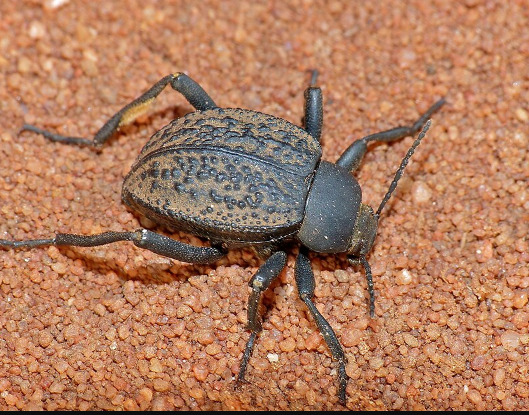
Darkling Beetles (family Tenebrionidae) are a large and diverse group of beetles known for their dark coloration and nocturnal habits. With over 20,000 species worldwide, they occupy a wide range of ecological roles. While many species are beneficial decomposers, others are significant stored-product pests and agricultural nuisances, particularly in grain storage and livestock facilities.
Some of the most well-known species include the yellow mealworm beetle (Tenebrio molitor) and the Lesser Mealworm (Alphitobius diaperinus), which is a major pest in poultry operations.
Taxonomy and Classification
- Common Name: Darkling Beetles
- Family: Tenebrionidae
- Order: Coleoptera
- Type: Stored-product and structural pest (some species)
Darkling beetles undergo complete metamorphosis (egg, larva, pupa, adult). Many pest species are associated with dry, starchy materials such as grains, flour, and animal feed.
Identification
Adult darkling beetles are typically dull and slow-moving.
- Color: Black, brown, or dark gray
- Body: Hard, elongated or oval-shaped
- Size: Ranges from 2 mm to over 25 mm
- Wings: Many species have fused wing covers and cannot fly
- Antennae: Gradually thickened toward the tips
The larval stage, commonly called mealworms, is highly recognizable:
- Shape: Cylindrical and elongated
- Color: Yellowish-brown
- Texture: Smooth, hard-bodied
Mealworms are often mistaken for wireworms but lack the rigid segmentation and distinctive tail features.
Distribution and Habitat
Darkling beetles are found worldwide and thrive in a variety of environments.
Common habitats include:
- Dry, arid regions
- Forests and decaying organic matter
- Grain storage facilities
- Pantries and food storage areas
- Poultry and livestock housing
They are especially attracted to dry organic materials such as grain, flour, and feed.
Behavior and Life Cycle
The life cycle varies depending on species and environmental conditions.
- Egg Stage: Eggs are laid in food sources or soil
- Larval Stage: Mealworms feed actively and cause most damage
- Pupal Stage: Occurs in soil or sheltered areas
- Adult Stage: Adults emerge and reproduce
Both larvae and adults are typically nocturnal. The larval stage can last several months and is the primary feeding stage.
In poultry facilities, larvae may bore into insulation or wood to pupate, contributing to structural damage.
Feeding and Damage
Darkling beetles cause damage in two primary ways:
- Stored Product Damage: Infest grains, flour, and feed, contaminating products with frass, shed skins, and dead insects
- Structural Damage: Larvae bore into insulation and wood, particularly in poultry houses
- Disease Transmission: Can carry pathogens such as Salmonella in livestock environments
Infestations can lead to economic losses in agriculture, food storage, and animal production systems.
Management and Control
Effective management requires a combination of sanitation and targeted treatments.
| Strategy | Purpose | Benefit |
|---|---|---|
| Sanitation | Remove spilled grain and organic debris | Eliminates food sources |
| Proper Storage | Use airtight containers | Prevents infestation of stored goods |
| Freezing | Freeze infested products | Kills all life stages |
| Facility Management | Clean and repair poultry housing | Reduces breeding sites and structural damage |
Integrated pest management is essential, especially in agricultural and livestock settings.
Prevention
- Keep storage areas clean and dry
- Store food and feed in sealed containers
- Remove old litter and waste in livestock facilities
- Repair structural damage promptly
- Inspect stored products regularly
Preventative measures are critical to minimizing infestations and maintaining safe storage conditions.
Related Articles
Conclusion
Darkling beetles are a diverse group of insects with both beneficial and harmful roles. While many species contribute to decomposition in natural ecosystems, others are serious pests of stored products and livestock facilities.
Through proper sanitation, storage practices, and integrated pest management, infestations can be effectively controlled, protecting food supplies and agricultural infrastructure.