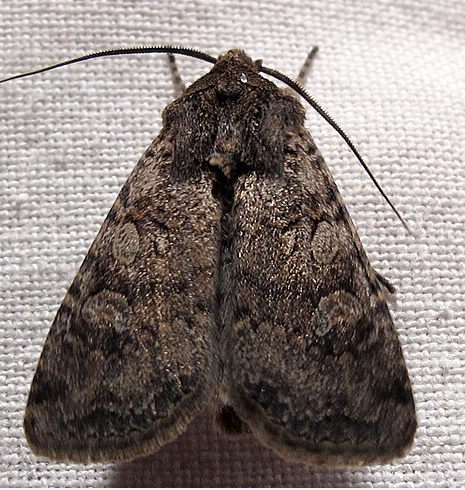
Dark-sided Cutworm Moths are a group of nocturnal moths in the family Noctuidae whose larvae, commonly known as cutworms, are among the most destructive pests of seedlings and young crops. While the adult moths themselves do not cause damage, their caterpillars live in the soil and feed on plant stems at ground level, often severing young plants completely.
These insects are widespread in agricultural and garden environments and are considered significant economic pests in many cropping systems. Their ability to remain hidden during the day and feed at night makes them particularly difficult to detect until damage becomes severe.
Taxonomy and Classification
- Common Name: Dark-sided Cutworm Moths
- Order: Lepidoptera
- Family: Noctuidae
- Group: Cutworm moths
- Type: Agricultural pest (larval stage)
Cutworm moths belong to the family Noctuidae, also known as owlet moths. This is one of the largest moth families, containing many species with larvae that feed on crops and ornamental plants.
They undergo complete metamorphosis, developing through egg, larva (cutworm), pupa, and adult moth stages.
Physical Description
Adult dark-sided cutworm moths are medium-sized and relatively inconspicuous.
- Color: Gray, brown, or dark mottled patterns
- Wings: Narrow, with subtle markings for camouflage
- Behavior: Nocturnal and attracted to lights
Their coloration allows them to blend into soil, bark, and plant debris during the day.
The larvae (cutworms) are the damaging stage and have distinctive characteristics:
- Body: Smooth, thick, and cylindrical
- Color: Gray, brown, or black
- Size: Up to 1–2 inches long when mature
- Behavior: Curl into a C-shape when disturbed
They are typically found just below the soil surface near host plants.
Distribution and Habitat
Dark-sided cutworm moths are found worldwide and are especially common in regions with active agriculture.
Typical habitats include:
- Crop fields (corn, vegetables, grains)
- Home vegetable gardens
- Lawns and turf areas
- Weedy or disturbed ground
They prefer areas with loose soil, plant debris, and weeds, which provide shelter for larvae during the day.
Behavior and Life Cycle
The life cycle of cutworm moths is closely tied to seasonal planting cycles.
- Egg Stage: Eggs are laid on plant stems, leaves, or nearby debris
- Larval Stage: Caterpillars hatch and begin feeding on seedlings
- Pupal Stage: Pupation occurs in the soil
- Adult Stage: Moths emerge and reproduce
Larvae are primarily nocturnal feeders, hiding in the soil during the day and emerging at night to feed.
They often remain near the base of plants, making them difficult to detect until damage becomes visible.
Feeding and Damage
Cutworm larvae are responsible for the most significant damage. They feed on plant stems and foliage, particularly targeting young plants.
Common damage includes:
- Seedlings cut at soil level
- Missing plants in rows
- Wilted or collapsed young plants
- Chewed leaves and stems
Because they cut through stems, a single larva can destroy multiple plants in one night.
They are considered serious agricultural pests, especially in early crop stages when plants are most vulnerable.
Pest Status
Dark-sided cutworm moths are classified as major agricultural pests due to the destructive feeding habits of their larvae.
They are particularly problematic for:
- Vegetable crops (tomatoes, peppers, lettuce)
- Row crops (corn, soybeans)
- Seedling nurseries and transplants
Damage can result in reduced plant populations, uneven crop stands, and economic losses.
Management and Control
Effective management focuses on early detection and protecting vulnerable seedlings.
| Strategy | Purpose | Benefit |
|---|---|---|
| Soil Preparation | Remove weeds and debris before planting | Reduces egg-laying sites |
| Plant Collars | Protect stems with barriers | Prevents cutting damage |
| Monitoring | Inspect soil and plants regularly | Early detection of larvae |
| Biological Control | Encourage birds and predatory insects | Reduces population naturally |
| Targeted Treatment | Apply controls if infestations are severe | Protects crops during vulnerable stages |
Physical barriers and cultural practices are often effective in small gardens, while larger agricultural operations may require integrated pest management strategies.
Prevention
- Remove weeds and plant debris before planting
- Till soil to expose larvae and pupae
- Use protective collars around seedlings
- Rotate crops to disrupt life cycles
- Monitor fields early in the growing season
Preventative measures are especially important during early plant development when crops are most susceptible.
Related Articles
Conclusion
Dark-sided cutworm moths are inconspicuous insects whose larvae can cause significant damage to crops and garden plants. By cutting seedlings at ground level, they can quickly reduce plant populations and impact yields.
Through proper monitoring, cultural practices, and early intervention, these pests can be effectively managed, helping protect crops and maintain healthy plant growth.