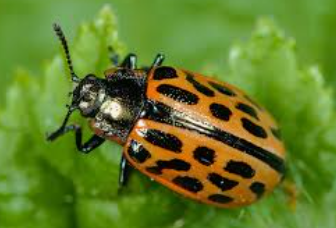
Dappled Willow Leaf Beetles are foliage-feeding beetles in the family Chrysomelidae that attack willow shrubs, particularly ornamental varieties such as dappled willow (Salix integra and related cultivars). Both adult beetles and their larvae feed on leaves, often causing visible damage that reduces the aesthetic value of ornamental plantings.
These beetles are considered ornamental plant pests. While mature willow shrubs can usually recover from moderate feeding, repeated or heavy infestations may lead to stress, reduced growth, and a decline in overall plant health.
Quick Facts
- Common Name: Dappled Willow Leaf Beetles
- Family: Chrysomelidae
- Order: Coleoptera
- Habitat: Willow shrubs, moist landscapes, and ornamental beds
- Diet: Willow leaves and related foliage
- Status: Ornamental plant pest
Taxonomy and Classification
Dappled willow leaf beetles belong to the leaf beetle family Chrysomelidae, a large group of plant-feeding beetles that includes many economically important pest species. Within this family, several species specialize in feeding on willow (Salix) plants.
These beetles undergo complete metamorphosis, developing through egg, larva, pupa, and adult stages. Their life cycle is closely tied to the seasonal growth of willow foliage.
Identification
Dappled willow leaf beetles vary in appearance depending on the species, but they share several common traits.
- Adults: Small to medium-sized beetles
- Color: Dark, brownish, or sometimes metallic
- Shape: Oval and slightly elongated
- Movement: Active on foliage during warm weather
The larvae are soft-bodied and typically found feeding openly on leaves. They may appear slug-like and are often more damaging than adults due to their continuous feeding behavior.
Damage caused by these beetles includes:
- Small holes in leaves
- Leaf skeletonization (tissue eaten between veins)
- Ragged leaf edges
- Browning or drying foliage
They are part of the broader group of beetles known for feeding on ornamental and landscape plants.
Distribution and Habitat
Dappled willow leaf beetles are found wherever willow species are present, including both natural and cultivated environments.
Common habitats include:
- Residential landscapes with ornamental willows
- Nursery and garden center plantings
- Moist garden beds and irrigation zones
- Streambanks and natural willow stands
They are especially common in moist environments, where willow plants thrive.
Behavior and Life Cycle
Dappled willow leaf beetles typically complete one or more generations per year, depending on climate conditions.
- Egg Stage: Eggs are laid on the underside of leaves
- Larval Stage: Larvae feed actively on leaf surfaces
- Pupal Stage: Pupation occurs on the plant or in nearby soil
- Adult Stage: Adults emerge and continue feeding and reproduction
Larval feeding is often the most destructive stage. Populations can build quickly, especially during warm weather, leading to rapid defoliation of affected plants.
Feeding and Damage
Both adult and larval beetles feed on willow foliage, causing visible and sometimes extensive damage.
- Leaf Damage: Holes, skeletonization, and ragged edges
- Defoliation: Heavy feeding may remove significant leaf area
- Plant Stress: Reduced photosynthesis and weakened growth
While established shrubs often recover, repeated defoliation can:
- Reduce ornamental value
- Slow plant growth
- Increase susceptibility to other pests and diseases
Young or newly planted willows are particularly vulnerable to damage.
Pest Status
Dappled willow leaf beetles are considered landscape pests due to their impact on ornamental plants. They do not affect structures or stored products but can significantly reduce the visual appeal of decorative plantings.
Infestations are most problematic in managed landscapes where plant appearance is important.
Management and Control
Effective management focuses on monitoring and early intervention.
| Strategy | Purpose | Benefit |
|---|---|---|
| Regular Inspection | Detect early infestations | Prevents severe damage |
| Pruning | Remove heavily infested leaves | Reduces population levels |
| Watering and Care | Maintain plant health | Improves recovery from feeding |
| Targeted Treatments | Apply insecticides when needed | Controls severe outbreaks |
Early detection is critical, as larvae can quickly cause significant damage if left unmanaged.
Prevention
- Inspect willow shrubs regularly during the growing season
- Maintain healthy soil and proper irrigation
- Remove plant debris that may harbor pests
- Encourage beneficial insects that prey on beetle larvae
Strong, well-maintained plants are more resilient to pest damage.
Related Articles
Conclusion
Dappled willow leaf beetles are common ornamental pests that feed on willow foliage, causing visible damage and reduced plant appearance. While rarely fatal to established plants, heavy infestations can weaken shrubs and diminish their decorative value.
Through regular monitoring, proper plant care, and timely intervention, these beetles can be effectively managed, allowing willow shrubs to remain healthy and visually appealing in landscape settings.