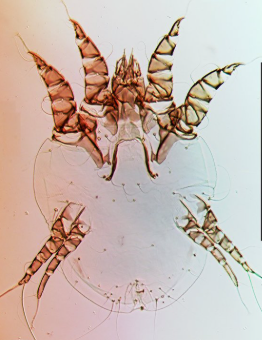
Dairy Cattle Mites are a group of microscopic parasitic arachnids that infest cattle and cause skin conditions collectively known as mange or scabies. These external parasites feed on skin tissue, lymph, or blood, leading to intense irritation, hair loss, and significant economic losses in dairy and livestock operations. Infestations are especially severe during the winter months, when cattle are housed closely together and environmental stress is higher.
Mite infestations can greatly impact animal health and productivity, reducing milk output, weight gain, and overall welfare. Early detection and proper management are critical to preventing widespread outbreaks in herds.
Taxonomy and Classification
- Common Name: Dairy Cattle Mites
- Class: Arachnida
- Subclass: Acari
- Type: Parasitic livestock pest
The most important mite genera affecting cattle include:
- Sarcoptes: Causes Sarcoptic Mange (burrowing mites)
- Psoroptes: Causes Psoroptic Mange (surface-feeding mites)
- Chorioptes: Causes Chorioptic Mange (milder, surface-feeding mites)
These mites are generally host-specific, meaning they primarily affect cattle and rarely infest humans or other animals. They undergo a simple life cycle with egg, larval, nymphal, and adult stages.
Physical Description
Cattle mites are extremely small and usually require magnification to be seen.
- Size: Typically less than 1 mm
- Color: Translucent or whitish
- Shape: Oval, soft-bodied
- Legs: Eight legs (typical of arachnids)
Differences between major types include:
- Sarcoptic Mites: Rounded body; burrow deep into skin
- Psoroptic Mites: Larger; long, jointed stalks on legs
- Chorioptic Mites: Shorter stalks; remain on skin surface
These differences are important for proper diagnosis and treatment.
Distribution and Habitat
Dairy cattle mites are found worldwide and occur wherever cattle are raised. Their habitat is the skin of the host animal, where they live, feed, and reproduce.
They tend to concentrate in specific areas depending on the species:
- Sarcoptes: Neck, shoulders, tail, and skin folds
- Psoroptes: Back, tail-head, and dense hair regions
- Chorioptes: Legs, udder, tail, and lower body
Infestations spread through:
- Direct animal-to-animal contact
- Shared bedding or housing
- Contaminated equipment or facilities
Behavior and Life Cycle
The entire life cycle of cattle mites occurs on the host animal and is relatively short.
- Duration: Typically 10–25 days
- Egg Stage: Eggs are laid on or within the skin
- Larval Stage: Larvae hatch and begin feeding
- Nymph Stage: Develop into mature forms
- Adult Stage: Continue feeding and reproduction
Mites reproduce rapidly, allowing populations to grow quickly under favorable conditions. Infestations are most severe in late winter and early spring.
Constant irritation causes cattle to rub, scratch, and groom excessively, which spreads mites and worsens skin damage.
Feeding and Damage
Mite infestations can have serious impacts on animal health and productivity.
- Skin Irritation: Severe itching (pruritus) leads to constant scratching
- Hair Loss: Patchy or widespread hair loss (alopecia)
- Skin Lesions: Thickened, crusted, or inflamed skin
- Secondary Infections: Open wounds can become infected
Economic impacts include:
- Reduced Milk Production: Losses of up to 25% in severe cases
- Poor Weight Gain: Reduced feed efficiency
- Stress and Discomfort: Lower overall herd health
Sarcoptic and psoroptic mange are particularly contagious and can spread rapidly through a herd if not treated promptly.
Management and Control
Effective management requires treating both animals and their environment.
| Strategy | Purpose | Benefit |
|---|---|---|
| Acaricides | Use injectable or topical treatments | Kills mites on animals |
| Accurate Diagnosis | Skin scraping and lab analysis | Ensures correct treatment |
| Quarantine | Isolate new or infected animals | Prevents spread |
| Facility Sanitation | Clean bedding and housing | Reduces reinfestation risk |
All animals in an affected herd should typically be treated simultaneously to prevent reinfestation.
Prevention
- Inspect cattle regularly for signs of itching or hair loss
- Quarantine and treat new animals before introduction
- Maintain clean and dry housing conditions
- Avoid overcrowding during winter months
- Implement routine parasite control programs
Preventative herd management is key to minimizing outbreaks and maintaining productivity.
Related Articles
Conclusion
Dairy cattle mites are significant livestock pests that can cause severe irritation, skin damage, and economic loss if left untreated. Their rapid life cycle and contagious nature make early detection and prompt intervention essential.
Through proper diagnosis, treatment, and preventative herd management practices, producers can effectively control mite infestations and protect both animal health and productivity.