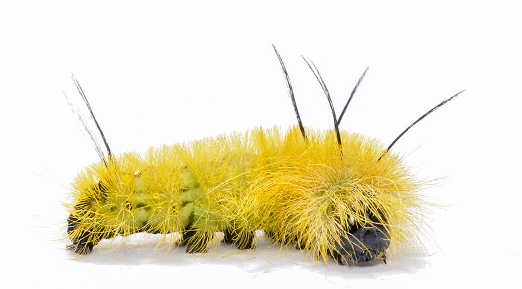
Dagger moth caterpillars are the larval stage of moths belonging to the genus Acronicta. These caterpillars are notable for their distinctive appearance, which often includes long hairs, spines, or brightly colored markings. They are widely distributed throughout North America and are commonly found feeding on deciduous trees and shrubs.
While many caterpillars blend into their surroundings for protection, dagger moth caterpillars often display striking patterns that may serve as warning coloration. Some species possess defensive hairs that can cause mild irritation when touched.
Quick Facts
- Genus: Acronicta
- Family: Noctuidae
- Diet: Leaves of deciduous trees
- Host Plants: Maple, oak, elm, birch, willow
- Status: Minor tree pest
Identification
Dagger moth caterpillars vary greatly in color and pattern depending on the species. Many species are covered with tufts of hair or bristles that give them a fuzzy appearance. Colors may include yellow, white, black, or orange.
The hairs of certain species may contain defensive chemicals or barbs that discourage predators. Although these hairs can sometimes irritate human skin, most species are harmless.
Habitat and Distribution
Dagger moth caterpillars occur across much of North America wherever suitable host trees grow. They are particularly common in deciduous forests, parks, orchards, and suburban landscapes.
Life Cycle
The life cycle begins when adult dagger moths lay eggs on host plant leaves. Caterpillars hatch and feed on foliage for several weeks before pupating in a cocoon within leaf litter or soil. Adults emerge later to reproduce.
Pest Status
Although they may occasionally defoliate small branches, dagger moth caterpillars rarely cause long-term damage to healthy trees.
Prevention
- Inspect trees for feeding damage
- Remove caterpillars if populations become large
- Wear gloves when handling hairy caterpillars
Control
Biological control from birds and predatory insects usually keeps populations at manageable levels.