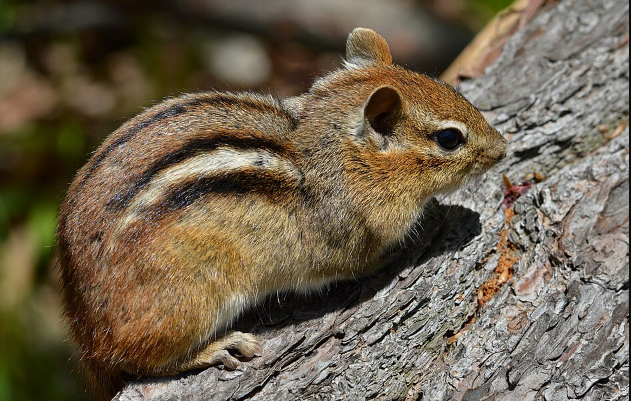
Chipmunks are small, striped rodents belonging primarily to the genera Tamias and Neotamias. They are familiar throughout much of North America and are easily recognized by the dark and light stripes running along their backs, sides, and often across the face. Although chipmunks are generally harmless and play useful ecological roles, they can become garden and structural pests when they establish burrows near homes, patios, retaining walls, sidewalks, or landscaped areas.
Most conflicts involve feeding on seeds, bulbs, fruits, and young plants or excavating burrow systems beneath hardscaping. In residential settings, chipmunks are often tolerated until their numbers increase or their burrows begin to interfere with gardens and structures.
Taxonomy and Classification
Chipmunks belong to the order Rodentia and family Sciuridae, which also includes squirrels, marmots, and prairie dogs. The Eastern Chipmunk, Tamias striatus, is widespread in eastern North America, while numerous western species are placed in the genus Neotamias.
Like other rodents, chipmunks possess continuously growing front incisors adapted for gnawing. They also have large cheek pouches that allow them to transport seeds, nuts, and other foods back to underground storage chambers.
Physical Description
Chipmunks are relatively small rodents, commonly measuring about 5 to 10 inches long including the tail, although size varies among species. Their distinctive striped pattern is the most useful field identification feature.
- Color: Usually reddish-brown, tan, or grayish-brown.
- Stripes: Several dark longitudinal stripes separated by lighter bands run along the back and sides.
- Face: Many species have dark and light facial stripes extending around the eyes.
- Tail: Fur-covered and relatively bushy, but not as large as that of a tree squirrel.
- Cheek Pouches: Expand dramatically when filled with food.
Chipmunks are sometimes confused with ground squirrels. Chipmunks are generally smaller and often have more prominent facial stripes. Their quick movements and tendency to dart between rocks, logs, shrubs, and burrow entrances are also characteristic.
Distribution and Habitat
Chipmunks occur throughout much of North America, from southern Canada through large parts of the United States and into portions of Mexico. They are especially common in woodlands, forest edges, rocky areas, brushlands, and suburban landscapes.
Residential properties can provide excellent habitat when they contain stone walls, woodpiles, dense shrubs, bird feeders, sheds, decks, porches, and ground cover. Chipmunks often place burrow entrances beneath logs, rocks, steps, patios, foundation edges, or landscape features that provide concealment.
Burrows and Nesting Behavior
Chipmunks construct extensive underground burrow systems used for shelter, nesting, and food storage. A mature burrow may contain several tunnels and chambers, including separate areas for sleeping, nesting, and storing food.
Unlike some ground squirrels, chipmunks often carry excavated soil away from the entrance in their cheek pouches. As a result, the burrow opening may have little or no obvious soil mound, making it difficult to locate.
Burrows can extend many feet and may pass beneath sidewalks, retaining walls, patios, sheds, or other structures. While chipmunks do not normally excavate foundations themselves, prolonged tunneling beneath poorly supported structures can contribute to settling or instability.
Behavior and Life Cycle
Chipmunks are primarily diurnal, meaning they are most active during daylight hours. They spend much of the day foraging for food, carrying material back to their burrows, and defending small territories around important feeding or nesting sites.
During colder months, many chipmunks spend long periods underground in a state of torpor. This is not always the same as continuous deep hibernation. They may wake periodically and consume food stored in underground chambers before returning to inactivity.
Breeding patterns vary by species and region. Some populations produce one litter annually, while others may reproduce twice during favorable years. Litters commonly contain several young that remain underground until they are developed enough to begin exploring outside the burrow.
Diet and Feeding
Chipmunks are omnivores with a highly varied diet. Much of their food consists of seeds, nuts, fruits, berries, and other plant material, although they also consume insects and other small animal matter when available.
- Acorns and other nuts
- Seeds and grains
- Berries and fruit
- Mushrooms and fungi
- Flower bulbs
- Young garden plants
- Insects and small invertebrates
- Occasionally eggs or other animal matter
Bird feeders are a major attractant in residential landscapes because spilled sunflower seed, corn, millet, and other grains provide a concentrated and dependable food source.
Garden Damage
Chipmunks can cause noticeable damage in gardens, especially when populations are high. Newly planted seeds and bulbs are particularly vulnerable because chipmunks frequently dig in freshly disturbed soil.
- Seed Removal: Corn, sunflower, bean, and other large seeds may be dug up shortly after planting.
- Bulb Feeding: Tulips, crocuses, and other bulbs can be excavated and eaten.
- Fruit Damage: Strawberries, tomatoes, berries, and fallen fruit may be sampled.
- Seedling Damage: Tender young plants can be clipped or uprooted.
- Digging: Repeated caching and food searching can disturb mulch and planting beds.
Structural Damage
The most serious concern around homes is usually burrowing beneath hardscaping or lightly supported structures. Tunnels under patios, pavers, steps, retaining walls, or slabs can remove supporting soil and contribute to shifting or settling over time.
Chipmunks may also enter garages, sheds, crawlspaces, or occasionally wall voids if suitable openings are present. They are less likely than rats or mice to establish large indoor infestations, but exclusion is still important where repeated entry occurs.
Management and Prevention
Chipmunk management should focus on habitat modification, food reduction, and exclusion. Completely eliminating chipmunks from wooded suburban environments is rarely realistic, but reducing attractants can greatly lower activity near structures.
- Reduce Shelter: Move woodpiles, rock piles, dense ground cover, and landscape debris away from foundations.
- Control Birdseed: Use feeders designed to reduce spillage and regularly clean seed from the ground.
- Secure Food: Store pet food, birdseed, and grain in tightly sealed containers.
- Seal Openings: Repair gaps around foundations, vents, doors, sheds, and crawlspace entrances.
- Protect Gardens: Wire mesh or other barriers can help protect bulbs and newly seeded areas.
Burrow Management
Burrows beneath structures should not simply be filled while animals are still actively using them. First determine whether the burrow is occupied and address the animal problem according to local wildlife regulations. Once activity has stopped, voids may be repaired and vulnerable areas reinforced to discourage future excavation.
Where repeated burrowing occurs along a foundation or garden edge, buried hardware cloth or appropriately sized wire mesh can create a physical barrier. The barrier should extend below ground and be installed securely so that animals cannot simply dig beneath it.
Trapping and Repellents
Commercial repellents may provide only temporary results, particularly when abundant food and shelter remain available. Trapping may be considered where chipmunks are causing significant structural or garden damage, but wildlife control laws vary by state and locality.
Homeowners should check local regulations before trapping, relocating, or lethally controlling chipmunks. Relocation is restricted or discouraged in some areas because of disease concerns, animal welfare issues, and the possibility of introducing animals into unsuitable habitat.
Ecological Importance
Despite occasional conflicts, chipmunks are important members of natural ecosystems. By carrying and storing seeds, they contribute to seed dispersal and forest regeneration. Forgotten food caches can germinate and produce new plants.
Chipmunks also serve as prey for hawks, owls, foxes, snakes, coyotes, bobcats, and other predators. Their burrowing activity mixes soil and can influence nutrient distribution within forest and woodland habitats.
Conservation and Research
Most common chipmunk species are abundant and are not managed primarily as conservation concerns. Research focuses on seed caching, forest ecology, territorial behavior, communication, seasonal torpor, population dynamics, and differences among the numerous western species.
For homeowners, chipmunks are best viewed as wildlife that sometimes becomes a nuisance rather than as inherently destructive pests. Where conflicts occur, reducing food and shelter near structures, protecting gardens, and preventing burrowing beneath vulnerable hardscaping usually provide the most practical long-term solution.