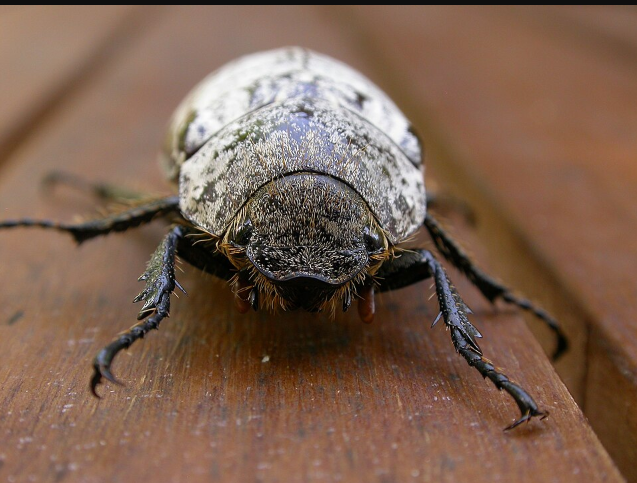
Cane Beetles is a general name used for several scarab beetles whose larvae are important root-feeding pests of sugar cane, grasses, and other agricultural crops. Depending on the region, the name may refer to species such as the Greyback Cane Beetle (Dermolepida albohirtum) or various May and June beetles in the genus Phyllophaga. Although adult beetles may feed on foliage, the greatest economic damage is usually caused by their underground larvae, commonly known as white grubs.
White grubs spend much of their development beneath the soil, where they consume roots and other underground plant tissues. In heavily infested sugar cane fields, this feeding can cause yellowing, stunting, poor establishment, lodging, reduced yields, and plant death. Because the destructive stage is hidden underground, infestations may become well established before obvious aboveground symptoms appear.
Taxonomy and Classification
Cane Beetles belong to the order Coleoptera and are generally members of the family Scarabaeidae, which includes scarab beetles, chafers, May beetles, June beetles, and many familiar white grub pests.
They undergo complete metamorphosis, progressing through egg, larval, pupal, and adult stages. The common name “Cane Beetle” does not describe one single species. Instead, it may be applied to different scarab beetles associated with sugar cane production in different parts of the world.
This distinction is important because the exact life cycle, seasonal activity, host range, and recommended control measures can differ considerably between species.
Physical Description
Adult Cane Beetles vary in size and coloration. Many are stout, oval scarab beetles with hardened wing covers and distinctive clubbed antennae. Depending on the species, adults may be brown, gray, reddish-brown, or nearly black.
The Greyback Cane Beetle, for example, is a robust beetle measuring approximately 20 to 25 millimeters long. Other scarab species associated with cane fields may be somewhat smaller.
- Adults: Stout-bodied scarab beetles with hardened wing covers.
- Color: Varies from light brown or gray to dark brown or black.
- Antennae: Characteristically clubbed, as is typical of many scarab beetles.
- Larvae: Creamy white, soft-bodied, and strongly C-shaped.
- Larval Head: Distinct brown or reddish-brown head capsule.
- Legs: Three pairs of well-developed legs immediately behind the head.
The white grub is usually the stage encountered when infested soil is examined. Mature larvae of larger species can become several centimeters long. Identification to species may require examination of the arrangement of hairs and spines on the underside of the terminal abdominal segments, a feature known as the raster pattern.
Distribution and Habitat
Cane Beetles occur in agricultural regions where suitable scarab species overlap with sugar cane and other susceptible crops. Important cane-feeding white grubs occur in parts of Australia, the Americas, the Caribbean, and other tropical or subtropical agricultural regions.
The larvae live primarily underground. Agricultural fields, pastures, grasslands, and areas containing abundant plant roots provide suitable habitat. Soil moisture, temperature, crop type, and organic matter can all influence where females deposit eggs and where larvae survive.
Some related white grubs are generalists and may also attack corn, sorghum, sweet potatoes, turfgrass, and pasture grasses. Others have more restricted host preferences.
Behavior and Life Cycle
The life cycle varies by species and climate and may require approximately one to several years to complete. Adults commonly emerge following favorable temperatures or seasonal rainfall. Many species are nocturnal and may be strongly attracted to outdoor lights.
After mating, females enter the soil and deposit eggs. Newly hatched grubs begin feeding on small roots and organic material. As they develop through successive larval stages, they become larger and capable of consuming substantial portions of the crop’s root system.
The larvae may move vertically through the soil according to temperature and moisture. During unfavorable periods, some species move deeper underground. Mature larvae eventually construct earthen cells where they pupate before emerging as adult beetles.
Feeding and Damage
The primary economic damage associated with Cane Beetles comes from white grub feeding below ground. Grubs chew roots, rootlets, and underground portions of cane plants, interfering with the plant’s ability to obtain water and nutrients.
- Stunted Growth: Root loss reduces the ability of plants to support vigorous aboveground growth.
- Yellowing: Damaged plants may become pale or yellow because compromised roots cannot efficiently absorb water and nutrients.
- Wilting: Plants can show drought-like symptoms even when adequate soil moisture is present.
- Lodging: Severe root destruction leaves cane poorly anchored, allowing stalks or entire stools to fall over.
- Easy Pulling: Heavily damaged plants may pull from the soil with little resistance because much of the root system has been destroyed.
- Patchy Fields: Infestations frequently produce irregular areas of weak, thin, or dying cane.
- Yield Loss: Chronic feeding can reduce stalk development and overall crop productivity.
Damage can become particularly important in ratoon crops, where cane is allowed to regrow after harvest. A weakened underground root and stool system may struggle to support vigorous regrowth, and continued grub feeding can further reduce stand longevity.
Monitoring and Detection
Because larvae remain underground, scouting often requires digging and examining the root zone. Areas containing yellow, stunted, lodged, or easily uprooted plants should be inspected for white grubs.
Adult activity may also provide an early warning. Light traps and other monitoring systems can be used for certain species to determine when adults are emerging and reproducing. However, large numbers of adults do not always translate directly into damaging grub populations, so soil sampling remains important.
Management and Prevention
Management is most effective when based on Integrated Pest Management (IPM). Since larvae are protected by soil, treatments should be based on the species present, grub density, crop stage, and local economic thresholds.
Cultural Control
Cultivation and soil disturbance can expose grubs to sunlight, drying conditions, birds, and other predators. Where appropriate within the cropping system, tillage may physically kill some larvae and pupae. Weed and grass management may also reduce alternative host plants for certain species.
Biological Control
Biological control has become an important component of white grub management. Entomopathogenic fungi, including strains of Metarhizium, can infect susceptible grubs in the soil. Beneficial entomopathogenic nematodes may also attack larvae under suitable soil moisture and temperature conditions.
Natural predators, parasitoids, and disease organisms can further suppress populations, making conservation of beneficial organisms valuable in long-term management programs.
Chemical Control
Where registered and economically justified, soil-applied insecticides may be used to protect roots from feeding grubs. Timing is critical because young larvae are generally easier to control than large, mature grubs located deeper in the soil.
Growers should follow local agricultural recommendations and product labels because registered treatments and application timing vary significantly between regions and Cane Beetle species.
Conservation and Research
Cane Beetles remain important subjects of agricultural research because controlling a pest hidden beneath the soil can be difficult and expensive. Research focuses on biological control, microbial insecticides, beneficial nematodes, improved monitoring, resistant sugar cane varieties, and more precise prediction of adult emergence and larval development.
For growers, early detection remains particularly valuable. Recognizing patchy growth, lodging, root loss, and the presence of C-shaped white grubs can allow management to begin before populations cause extensive crop loss. Combining monitoring with biological, cultural, and carefully targeted chemical controls offers the best opportunity for long-term Cane Beetle suppression.