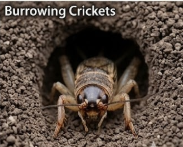
Burrowing Crickets are soil-dwelling insects that live beneath the surface of lawns, gardens, and agricultural fields. These crickets belong to several groups within the order Orthoptera and are closely related to grasshoppers and katydids. Unlike many surface-dwelling crickets, burrowing crickets spend much of their lives underground where they create tunnels and chambers used for shelter, feeding, and reproduction.
Some burrowing cricket species are harmless decomposers, while others may become occasional lawn or garden pests by disturbing roots and feeding on plant material. Their underground lifestyle makes them difficult to detect until signs of tunneling or plant damage become noticeable.
Quick Facts
- Order: Orthoptera
- Common Habitat: Lawns, gardens, fields, sandy soils
- Diet: Plant roots, organic debris, small insects
- Status: Occasional lawn pest
- Distinctive Feature: Powerful digging front legs
Identification
Burrowing crickets resemble typical crickets but possess several physical adaptations for underground living.
Most species are brown, tan, or gray and measure between 1/2 and 2 inches long depending on the species.
Key identifying characteristics include:
- Strong enlarged front legs adapted for digging
- Cylindrical or flattened body shape
- Long antennae
- Powerful hind legs for jumping
- Velvety or smooth body surfaces
Some burrowing species, especially mole crickets, have shovel-like front legs designed specifically for tunneling through soil.
Their coloration helps camouflage them against soil and vegetation.
Nymphs resemble smaller wingless adults and gradually mature through several molts.
Distribution and Habitat
Burrowing crickets occur worldwide and are especially common in warm climates and regions with loose soil.
Habitats commonly occupied by burrowing crickets include:
- Lawns
- Golf courses
- Pastures
- Gardens
- Sports fields
- Agricultural land
- Sandy soils
Moist well-aerated soils are particularly attractive because they are easier to tunnel through.
Some species prefer coastal regions and sandy environments, while others inhabit fertile garden soil or grassy fields.
Life Cycle
Burrowing crickets undergo incomplete metamorphosis consisting of three stages:
- Egg
- Nymph
- Adult
Females lay eggs in underground chambers or protected soil cavities.
After hatching, nymphs remain underground where they feed and grow.
Nymphs molt several times before becoming fully winged adults.
Depending on climate and species, development may require several months to over a year.
Adults are often most active during warm summer evenings.
Behavior
Burrowing crickets spend much of their lives underground.
Their tunnels serve multiple purposes including:
- Protection from predators
- Moisture retention
- Egg-laying sites
- Feeding access
- Temperature regulation
Many species emerge primarily at night to forage on surface vegetation.
Males commonly produce chirping sounds to attract females.
Some species create specialized acoustic chambers inside tunnels that amplify their calls.
Their feeding habits vary depending on species.
Burrowing crickets may consume:
- Grass roots
- Plant stems
- Organic debris
- Fungi
- Small insects
- Decaying plant matter
Signs of Infestation
Burrowing cricket activity can produce noticeable symptoms in lawns and gardens.
Common signs include:
- Raised soil tunnels
- Small mounds of loose dirt
- Thinning turfgrass
- Brown lawn patches
- Disturbed roots
- Weak or wilted plants
In severe infestations, tunneling may loosen turf enough that sections of grass feel spongy underfoot.
Pest Status
Burrowing crickets are considered occasional lawn and garden pests.
Most species cause only minor damage, but high populations may harm:
- Turfgrass
- Vegetable gardens
- Seedlings
- Golf courses
- Sports fields
Damage typically results from both feeding and tunneling activity.
Root disturbance can reduce plant stability and interfere with water uptake.
However, some burrowing cricket species also contribute positively to soil aeration and decomposition.
Natural Predators
Many animals feed on burrowing crickets and help regulate their populations naturally.
Predators include:
- Birds
- Skunks
- Raccoons
- Armadillos
- Parasitic wasps
- Ground beetles
- Spiders
Some mammals may dig into lawns while searching for crickets underground.
Prevention
Maintaining healthy turf and balanced soil conditions helps reduce burrowing cricket problems.
Recommended prevention methods include:
- Maintain healthy turfgrass
- Reduce excessive lawn moisture
- Avoid overwatering
- Encourage natural predators
- Improve soil drainage
- Monitor lawns regularly for tunneling
Healthy dense turf is often less vulnerable to severe cricket damage.
Control
Control is usually unnecessary unless populations become large enough to damage lawns or gardens.
Common management methods include:
- Proper lawn maintenance
- Biological controls
- Reducing excessive irrigation
- Targeted insecticide treatments for severe infestations
- Encouraging predatory insects and wildlife
Integrated pest management techniques are generally more effective than heavy pesticide use.
Because the insects live underground, surface treatments may have limited effectiveness unless timed properly.
Interesting Facts
- Some burrowing crickets create underground tunnels several feet long.
- Mole crickets are among the best-known burrowing cricket groups.
- Male crickets amplify mating calls using specially shaped burrows.
- Burrowing crickets are most active during warm humid weather.
- Their tunneling may help aerate compacted soil.
- Many species remain hidden underground during daytime hours.