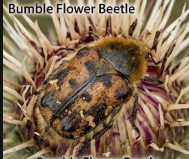
The Bumble Flower Beetle (Euphoria inda) is a common North American scarab beetle recognized for its loud buzzing flight and attraction to flowers, ripe fruit, and fermenting plant material. Despite its somewhat clumsy appearance and noisy behavior, this beetle is generally considered a beneficial or harmless insect because it contributes to pollination and decomposition processes within natural ecosystems.
Bumble flower beetles are often mistaken for bees because of their fuzzy bodies and humming flight patterns. They are especially active during warm summer months and are commonly observed visiting flowers, orchards, compost piles, and gardens. Although adults occasionally feed on ripe fruit, serious plant damage is uncommon.
Quick Facts
- Family: Scarabaeidae
- Common Habitat: Gardens, orchards, compost piles, meadows
- Diet: Nectar, pollen, sap, decaying fruit, organic matter
- Status: Mostly beneficial insect
- Active Season: Late spring through summer
Identification
Bumble flower beetles are stout oval-shaped beetles that typically measure about 1/2 inch long. Their coloration ranges from dark brown to black and often includes small white spots or pale markings scattered across the wing covers.
Key identifying characteristics include:
- Fuzzy or velvety body surface
- Heavy-bodied scarab beetle shape
- Loud buzzing flight
- Short clubbed antennae
- Small white speckled markings
The beetle’s slightly hairy appearance contributes to its resemblance to a bumble bee.
Like other scarab beetles, the species possesses hardened wing covers called elytra that protect the delicate flight wings underneath.
Adults are strong fliers and often produce a deep humming sound while flying between flowers and fruit sources.
Distribution and Habitat
Bumble flower beetles occur throughout much of the United States and southern Canada.
They are especially common in:
- Gardens
- Orchards
- Fields
- Compost piles
- Woodland edges
- Meadows
- Suburban landscapes
The species thrives in habitats containing abundant flowers, decaying fruit, and organic matter.
Warm sunny conditions increase adult activity, particularly during midsummer.
Life Cycle
The bumble flower beetle undergoes complete metamorphosis consisting of four stages:
- Egg
- Larva
- Pupa
- Adult beetle
Females lay eggs in soil rich in organic material such as compost, manure, mulch, or decaying vegetation.
After hatching, larvae develop underground.
The larvae are white grubs with:
- C-shaped bodies
- Brown heads
- Soft segmented bodies
- Short legs near the front
Unlike many damaging scarab grubs that attack roots, bumble flower beetle larvae primarily feed on decaying organic matter.
This feeding behavior helps recycle nutrients within soil ecosystems.
After completing development, larvae pupate underground before emerging as adults.
Behavior
Adult bumble flower beetles are active daytime fliers that spend much of their time feeding on:
- Flower nectar
- Pollen
- Tree sap
- Overripe fruit
- Fermenting plant juices
Their buzzing flight is loud and somewhat erratic, often causing them to be mistaken for large bees.
Adults commonly gather on:
- Sunflowers
- Corn tassels
- Ripening peaches
- Melons
- Grapes
- Fallen fruit
Although they occasionally feed on ripe fruit, most feeding is superficial and rarely causes major agricultural problems.
The species is particularly attracted to fermenting odors and sugary plant materials.
Ecological Importance
Bumble flower beetles play several beneficial ecological roles.
These include:
- Pollination of flowers
- Decomposition of organic material
- Nutrient recycling in soil
- Serving as prey for birds and wildlife
Adult beetles transfer pollen while visiting flowers, making them minor but useful pollinators.
Larvae contribute to the breakdown of organic matter in compost and soil systems.
Pest Status
Bumble flower beetles are generally considered harmless or mildly beneficial insects.
Unlike many scarab beetles, they rarely cause significant agricultural damage.
Occasional nuisance situations may occur when adults gather in large numbers around:
- Ripening fruit
- Gardens
- Compost piles
- Outdoor gatherings
Minor fruit feeding may occur on:
- Peaches
- Grapes
- Apples
- Tomatoes
However, damage is usually limited to already ripening or damaged fruit.
Natural Predators
Bumble flower beetles are preyed upon by numerous animals and insects.
Natural predators include:
- Birds
- Skunks
- Raccoons
- Spiders
- Predatory beetles
- Parasitic wasps
Healthy ecosystems usually maintain stable beetle populations naturally.
Prevention
Preventive measures are rarely necessary because the species usually causes little damage.
Where nuisance feeding occurs, gardeners may reduce attraction by:
- Removing overripe fruit promptly
- Cleaning fallen fruit from the ground
- Maintaining compost piles properly
- Reducing exposed fermenting material
Good garden sanitation typically prevents large concentrations of beetles.
Control
Control is rarely required for bumble flower beetles.
In most cases, the species should be tolerated because of its ecological benefits.
If management becomes necessary, options may include:
- Hand removal from fruit
- Fruit netting
- Sanitation practices
- Prompt harvesting of ripe produce
Broad-spectrum insecticides are usually discouraged because they may harm beneficial pollinators and predators.
Interesting Facts
- Bumble flower beetles often resemble bees in flight.
- The species belongs to the scarab beetle family.
- Adults commonly feed on fermenting fruit juices.
- Larvae help decompose organic material in soil.
- The loud buzzing flight helps make the species easy to identify.
- Adults may fly during the hottest parts of summer days.