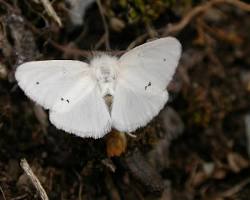
The Brown Tail Moth (Euproctis chrysorrhoea) is an invasive moth species known for its destructive caterpillars and medically important toxic hairs. Originally native to Europe and parts of Asia, this insect was accidentally introduced into North America during the late 1800s and has since become established in portions of the northeastern United States. The species is especially problematic in coastal regions where caterpillar populations can become extremely dense.
Unlike many other moths, the brown tail moth is considered both an agricultural and public health pest. The caterpillars feed aggressively on trees and shrubs, causing defoliation, while their microscopic toxic hairs can trigger severe skin irritation and respiratory discomfort in humans.
Quick Facts
- Family: Erebidae
- Scientific Name: Euproctis chrysorrhoea
- Common Habitat: Coastal forests, residential landscapes, orchards
- Diet: Leaves of hardwood trees and shrubs
- Status: Invasive pest species
- Main Concern: Toxic caterpillar hairs and tree defoliation
Identification
Adult brown tail moths are relatively small white moths with wingspans ranging from 1 to 1.5 inches. Their bodies are bright white, but the most recognizable feature is the tuft of brown hairs located at the tip of the abdomen.
Females are often slightly larger than males and possess more prominent abdominal tufts.
The caterpillars are much easier to recognize and are responsible for most problems associated with the species.
Brown tail moth caterpillars:
- Have dark brown to black bodies
- Display broken white stripes along the sides
- Possess two reddish-orange spots near the rear
- Are covered with tiny toxic hairs
- Grow up to 1.5 inches long
These hairs can easily become airborne and remain toxic long after the caterpillars are gone.
Distribution and Habitat
The brown tail moth is primarily established in the northeastern United States, especially in:
- Maine
- Massachusetts
- New Hampshire
- Coastal New England regions
Populations are most severe in coastal climates where conditions favor caterpillar survival.
The species thrives in:
- Oak forests
- Apple orchards
- Residential neighborhoods
- Roadside vegetation
- Parks and recreational areas
Brown tail moth caterpillars feed on a wide variety of hardwood trees and shrubs.
Common host plants include:
- Oak
- Apple
- Birch
- Cherry
- Rose
- Raspberry
- Pear
- Hawthorn
Life Cycle
The brown tail moth undergoes complete metamorphosis consisting of four life stages:
- Egg
- Caterpillar
- Pupa
- Adult moth
Females lay egg masses on the undersides of leaves during summer.
After hatching, young caterpillars feed briefly before constructing overwintering webs at the ends of branches.
These silken winter webs are highly visible during colder months and are one of the easiest ways to detect infestations.
In spring, the caterpillars emerge and begin feeding aggressively on fresh foliage.
During late spring and early summer:
- Caterpillars reach peak feeding size
- Toxic hairs become widespread
- Defoliation damage increases
- Human exposure incidents rise sharply
After feeding is complete, caterpillars pupate in silken cocoons before emerging as adult moths later in summer.
Behavior
Brown tail moth caterpillars are social feeders during early development and often cluster together on foliage.
As populations grow, they may completely strip leaves from trees.
The caterpillars are most active during:
- Spring
- Early summer
- Warm sunny days
The toxic hairs serve as a defense mechanism against predators.
Unfortunately, these hairs also affect humans and animals.
Airborne hairs may settle on:
- Outdoor furniture
- Clothing
- Vehicles
- Decks
- Swimming pools
- Garden equipment
Pest Status
The brown tail moth is considered both an environmental and public health pest.
Tree damage may include:
- Defoliation
- Reduced tree vigor
- Stress-related decline
- Increased vulnerability to disease
- Repeated seasonal damage
Human exposure to the hairs may cause:
- Severe itchy rashes
- Skin irritation
- Eye irritation
- Respiratory discomfort
- Asthma-like symptoms
Symptoms can last for days or even weeks depending on exposure levels and individual sensitivity.
Signs of Infestation
Common indicators of brown tail moth activity include:
- Silken overwintering webs in trees
- Defoliated branches
- Visible caterpillar clusters
- Rashes after outdoor activity
- White moths near lights in summer
- Cocoons attached to vegetation
Winter webs are especially noticeable after leaves have fallen from deciduous trees.
Prevention
Prevention focuses on reducing exposure and limiting caterpillar populations.
Recommended prevention measures include:
- Remove winter webs before spring emergence
- Wear protective clothing outdoors
- Avoid heavily infested areas
- Wash exposed skin after outdoor work
- Keep windows closed during outbreaks
- Use caution when mowing near infested vegetation
Web removal is most effective during winter and early spring before caterpillars become active.
Control
Management methods depend on infestation severity and tree size.
Common control strategies include:
- Pruning overwintering webs
- Biological insecticides
- Targeted professional treatments
- Monitoring caterpillar populations
- Reducing exposure to toxic hairs
Biological insecticides containing Bacillus thuringiensis (Bt) are commonly used when caterpillars are young.
Large infestations often require professional arborist or pest management services.
Interesting Facts
- Brown tail moth hairs remain toxic for long periods even after caterpillars die.
- The species was accidentally introduced into North America from Europe.
- Caterpillars overwinter communally inside silken webs.
- Heavy infestations may completely defoliate trees.
- The moth is most problematic in coastal climates.
- Adult moths themselves are harmless compared to the larvae.