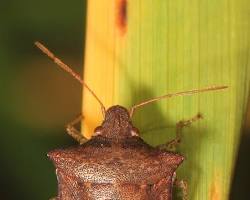
The Brown Stink Bug is a shield-shaped insect belonging to the family Pentatomidae. Several species of brown stink bugs occur throughout North America, where they feed on plants and occasionally invade homes during cooler months. These insects are closely related to the invasive Brown Marmorated Stink Bug, which has become a serious agricultural pest in many regions.
Brown stink bugs are best known for the unpleasant odor they release when disturbed or crushed. Although most species are harmless to humans, they can become nuisance pests in homes and may damage fruits, vegetables, ornamental plants, and agricultural crops through their feeding activity.
Quick Facts
- Family: Pentatomidae
- Common Habitat: Gardens, farms, forests, orchards, residential landscapes
- Diet: Plant juices from leaves, fruits, stems, and seeds
- Status: Agricultural and household nuisance pest
- Defense Mechanism: Odor-producing scent glands
- Activity Peak: Spring through fall
Identification
Brown stink bugs have the classic shield-shaped body associated with stink bugs. Adults are usually brown, gray-brown, or mottled with subtle markings that provide camouflage against bark and vegetation.
Most adults measure between 1/2 and 3/4 inch long.
Key identifying features include:
- Broad shield-shaped body
- Flattened appearance
- Brown or mottled coloration
- Piercing-sucking mouthparts
- Five-segmented antennae
- Strong defensive odor
The underside of the body is often lighter in color than the upper surface.
Nymphs resemble smaller wingless adults and may display brighter markings during early developmental stages.
Distribution and Habitat
Various species of brown stink bugs occur widely across North America.
They thrive in areas where food plants are abundant, including:
- Gardens
- Crop fields
- Fruit orchards
- Forested areas
- Residential landscapes
- Weedy vegetation
Many species become especially noticeable during late summer and fall when adults search for sheltered overwintering sites.
Common hiding places include:
- Wall voids
- Attics
- Garages
- Sheds
- Under bark
- Rock crevices
Life Cycle
Brown stink bugs undergo incomplete metamorphosis consisting of three primary stages:
- Egg
- Nymph
- Adult
Females lay clusters of small barrel-shaped eggs on the undersides of leaves.
After hatching, the nymphs remain grouped together for a short period before dispersing to feed.
Nymphs molt several times as they grow larger and gradually develop wings.
Depending on climate conditions, some species may produce multiple generations per year.
Behavior
Brown stink bugs feed by inserting their piercing mouthparts into plant tissues and extracting fluids.
They commonly feed on:
- Fruits
- Seeds
- Leaves
- Vegetables
- Crop plants
- Ornamental shrubs
When threatened, stink bugs release a foul-smelling chemical from specialized glands located on the thorax.
This odor serves as a defense mechanism against predators.
Adults are relatively slow-moving but capable of strong flight.
During cooler weather, they often gather on sunny walls and windows while searching for overwintering shelter.
Pest Status
Brown stink bugs are considered occasional agricultural and garden pests.
Feeding damage may result in:
- Discolored fruit
- Deformed vegetables
- Sunken feeding spots
- Reduced crop quality
- Premature fruit drop
- Seed damage
In homes, they are nuisance pests because they:
- Enter buildings during fall
- Release unpleasant odors
- Gather around windows
- Appear indoors during winter
However, they do not:
- Bite humans
- Damage structures
- Reproduce indoors
- Transmit diseases
Signs of Infestation
Common signs of brown stink bug activity include:
- Shield-shaped insects on plants
- Feeding scars on fruits
- Clusters of insects near windows
- Strong odor when insects are disturbed
- Indoor sightings during cooler weather
- Egg clusters on leaf undersides
Heavy garden infestations may become noticeable during late summer when crops begin ripening.
Prevention
Preventative measures can help reduce both plant damage and indoor invasions.
Recommended prevention methods include:
- Seal cracks around doors and windows
- Repair damaged screens
- Reduce outdoor lighting near entrances
- Remove weeds near structures
- Inspect plants regularly
- Use row covers in gardens
Maintaining healthy plants may also reduce vulnerability to feeding damage.
Control
Management methods depend on whether the insects are causing garden damage or entering structures.
Common control methods include:
- Hand removal
- Vacuuming indoor insects
- Garden row covers
- Targeted insecticide treatments
- Removing overwintering sites
- Integrated pest management practices
Indoors, vacuuming is usually preferred because crushing the insects releases their strong odor.
Interesting Facts
- Stink bugs release defensive chemicals from scent glands on the thorax.
- Their shield shape helps protect them from predators.
- Some species are beneficial predators of other insects.
- Brown stink bugs often overwinter inside buildings.
- Nymphs resemble miniature adults without fully developed wings.
- Their feeding damage can make fruit vulnerable to rot organisms.