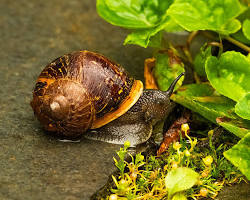
The Brown Garden Snail (Cornu aspersum), also known as the common garden snail, is one of the most widespread snail species found in gardens, orchards, vineyards, and landscaped areas. Native to the Mediterranean region, this species has spread throughout North America and many other parts of the world through agriculture and human transportation. Brown garden snails are well known for feeding on vegetables, ornamental plants, flowers, and ripening fruit, making them important garden pests in moist environments.
Although slow-moving, these snails can become highly destructive when populations are large. Their feeding damage and slime trails are common problems in home gardens and commercial crop production.
Quick Facts
- Group: Gastropod Mollusk
- Scientific Name: Cornu aspersum
- Common Habitat: Gardens, vineyards, orchards, nurseries
- Diet: Leaves, vegetables, fruit, flowers, seedlings
- Status: Common garden and agricultural pest
- Activity Period: Most active during cool, moist conditions
Identification
The brown garden snail has a rounded spiral shell that ranges from tan to brown with darker bands or mottled markings.
Adult shells typically measure about 1 to 1.5 inches across.
Key identifying features include:
- Rounded coiled shell
- Brown or tan shell coloration
- Dark spiral banding
- Soft gray or brown body
- Two pairs of tentacles
- Visible slime production
The upper tentacles contain simple eyes used for detecting light and movement, while the lower pair helps sense touch and smell.
Like other snails and slugs, the brown garden snail leaves behind a shiny slime trail that helps reduce friction and prevent dehydration.
Distribution and Habitat
Brown garden snails are now widely distributed throughout temperate regions worldwide.
They thrive in areas with:
- High humidity
- Frequent irrigation
- Dense vegetation
- Mild temperatures
- Sheltered hiding places
Common habitats include:
- Vegetable gardens
- Flower beds
- Greenhouses
- Vineyards
- Orchards
- Landscaped yards
- Mulched planting areas
During hot or dry weather, snails hide beneath rocks, boards, dense foliage, pots, and garden debris to conserve moisture.
Life Cycle
Brown garden snails undergo a relatively simple life cycle consisting of:
- Egg
- Juvenile snail
- Adult snail
These snails are hermaphrodites, meaning each individual possesses both male and female reproductive organs.
After mating, both snails may lay eggs in moist soil or protected locations.
Egg masses typically contain dozens of small white eggs.
Young snails hatch with tiny translucent shells and gradually grow larger through continuous shell development.
Under favorable conditions, populations may increase rapidly.
Behavior
Brown garden snails are primarily nocturnal and become most active during:
- Nighttime
- Rainy weather
- Foggy mornings
- Cool humid conditions
They feed using a specialized rasping mouthpart called a radula, which scrapes plant tissue from surfaces.
Snails commonly feed on:
- Leafy vegetables
- Seedlings
- Flower petals
- Ripening fruit
- Tender stems
- Ground-level foliage
During dry periods they may seal themselves inside their shells to conserve moisture until conditions improve.
Pest Status
The brown garden snail is considered a serious garden and agricultural pest in many regions.
Feeding damage may include:
- Irregular holes in leaves
- Damaged seedlings
- Scarring on fruit
- Destroyed ornamental flowers
- Contaminated produce
- Visible slime trails
Heavy infestations can significantly reduce crop quality and aesthetic appearance in ornamental landscapes.
Signs of Infestation
Common signs of brown garden snail activity include:
- Slime trails on plants and surfaces
- Irregular chewing damage
- Snails hiding under debris
- Damaged seedlings
- Feeding scars on fruit
- Shells around garden beds
Damage is often most noticeable in the morning after nighttime feeding activity.
Prevention
Reducing moisture and hiding places is one of the best ways to prevent snail problems.
Recommended prevention methods include:
- Remove boards, rocks, and debris
- Water plants early in the day
- Improve garden drainage
- Reduce excessive mulch buildup
- Use copper barriers around beds
- Inspect plants regularly
Encouraging natural predators may also help reduce populations.
Control
Several control methods may help manage brown garden snail infestations.
Common management options include:
- Hand removal at night
- Beer or bait traps
- Copper barriers
- Iron phosphate snail baits
- Habitat modification
- Professional pest management for severe infestations
Integrated pest management approaches are usually more effective than relying on a single treatment method.
Interesting Facts
- Brown garden snails can seal themselves inside their shells during drought.
- The species was originally native to the Mediterranean region.
- Snails move using muscular waves along their foot.
- The slime they produce helps prevent dehydration and injury.
- Some brown garden snails may live several years under favorable conditions.
- The species is edible and used as escargot in some cuisines.