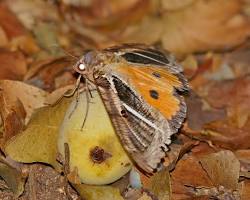
The Brown Fruit-piercing Moth is a nocturnal moth known for its unusual feeding behavior and ability to puncture ripening fruit. Unlike many adult moths that feed harmlessly on nectar, fruit-piercing moths possess strong mouthparts capable of penetrating soft fruit skins to consume juices. This feeding habit can make them important pests in orchards, vineyards, and tropical fruit-growing regions.
Several species of fruit-piercing moths occur worldwide, particularly in tropical and subtropical climates. Their nighttime activity and camouflage make them difficult to detect until damaged fruit begins to spoil.
Quick Facts
- Group: Nocturnal fruit-feeding moth
- Order: Lepidoptera
- Common Habitat: Orchards, vineyards, gardens, tropical landscapes
- Adult Diet: Fruit juices and plant fluids
- Larval Diet: Leaves and foliage of host plants
- Status: Potential orchard and fruit crop pest
Identification
Brown fruit-piercing moths are typically medium to large moths with mottled brown, gray, or dark-colored wings that provide excellent camouflage against bark and tree trunks.
Key identifying characteristics include:
- Broad triangular wings
- Brown or gray camouflage coloration
- Strong coiled proboscis adapted for piercing fruit
- Nocturnal activity
- Large robust body
- Occasional eye-like wing markings
Some species display brightly colored hindwings hidden beneath the forewings, which may flash when the moth is disturbed.
Their specialized mouthparts are much stronger than those of nectar-feeding moths and allow them to penetrate the skins of:
- Peaches
- Citrus fruits
- Grapes
- Mangoes
- Bananas
- Figs
- Apples
Distribution and Habitat
Fruit-piercing moths are most common in tropical and subtropical regions, although related species occur in warmer parts of North America and other temperate areas.
They are frequently associated with:
- Commercial orchards
- Backyard fruit gardens
- Vineyards
- Forest edges
- Tropical landscapes
- Areas with abundant fruiting plants
Adults are highly attracted to ripening fruit and are most active during warm nighttime conditions.
Life Cycle
Like other moths, brown fruit-piercing moths undergo complete metamorphosis consisting of four stages:
- Egg
- Caterpillar (larva)
- Pupa
- Adult moth
Females lay eggs on suitable host plants where caterpillars can feed after hatching.
The larval stage feeds primarily on foliage rather than fruit. Caterpillars consume leaves from specific host plants before pupating in protected locations such as:
- Leaf litter
- Loose bark
- Soil debris
- Vegetation near host plants
Adults emerge as strong nocturnal fliers capable of traveling significant distances in search of fruit.
Behavior
Brown fruit-piercing moths are primarily nocturnal and spend daylight hours resting in concealed locations.
At night, adults actively search for:
- Ripening fruit
- Damaged fruit
- Fermenting plant material
- Tree sap
- Sweet plant fluids
After piercing fruit skins, the moths feed on juices using their specialized proboscis.
Damaged fruit often becomes vulnerable to:
- Rot organisms
- Secondary insect pests
- Fungal infections
- Bacterial contamination
- Premature spoilage
Pest Status
Brown fruit-piercing moths are considered agricultural pests in many fruit-growing regions.
Problems associated with infestations include:
- Fruit spoilage
- Reduced crop quality
- Entry points for disease organisms
- Premature fruit drop
- Economic losses in orchards
Even small feeding punctures can significantly reduce the marketability of fresh fruit crops.
Signs of Infestation
Common signs of fruit-piercing moth activity include:
- Small puncture holes in fruit
- Leaking fruit juices
- Soft or collapsing fruit tissue
- Rot developing around feeding wounds
- Nighttime moth activity around orchards
- Fermenting odors from damaged fruit
Because adults feed primarily at night, infestations are often discovered only after fruit damage becomes noticeable.
Prevention
Preventative orchard management is one of the most effective ways to reduce fruit-piercing moth problems.
Recommended prevention methods include:
- Harvest ripe fruit promptly
- Remove fallen fruit from the ground
- Dispose of damaged fruit quickly
- Use orchard netting where practical
- Reduce fermenting fruit odors
- Monitor orchards during peak fruiting seasons
Good sanitation practices are especially important because damaged or fermenting fruit strongly attracts adult moths.
Control
Control strategies vary depending on infestation levels and crop value.
Common management methods include:
- Physical exclusion netting
- Orchard sanitation
- Light trapping
- Timely fruit harvesting
- Monitoring adult populations
- Targeted integrated pest management programs
In home fruit gardens, sanitation and exclusion are often more practical and environmentally friendly than widespread insecticide use.
Interesting Facts
- Fruit-piercing moths possess unusually strong feeding structures compared to most moth species.
- Many species are active only at night.
- Their camouflage helps them avoid predators during daylight hours.
- Some species migrate seasonally in search of food sources.
- Damaged fruit often attracts additional pests after feeding occurs.
- Not all adult moths feed on nectar — some specialize in fruit juices instead.