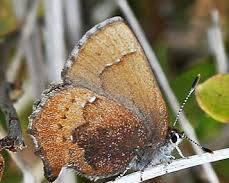
The Brown Elfin Butterfly is a small woodland butterfly admired for its subtle beauty and early spring appearance. Unlike brightly colored garden butterflies, this species relies on earthy brown coloration and natural camouflage to blend into bark, dead leaves, and forest vegetation. Brown elfins belong to the family Lycaenidae, a diverse group of small butterflies that includes hairstreaks and coppers. These native insects play important ecological roles as pollinators and indicators of healthy woodland habitats.
Because of their small size and cryptic coloration, brown elfins are often overlooked by casual observers. However, they are highly valued by butterfly enthusiasts and conservationists because they are closely tied to native plant communities and undisturbed natural habitats.
Quick Facts
- Family: Lycaenidae
- Common Habitat: Woodlands, pine barrens, scrublands, and forest edges
- Diet: Flower nectar as adults; host plant foliage as larvae
- Active Season: Early spring
- Status: Beneficial native pollinator
- Conservation Importance: Native woodland butterfly species
Identification
Brown elfin butterflies are very small butterflies with wingspans usually measuring less than 1 inch across. Their wings are primarily shades of brown, tan, or gray-brown, helping them blend seamlessly into woodland environments.
Key identifying characteristics include:
- Small compact body
- Earth-toned wing coloration
- Rounded wing shape
- Subtle wing patterning
- Rapid fluttering flight
- Excellent camouflage when resting
The underside of the wings may display faint bands, spots, or slight color variations depending on the species and geographic region.
Unlike some other butterflies, brown elfins lack bright warning colors or large eye spots. Their defense strategy relies almost entirely on concealment.
Distribution and Habitat
Brown elfin butterflies occur across portions of North America, particularly in areas with healthy woodland ecosystems and native host plants.
They are commonly associated with:
- Pine barrens
- Dry woodlands
- Forest edges
- Scrub habitats
- Heathlands
- Open conifer forests
These butterflies are especially common in habitats containing low-growing shrubs and native understory vegetation.
Because adults emerge early in the season, they are often among the first butterflies observed in spring.
Life Cycle
Like all butterflies, brown elfins undergo complete metamorphosis consisting of four stages:
- Egg
- Caterpillar (larva)
- Chrysalis (pupa)
- Adult butterfly
Females lay eggs on or near specific host plants suitable for developing caterpillars.
After hatching, the larvae feed on plant tissues before pupating in sheltered areas such as leaf litter or beneath vegetation.
Adults emerge in spring and spend much of their time:
- Visiting flowers for nectar
- Basking in sunlight
- Resting on vegetation
- Searching for mates
- Exploring woodland clearings
Their short adult lifespan is focused primarily on feeding and reproduction.
Behavior
Brown elfins are generally quiet, inconspicuous butterflies.
Unlike larger butterfly species that remain highly visible in open gardens, brown elfins tend to stay close to:
- Leaf litter
- Shrubs
- Low branches
- Forest edges
- Native flowering plants
Their coloration allows them to disappear almost completely against tree bark and dried leaves.
Adults are most active during sunny spring days when temperatures are warm enough for flight activity.
Ecological Importance
Brown elfins are considered beneficial native insects and important contributors to biodiversity.
Ecological benefits include:
- Pollination of native flowers
- Support of woodland ecosystems
- Food source for birds and predators
- Indicators of habitat quality
- Contribution to native insect diversity
Because they are sensitive to habitat disturbance, healthy brown elfin populations often indicate well-preserved natural environments.
Pest Status
The brown elfin butterfly is not considered a pest.
Larval feeding typically causes little or no noticeable damage to host plants.
Instead, these butterflies are valued for their ecological importance and role as native pollinators.
Prevention
No prevention measures are necessary because brown elfins are harmless and beneficial insects.
In fact, conservation efforts often focus on protecting suitable habitat for these butterflies.
Helpful conservation practices include:
- Preserving native woodland habitats
- Protecting host plants
- Reducing unnecessary pesticide use
- Maintaining native wildflower populations
- Supporting pollinator-friendly landscapes
Control
Control is not recommended.
Brown elfins should be viewed as valuable native insects that contribute positively to natural ecosystems.
Gardeners and conservationists often encourage butterfly-friendly environments that support these and other pollinator species.
Interesting Facts
- Brown elfins are among the earliest butterflies to appear in spring.
- Their camouflage helps protect them from predators.
- Many species rely on highly specific host plants.
- Adults often rest with closed wings to remain concealed.
- Brown elfins are part of the same family as hairstreak butterflies.
- Healthy populations are often linked to intact native habitats.