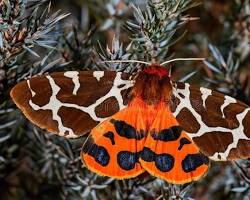
The Brown Bear Moth, often associated with the Garden Tiger Moth (Arctia caja), is a striking moth known for its hairy caterpillars and colorful adult wings. While the caterpillar stage is often called a “woolly bear,” the adult moth is best known for its dramatic hindwings and bold warning colors. These moths are part of a larger group of fuzzy-bodied moths that attract attention in gardens, meadows, and wild landscapes.
Quick Facts
- Family: Erebidae
- Common Habitat: Gardens, meadows, woodland edges
- Diet: Herbaceous plants in larval stage
- Status: Usually harmless, occasionally minor plant feeder
Identification
Adult garden tiger moths have brown and white patterned forewings that help them blend into bark and leaf litter. When disturbed, they may reveal bright orange hindwings with dark blue or black spots. Caterpillars are hairy and dark brown to black, often with rusty or reddish hairs along the body.
Like many fuzzy caterpillars, the larval stage can appear intimidating, but these insects are generally more interesting than harmful.
Distribution
Brown bear moths and related tiger moths are found in gardens, grasslands, and forest margins across cooler regions of North America and Europe, depending on the species being referenced locally.
Life Cycle
The life cycle includes egg, caterpillar, pupa, and adult stages. Caterpillars feed on a wide variety of low-growing plants before pupating in sheltered debris or soil. Adults emerge during warmer months and may be attracted to porch lights at night.
Pest Status
These moths are rarely serious pests. Caterpillars may nibble on garden plants, but damage is typically light and scattered. In most home landscapes, they are better viewed as part of local biodiversity than as a true control problem.
Prevention
- Monitor young plants for caterpillar feeding
- Hand-pick caterpillars if damage becomes noticeable
- Encourage birds and beneficial predators
Control
Control is rarely necessary. If caterpillars are feeding heavily on ornamentals, manual removal is usually enough. Broad insecticide use is not recommended in pollinator-friendly landscapes.