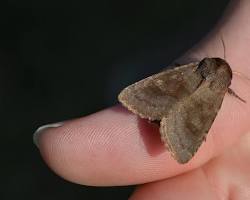
The Bronzed Cutworm Moth is a species of noctuid moth whose larvae are commonly known as cutworms. These caterpillars are important agricultural pests capable of damaging a wide range of crops, vegetables, turfgrass, and ornamental plants. Like many members of the family Noctuidae, the adult moth is primarily nocturnal, while the larval stage is responsible for most plant injury.
Cutworms are especially problematic in gardens and agricultural fields because they feed on young seedlings and stems at ground level. Their feeding habits can destroy newly planted crops overnight, making them a major concern for growers throughout North America.
Quick Facts
- Family: Noctuidae
- Habitat: Agricultural fields, gardens, lawns, and grassy habitats
- Diet: Leaves, stems, seedlings, and low-growing vegetation
- Active Stage: Caterpillar larvae
- Status: Agricultural and garden pest
- Feeding Time: Primarily nocturnal
Identification
Adult bronzed cutworm moths are medium-sized moths with brownish-gray coloration and subtle bronze or metallic-toned markings across the forewings.
Adults generally have wingspans between 1 and 1.5 inches.
Key adult features include:
- Brown or gray forewings
- Bronze-toned wing markings
- Camouflaged wing patterns
- Stout body structure
- Nocturnal activity
The larvae are thick-bodied caterpillars that are usually gray, brown, or dark green in color.
Like many cutworms, the caterpillars curl into a tight C-shape when disturbed.
Larvae are often smooth-skinned and may reach lengths of approximately 1.5 inches when fully grown.
Distribution and Habitat
Bronzed cutworm moths occur throughout much of North America.
They are especially common in:
- Agricultural fields
- Vegetable gardens
- Row crop systems
- Lawns and turfgrass
- Greenhouses
- Grasslands
Areas with loose soil and abundant vegetation provide ideal conditions for egg laying and larval development.
Larvae spend much of their time hidden in soil, beneath debris, or near the bases of plants.
Life Cycle
The bronzed cutworm moth undergoes complete metamorphosis consisting of four life stages:
- Egg
- Caterpillar
- Pupa
- Adult moth
Females lay eggs on plant stems, weeds, or soil surfaces.
After hatching, caterpillars begin feeding on nearby vegetation.
Young larvae feed on leaves, while older larvae often attack plant stems near the soil line.
During daylight hours, caterpillars usually hide in:
- Loose soil
- Plant debris
- Mulch
- Under stones
Larvae eventually pupate in the soil before emerging as adult moths.
Several generations may occur annually depending on climate conditions.
Behavior
Bronzed cutworm caterpillars are primarily nocturnal feeders.
They emerge at night to attack:
- Seedlings
- Young stems
- Leaves
- Tender shoots
- Low-growing crops
One of their most destructive behaviors is cutting young plants at ground level.
This feeding behavior can quickly devastate newly planted gardens or crop rows.
Adult moths are attracted to lights and become active during warm nighttime conditions.
Pest Status
Bronzed cutworms are considered significant agricultural pests.
The larvae damage crops by:
- Severing seedlings
- Feeding on leaves
- Reducing plant vigor
- Destroying young garden plants
- Damaging turfgrass
Commonly affected plants include:
- Corn
- Lettuce
- Tomatoes
- Beans
- Peppers
- Turfgrass
- Ornamental flowers
Heavy infestations can lead to major crop losses if left unmanaged.
Signs of Infestation
Typical symptoms of cutworm activity include:
- Seedlings cut at ground level
- Wilted young plants
- Irregular feeding holes
- Caterpillars hidden in nearby soil
- Thinning rows of crops
- Brown patches in turfgrass
Damage often appears suddenly because larvae feed mostly at night.
Prevention
Preventive garden and field management greatly reduces cutworm problems.
Helpful prevention methods include:
- Remove weeds and plant debris
- Till soil before planting
- Use collars around seedlings
- Maintain healthy soil conditions
- Encourage birds and beneficial predators
- Inspect gardens regularly at night
Reducing hiding places around crops can lower larval survival rates.
Control
Integrated pest management is commonly used to manage bronzed cutworm populations.
Control methods may include:
- Hand removal of caterpillars
- Biological insecticides such as Bacillus thuringiensis (Bt)
- Beneficial nematodes
- Protective seedling collars
- Targeted insecticide applications
Nighttime monitoring is often necessary because caterpillars hide during the day.
Ecological Importance
Although destructive in agriculture, cutworms are also important components of food webs.
They serve as prey for:
- Birds
- Ground beetles
- Parasitic wasps
- Spiders
- Small mammals
Natural predators help regulate populations in healthy ecosystems.
Interesting Facts
- Cutworms are named for their habit of cutting plants near the soil line.
- Most feeding occurs at night.
- Caterpillars curl into a C-shape when disturbed.
- Adult moths are strong nocturnal fliers.
- Larvae often hide underground during the daytime.
- Some species can damage turfgrass as well as crops.