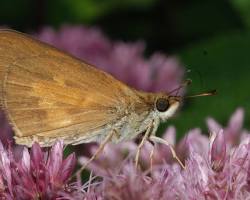
The Broad-winged Skipper Butterfly is a small, fast-flying butterfly belonging to the family Hesperiidae. Skipper butterflies are known for their quick darting flight patterns, compact bodies, and distinctive resting posture. These butterflies are commonly found visiting flowers in meadows, gardens, prairies, and grassy habitats throughout North America.
Although small in size, broad-winged skipper butterflies play an important ecological role as pollinators. Their feeding activity helps support wildflowers and native plant populations while also contributing to healthy garden ecosystems.
Quick Facts
- Family: Hesperiidae
- Order: Lepidoptera
- Habitat: Meadows, grasslands, gardens, and prairies
- Diet: Nectar from flowers
- Larval Food Source: Grasses and small plants
- Status: Beneficial pollinator
Identification
Broad-winged skipper butterflies are small, stout-bodied butterflies with broad wings and rapid flight behavior.
Adults typically measure between 1 and 1.5 inches in wingspan.
Key identifying characteristics include:
- Wide triangular wings
- Brown or orange wing coloration
- Hooked antennae tips
- Compact fuzzy body
- Rapid darting flight
- Short resting posture with partially folded wings
Unlike many larger butterflies, skippers often appear moth-like because of their thick bodies and fast movement.
Their hooked antennae are one of the easiest features used to distinguish skipper butterflies from other butterfly groups.
Distribution and Habitat
Broad-winged skippers occur throughout much of North America.
They are especially common in:
- Native grasslands
- Prairies
- Roadside vegetation
- Open woodlands
- Gardens
- Wildflower meadows
- Parks
These butterflies prefer sunny habitats with abundant flowering plants and grasses.
Because their caterpillars often feed on grasses, habitats with dense vegetation provide ideal breeding conditions.
Life Cycle
Like other butterflies, broad-winged skippers undergo complete metamorphosis consisting of four stages:
- Egg
- Caterpillar
- Chrysalis
- Adult
Females lay eggs on host plants, usually grasses or low-growing vegetation.
After hatching, caterpillars feed on leaves and create small silk shelters for protection.
The caterpillar eventually forms a chrysalis where transformation into the adult butterfly occurs.
Adult butterflies emerge during warm seasons and actively search for nectar-rich flowers.
Behavior
Broad-winged skippers are highly active during daylight hours.
Their flight pattern is characterized by:
- Rapid darting movements
- Short bursts of flight
- Frequent resting on flowers
- Quick directional changes
Adults feed primarily on nectar from flowering plants.
Common nectar sources include:
- Goldenrod
- Clover
- Milkweed
- Coneflowers
- Asters
- Wild prairie flowers
Because they move quickly between flowers, they contribute significantly to pollination.
Pest Status
Broad-winged skipper butterflies are considered beneficial insects.
They do not damage structures or significantly harm plants.
While caterpillars feed on grasses and leaves, their feeding rarely causes noticeable damage.
In gardens and natural ecosystems, they are valued as pollinators and indicators of biodiversity.
Ecological Importance
Broad-winged skippers contribute to healthy ecosystems in several important ways.
Benefits include:
- Pollination of wildflowers
- Support for native plant reproduction
- Food source for birds and predators
- Contribution to biodiversity
- Indicator of healthy grassland ecosystems
Like many native pollinators, skipper butterflies are sensitive to habitat destruction and pesticide exposure.
Protecting flowering habitats helps maintain healthy skipper populations.
Prevention
No prevention measures are necessary because broad-winged skippers are beneficial insects.
Instead, many gardeners encourage them by:
- Planting native flowers
- Reducing pesticide use
- Maintaining pollinator gardens
- Providing natural grassy habitats
- Supporting native wildflower growth
Control
Control is not recommended.
These butterflies are harmless and beneficial to gardens and natural environments.
Protecting skipper butterfly populations helps support pollination and overall ecosystem health.
Interesting Facts
- Skipper butterflies are named for their rapid skipping flight pattern.
- They are among the fastest-flying small butterflies.
- The hooked antennae tips are unique among butterflies.
- Many species rest with wings partially open.
- Their caterpillars often hide in folded leaves or silk shelters.
- Skippers are important native pollinators.