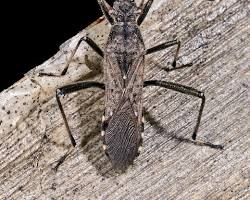
The Broad-headed Bug is a predatory insect belonging to the family Alydidae and related groups of true bugs. Known for its distinctive wide head and elongated body, this insect plays an important ecological role by feeding on smaller insects and plant pests. Although some species occasionally feed on plants, most broad-headed bugs are considered beneficial insects in gardens and agricultural ecosystems.
Broad-headed bugs are commonly observed in grassy habitats, crop fields, woodland edges, and gardens where prey insects are abundant. Their long legs and slender bodies allow them to move quickly across vegetation while searching for food.
Quick Facts
- Scientific Family: Alydidae
- Common Habitat: Fields, gardens, forests, grassy areas
- Diet: Small insects, larvae, seeds, plant juices
- Status: Mostly beneficial predator
- Activity: Active during warm seasons
Identification
Broad-headed bugs are medium-sized insects typically measuring between 1/2 and 3/4 inch long. Their most recognizable feature is the unusually broad head, which appears wider than that of many other true bugs.
Key identification features include:
- Elongated body shape
- Wide head
- Long antennae
- Brown, reddish-brown, or gray coloration
- Long slender legs
- Piercing-sucking mouthparts
Many species resemble stink bugs or leaf-footed bugs, although they are usually more slender in appearance.
Nymphs resemble smaller wingless adults and gradually develop through several molts before reaching maturity.
Distribution and Habitat
Broad-headed bugs occur throughout much of North America and can also be found in parts of Central America and other regions worldwide.
They are commonly associated with:
- Gardens
- Agricultural fields
- Prairies
- Grasslands
- Forest edges
- Roadside vegetation
- Weedy habitats
These insects prefer warm environments with abundant vegetation and suitable prey populations.
During summer months they are often observed resting on stems, leaves, or flowers while searching for food.
Life Cycle
Broad-headed bugs undergo incomplete metamorphosis consisting of three primary stages:
- Egg
- Nymph
- Adult
Females lay eggs on vegetation or plant stems during warm seasons.
After hatching, the nymphs begin feeding immediately and pass through multiple growth stages called instars.
Unlike butterflies or moths, true bugs do not develop through a pupal stage.
Adults are active during spring, summer, and early fall depending on climate conditions.
Behavior
Broad-headed bugs are active hunters and scavengers that move through vegetation searching for prey.
They commonly feed on:
- Small caterpillars
- Soft-bodied insects
- Larvae
- Aphids
- Plant juices
- Seeds
Their piercing mouthparts allow them to puncture prey and extract fluids.
Some species are partially predatory while others consume both plant and animal material.
When disturbed, these insects may quickly fly away or drop from vegetation to avoid predators.
Pest Status
Most broad-headed bugs are considered beneficial insects because they help control populations of smaller pests.
In agricultural systems they may contribute to natural biological control by feeding on:
- Caterpillars
- Aphids
- Small larvae
- Other plant-feeding insects
However, some species occasionally feed on seeds, fruits, or plant sap. In large numbers, minor plant damage may occur, though significant crop injury is uncommon.
Because of their mostly beneficial behavior, broad-headed bugs are generally not considered serious pests.
Prevention
Prevention measures are rarely necessary.
To maintain healthy ecological balance:
- Encourage beneficial insects
- Avoid excessive pesticide use
- Maintain plant diversity
- Support natural predator populations
- Monitor gardens regularly
Balanced garden ecosystems usually keep insect populations stable without chemical intervention.
Control
Control is rarely required since broad-headed bugs are generally beneficial.
If populations become problematic in sensitive crops, management options may include:
- Manual removal
- Targeted pruning
- Integrated pest management practices
- Encouraging natural predators
Broad-spectrum insecticides are usually discouraged because they may harm other beneficial insects.
Ecological Importance
Broad-headed bugs are important members of natural ecosystems.
They help:
- Reduce pest insect populations
- Support natural biological control
- Maintain ecological balance
- Provide food for birds and reptiles
Their role as opportunistic predators makes them valuable components of sustainable gardens and agricultural systems.
Interesting Facts
- Broad-headed bugs are closely related to stink bugs and leaf-footed bugs.
- Many species mimic ants or wasps during immature stages.
- Their wide heads help distinguish them from similar true bugs.
- Some species emit odors when disturbed.
- They are fast runners and capable fliers.
- Most species are more beneficial than harmful.