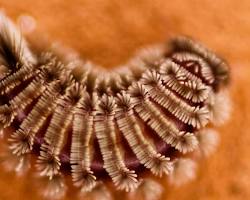
The Bristly Millipede is a small soil-dwelling arthropod belonging to the class Diplopoda. Although often mistaken for insects, millipedes are actually distant relatives of insects and crustaceans. Bristly millipedes are especially distinctive because of the tiny hair-like bristles covering their segmented bodies. These creatures play an important ecological role by breaking down decaying plant material and recycling nutrients back into the soil.
Unlike centipedes, which are active predators, millipedes are generally slow-moving scavengers that feed on decomposing organic matter. They are most commonly found in damp habitats such as forests, gardens, compost piles, and beneath logs or stones. Although harmless to humans, bristly millipedes may occasionally wander indoors during periods of excessive moisture or heavy rainfall.
Quick Facts
- Class: Diplopoda
- Habitat: Moist soil, forests, gardens, leaf litter
- Diet: Decaying plant material and fungi
- Status: Beneficial decomposer
- Activity: Mostly nocturnal
Identification
Bristly millipedes are tiny arthropods that usually measure only a few millimeters in length. Their bodies are elongated and divided into many rounded segments.
Distinctive features include:
- Hair-like bristles covering the body
- Numerous legs
- Dark brown, gray, or black coloration
- Cylindrical or slightly flattened body shape
- Slow crawling movement
Like other millipedes, most body segments contain two pairs of legs. This characteristic helps distinguish millipedes from centipedes, which possess only one pair of legs per segment.
The tiny bristles covering the body provide additional protection and may help the animal sense its surroundings.
Distribution and Habitat
Bristly millipedes occur throughout many regions of North America and are commonly found anywhere moisture and decaying organic material are abundant.
Preferred habitats include:
- Forest floors
- Leaf litter
- Rotting logs
- Mulch beds
- Compost piles
- Gardens
- Moist soil
- Under stones and bark
Because they require humid conditions to survive, bristly millipedes are most active during wet weather and in shaded environments.
Indoors, they may occasionally appear in:
- Basements
- Crawl spaces
- Bathrooms
- Garages
- Moist storage areas
Life Cycle
Bristly millipedes undergo gradual development rather than complete metamorphosis.
The life cycle typically includes:
- Egg
- Juvenile stages
- Adult
Females lay eggs in moist soil or protected organic debris.
Young millipedes hatch with fewer body segments and legs than adults. As they grow, they molt repeatedly and gradually add more segments and legs.
Depending on environmental conditions, development may take several months or longer.
Behavior
Bristly millipedes are slow-moving scavengers that spend much of their time hidden beneath debris or within moist soil.
They feed primarily on:
- Decaying leaves
- Rotting wood
- Fungi
- Organic debris
- Dead plant material
By consuming decomposing matter, they help recycle nutrients and improve soil quality.
When threatened, many millipedes:
- Curl into a spiral shape
- Remain motionless
- Release defensive chemicals
Some species produce mild defensive secretions that discourage predators, although these substances are generally harmless to humans.
Pest Status
Bristly millipedes are generally considered harmless and beneficial arthropods.
They do not:
- Bite humans
- Transmit diseases
- Damage structures
- Infest stored food
Occasionally, large numbers may become nuisance pests when they migrate indoors during rainy periods or when outdoor habitats become overly wet.
Even then, they typically die quickly indoors because dry conditions are unsuitable for survival.
Prevention
Prevention is usually unnecessary because bristly millipedes are beneficial decomposers.
If indoor invasions occur, the following steps may help:
- Reduce indoor moisture
- Use dehumidifiers
- Improve ventilation
- Seal cracks and gaps around foundations
- Remove excess mulch near buildings
- Keep gutters draining properly
- Reduce leaf litter near foundations
Maintaining drier conditions around structures makes environments less attractive to millipedes.
Control
Chemical treatment is rarely necessary.
Most millipedes that enter buildings can simply be:
- Vacuumed
- Swept up
- Removed manually
Long-term management focuses on moisture reduction and habitat modification rather than pesticide use.
Ecological Importance
Bristly millipedes are valuable decomposers within natural ecosystems.
Their feeding activity helps:
- Break down dead plant material
- Recycle nutrients into soil
- Improve soil structure
- Support healthy microbial communities
- Contribute to compost formation
They also serve as food sources for:
- Birds
- Frogs
- Small mammals
- Ground beetles
- Reptiles
Interesting Facts
- Millipedes are among the oldest land-dwelling arthropods.
- Some species possess hundreds of legs.
- Bristly millipedes are highly sensitive to dry conditions.
- They are most active at night or during rainy weather.
- Millipedes help enrich soil through decomposition.
- Despite their many legs, they move relatively slowly.