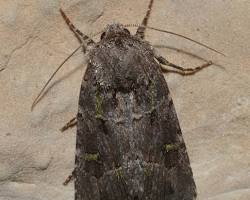
The Bristly Cutworm Moth belongs to a group of nocturnal moths whose larvae are known as cutworms. These caterpillars are common agricultural and garden pests because they feed on young plants, stems, and foliage. The name “cutworm” comes from the larval habit of chewing through seedlings at ground level, often causing plants to collapse. Bristly cutworm caterpillars are especially recognizable because their bodies are covered with fine hairs or bristles.
Although adult moths are relatively harmless, the larval stage can cause serious damage to vegetables, field crops, ornamental plants, and newly sprouted seedlings. These insects are widely distributed throughout North America and are particularly active during warm growing seasons.
Quick Facts
- Family: Noctuidae
- Common Name: Bristly Cutworm Moth
- Habitat: Gardens, crop fields, grassy areas
- Diet: Plant foliage and stems
- Status: Agricultural and garden pest
Identification
Adult bristly cutworm moths typically have wingspans measuring:
- About 1 to 1.5 inches
Adults usually display:
- Gray or brown coloration
- Camouflaged wing patterns
- Scaled wings
- Stout bodies
- Nocturnal behavior
The caterpillars are more distinctive and are characterized by:
- Thick cylindrical bodies
- Brown, gray, or green coloration
- Fine bristles or hairs
- Smooth segmented appearance
- Curling into a C-shape when disturbed
Like many moths, adults are active mainly at night and are often attracted to outdoor lights.
Distribution and Habitat
Bristly cutworm moths occur widely throughout North America and are especially common in:
- Agricultural fields
- Vegetable gardens
- Flower beds
- Grasslands
- Roadside vegetation
- Pastures
The larvae thrive in areas with abundant low-growing vegetation and loose soil where they can hide during the daytime.
Cutworms are particularly common in:
- Corn fields
- Lettuce crops
- Tomato gardens
- Bean plantings
- Young seedlings
Life Cycle
The bristly cutworm moth undergoes complete metamorphosis consisting of:
- Egg
- Larva
- Pupa
- Adult moth
Female moths lay eggs on:
- Plant leaves
- Weeds
- Grass stems
- Crop residue
After hatching, caterpillars begin feeding immediately on nearby vegetation.
Young larvae may feed on leaf surfaces, while older caterpillars become more destructive and attack stems at soil level.
During the day, caterpillars hide beneath:
- Soil
- Plant debris
- Mulch
- Leaf litter
Once fully developed, larvae pupate in the soil before emerging as adult moths.
Several generations may occur annually depending on climate conditions.
Behavior
Bristly cutworm caterpillars are primarily nocturnal feeders.
At night they emerge from hiding places to feed on:
- Seedlings
- Leaves
- Stems
- Roots
- Young shoots
Their feeding behavior often causes seedlings to be:
- Severed at ground level
- Wilted
- Partially eaten
- Destroyed overnight
Adult moths feed mostly on nectar and are not responsible for direct crop damage.
Pest Status
Bristly cutworms are considered important agricultural and garden pests.
Damage is most severe on:
- Young seedlings
- Recently transplanted vegetables
- Field crops
- Ornamental flowers
Common signs of infestation include:
- Seedlings cut at soil level
- Missing young plants
- Chewed leaves
- Wilting stems
- Caterpillars hidden in soil nearby
Large populations can cause serious crop losses in agricultural systems.
Prevention
Preventive management is important for protecting vulnerable young plants.
Recommended prevention methods include:
- Remove weeds and plant debris
- Till soil before planting
- Use collars around seedlings
- Encourage birds and beneficial predators
- Inspect gardens regularly at night
- Reduce excessive mulch near seedlings
Plant collars made from cardboard or plastic can help protect stems from caterpillar feeding.
Control
Integrated pest management strategies are commonly used to control cutworms.
Effective methods include:
- Hand removal of caterpillars
- Biological insecticides such as Bacillus thuringiensis
- Beneficial nematodes
- Soil cultivation
- Targeted insecticide treatments when necessary
Nighttime inspection is often the best way to locate active caterpillars.
Ecological Importance
Although cutworms are crop pests, they are also important food sources for:
- Birds
- Ground beetles
- Parasitic wasps
- Small mammals
- Predatory insects
Natural predators help regulate cutworm populations in healthy ecosystems.
Interesting Facts
- Cutworms hide in soil during daylight hours.
- Many species curl into a C-shape when disturbed.
- Adult moths are mostly harmless nectar feeders.
- Larvae can destroy seedlings overnight.
- Some cutworm species migrate long distances.
- Bristles help distinguish certain species from smooth-bodied cutworms.