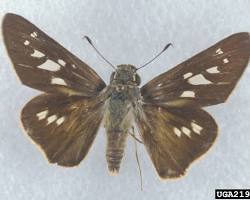
The Brazilian Skipper Butterfly (Calpodes ethlius), commonly known as the Canna Skipper, is a tropical butterfly species recognized for its association with ornamental canna plants. Native to Central and South America, this butterfly has expanded into parts of the southern United States where warm climates allow year-round activity. Although the adult butterfly is harmless and serves as a pollinator, the caterpillars can become ornamental plant pests by feeding heavily on canna foliage.

The species is especially noticeable in gardens where ornamental cannas are planted. Caterpillars roll and fold leaves into protective shelters while feeding, creating one of the most recognizable signs of infestation.
Quick Facts
- Family: Hesperiidae
- Common Names: Brazilian Skipper, Canna Skipper
- Primary Host Plant: Canna lilies
- Habitat: Tropical gardens and ornamental landscapes
- Status: Ornamental plant pest
Identification
Adult Brazilian skipper butterflies typically have wingspans of:
- About 2 inches
Adults possess:
- Dark brown wings
- Subtle lighter markings
- Thick bodies typical of skipper butterflies
- Rapid darting flight patterns
Like other butterflies, they have scaled wings and coiled mouthparts used for feeding on nectar.
Caterpillars are easier to identify than adults because they:
- Are bright green
- Possess large dark heads
- Hide within rolled leaves
- Create silk shelters on canna plants
The rolled leaf shelters are often the first visible sign of infestation.
Distribution and Habitat
The Brazilian skipper butterfly is native to:
- Central America
- South America
- Tropical regions of the Americas
It now occurs throughout warm regions of North America including:
- Florida
- Texas
- Arizona
- Southern California
- Gulf Coast states
This butterfly is strongly associated with landscapes containing:
- Ornamental cannas
- Tropical gardens
- Parks
- Residential flower beds
- Public landscapes
Warm humid climates support multiple generations each year.
Life Cycle
The Brazilian skipper undergoes complete metamorphosis consisting of:
- Egg
- Caterpillar
- Chrysalis
- Adult butterfly
Females lay eggs directly on canna leaves.
After hatching, caterpillars begin feeding on leaf tissue and quickly construct protective rolled shelters by:
- Folding leaves
- Securing foliage with silk
- Feeding from inside the shelter
This behavior protects the larvae from:
- Predators
- Rain
- Sun exposure
- Environmental stress
Once fully developed, caterpillars pupate within the rolled leaf before emerging as adult butterflies.
Several generations may occur annually in warm climates.
Behavior
Adult Brazilian skippers are active during daylight hours and are strong fast fliers.
Adults feed primarily on:
- Flower nectar
- Plant fluids
- Moist organic material
Caterpillars remain hidden inside rolled leaves during most of their development.
Feeding activity produces:
- Large holes in leaves
- Shredded foliage
- Rolled leaf tubes
- Damaged ornamental appearance
Heavy infestations may significantly reduce the visual appeal of ornamental canna plantings.
Pest Status
The Brazilian skipper is considered an ornamental plant pest because larval feeding damages decorative canna plants.
Common symptoms of infestation include:
- Rolled leaves
- Chewed foliage
- Brown leaf edges
- Shredded plant appearance
- Reduced ornamental quality
Although infestations rarely kill healthy plants, repeated heavy feeding may weaken cannas and reduce flowering.
The insect is primarily a concern in:
- Decorative gardens
- Landscape plantings
- Botanical collections
- Commercial ornamental nurseries
Signs of Infestation
Visible signs of Brazilian skipper activity include:
- Rolled or folded canna leaves
- Green caterpillars inside leaf shelters
- Chewed foliage
- Frass inside leaf folds
- Irregular feeding holes
Inspecting rolled leaves often reveals the caterpillar hidden within the shelter.
Prevention
Regular inspection of ornamental cannas is the best prevention method.
Recommended prevention practices include:
- Inspect canna plants frequently
- Remove rolled leaves containing larvae
- Encourage birds and beneficial insects
- Maintain healthy vigorous plants
- Reduce overcrowded foliage
Early detection helps prevent large caterpillar populations from developing.
Control
Small infestations are usually manageable through manual removal.
Common control strategies include:
- Hand-picking caterpillars
- Pruning infested leaves
- Applying biological insecticides such as Bacillus thuringiensis
- Encouraging natural predators
Chemical insecticides are rarely necessary unless infestations become severe.
Because caterpillars remain protected inside rolled leaves, treatments are most effective when applied early.
Ecological Importance
Despite being ornamental pests, Brazilian skipper butterflies contribute to local ecosystems.
Adult butterflies serve as:
- Pollinators
- Food sources for birds
- Part of tropical garden biodiversity
Natural predators and parasitoids help regulate populations in outdoor environments.
Interesting Facts
- Brazilian skipper caterpillars create rolled leaf shelters using silk.
- The species is strongly associated with canna plants.
- Adults are fast darting fliers typical of skipper butterflies.
- Warm climates allow multiple generations each year.
- The species expanded northward from tropical regions.
- Caterpillars often remain hidden during daylight hours.