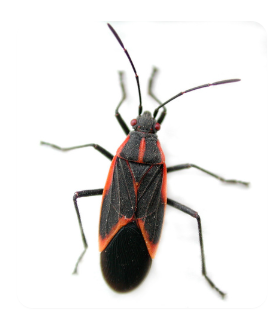
The Eastern Boxelder Bug (Boisea trivittata) is a common true bug found throughout North America. These insects are well known for their bright red or orange markings on dark black bodies and their tendency to gather in large numbers on sunny walls, fences, and buildings during autumn. Although they rarely damage plants, they frequently become nuisance pests when they invade homes seeking warm overwintering sites.
Eastern boxelder bugs are strongly associated with boxelder trees but may also feed on maples, ash trees, and other seed-producing plants. Their sudden appearance in large aggregations often causes concern among homeowners, especially during late summer and fall migration periods.
Quick Facts
- Family: Rhopalidae
- Common Name: Eastern Boxelder Bug
- Habitat: Boxelder, maple, and ash trees
- Diet: Seeds and plant juices
- Status: Household nuisance pest
Identification
Adult eastern boxelder bugs typically measure:
- About 1/2 inch long
Key identifying features include:
- Elongated flattened bodies
- Black coloration with red or orange markings
- Three reddish stripes behind the head
- Thin red lines outlining the wings
- Long black antennae
When wings are folded, the markings create an X-shaped pattern across the back.
Nymphs differ from adults and are:
- Bright red or orange
- Wingless during early stages
- Smaller and more rounded
Eastern boxelder bugs belong to the larger group of true bugs, insects characterized by piercing-sucking mouthparts used to feed on plant fluids.
Distribution and Habitat
This species occurs widely throughout North America, especially in regions where boxelder and maple trees are common.
Typical habitats include:
- Residential neighborhoods
- Parks
- Forests
- Urban landscapes
- Woodland edges
Eastern boxelder bugs are especially abundant near:
- Female boxelder trees
- Seed-producing maples
- Ash trees
- Sunny building surfaces
During colder months they often seek shelter inside:
- Homes
- Garages
- Wall voids
- Attics
- Sheds
Life Cycle
The eastern boxelder bug undergoes incomplete metamorphosis consisting of:
- Egg
- Nymph
- Adult
Females lay eggs in spring on bark, leaves, and seed pods of host trees.
After hatching, nymphs feed on developing seeds and plant juices.
Nymphs gradually mature through several molts before becoming winged adults.
In many regions, populations peak during late summer and fall when adults begin searching for overwintering shelter.
Large aggregations commonly form on:
- South-facing walls
- Tree trunks
- Warm rocks
- Building exteriors
Behavior
Eastern boxelder bugs are highly social insects that often gather in large groups.
They feed primarily on:
- Seeds
- Flowers
- Leaves
- Plant juices
Although they possess piercing-sucking mouthparts, they rarely cause serious injury to healthy trees.
These insects are especially noticeable during fall migration periods when thousands may cluster on sunny structures.
Inside homes, boxelder bugs:
- Do not reproduce indoors
- Do not bite humans
- Do not damage wood
- Do not infest stored food
However, crushed insects may produce unpleasant odors and leave reddish stains on walls or fabrics.
Pest Status
Eastern boxelder bugs are considered nuisance pests rather than destructive insects.
Common problems associated with infestations include:
- Large indoor invasions
- Visible wall aggregations
- Staining from crushed insects
- Accumulations near windows
Plant damage is usually minor and rarely threatens healthy trees.
The greatest concern for homeowners is the insects’ tendency to overwinter inside buildings.
Signs of Infestation
Common signs of eastern boxelder bug activity include:
- Clusters of insects on sunny walls
- Bugs entering windows and doors
- Large numbers near boxelder trees
- Indoor insects during autumn or winter
- Red-orange nymphs on vegetation
Warm south-facing surfaces are especially attractive during cool weather.
Prevention
Preventing indoor invasions is the most effective management strategy.
Recommended prevention methods include:
- Seal cracks around windows and doors
- Repair damaged screens
- Caulk gaps in siding and foundations
- Reduce outdoor clutter near buildings
- Trim branches touching structures
- Remove seed-producing boxelder trees if practical
Good exterior maintenance significantly reduces entry opportunities.
Control
Indoor control methods typically focus on exclusion and removal.
Effective management strategies include:
- Vacuuming indoor insects
- Removing aggregations outdoors
- Applying exterior barrier treatments when necessary
- Sealing entry points
Chemical control indoors is usually unnecessary because the insects do not reproduce inside structures.
Professional pest management may help during severe seasonal invasions.
Ecological Importance
Although nuisance pests around homes, eastern boxelder bugs are part of natural ecosystems.
They serve as food sources for:
- Birds
- Spiders
- Predatory insects
- Small mammals
Their feeding activity also contributes to seed decomposition in forest ecosystems.
Interesting Facts
- Eastern boxelder bugs often gather by the thousands.
- They are strongly attracted to warm sunny surfaces.
- Most infestations occur during fall.
- They rarely damage healthy trees.
- Crushed bugs may leave reddish stains.
- They commonly overwinter inside wall voids.