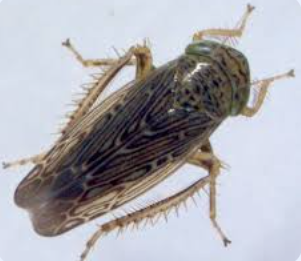
The Blunt-nosed Leafhopper is a small sap-feeding insect belonging to the family Cicadellidae, one of the largest groups of plant-feeding insects in the world. Leafhoppers are well known for their wedge-shaped bodies, rapid jumping ability, and habit of feeding on plant sap using specialized piercing-sucking mouthparts. Although tiny, some species can become important agricultural pests because they damage plants directly through feeding and indirectly by spreading plant diseases.

Blunt-nosed leafhoppers are commonly found in grassy habitats, gardens, agricultural fields, and ornamental landscapes where vegetation is abundant. Their small size and quick movements often make them difficult to notice until populations become large.
Quick Facts
- Order: Hemiptera
- Family: Cicadellidae
- Common Group: Leafhoppers
- Habitat: Fields, gardens, forests, turfgrass
- Diet: Plant sap
- Status: Plant pest and possible disease vector
Identification
Adult blunt-nosed leafhoppers are extremely small insects that usually measure:
- Only a few millimeters long
They possess several distinctive characteristics including:
- Flattened wedge-shaped bodies
- Rounded or blunt head structure
- Green, tan, or brown coloration
- Strong hind legs adapted for jumping
- Piercing-sucking mouthparts
Like other leafhoppers, they are highly mobile and quickly leap away when disturbed.
Nymphs resemble miniature wingless adults and gradually develop through multiple molts before reaching maturity.
Leafhoppers are often confused with:
- Aphids
- Planthoppers
- Treehoppers
- Small grass insects
However, their wedge-shaped bodies and jumping behavior usually help distinguish them.
Distribution and Habitat
Blunt-nosed leafhoppers occur throughout much of North America and are especially common in areas with dense vegetation.
Preferred habitats include:
- Grasslands
- Gardens
- Agricultural fields
- Pastures
- Woodland edges
- Turfgrass
- Wetlands
These insects thrive in environments containing:
- Moist vegetation
- Dense plant growth
- Warm seasonal temperatures
- Abundant host plants
Many species are highly adaptable and may feed on a wide variety of plants.
Life Cycle
Blunt-nosed leafhoppers undergo incomplete metamorphosis consisting of three primary stages:
- Egg
- Nymph
- Adult
Females deposit eggs inside plant tissues where they remain protected during development.
After hatching, nymphs immediately begin feeding on plant sap.
Nymphs pass through several molts before becoming winged adults.
Unlike butterflies or moths, leafhoppers do not have a pupal stage.
Several generations may occur annually depending on:
- Climate
- Temperature
- Host plant availability
Warm regions often support continuous breeding during much of the growing season.
Behavior
Blunt-nosed leafhoppers are highly active insects that move rapidly between plants.
Both adults and nymphs feed by inserting their mouthparts into plant tissues and extracting sap.
Feeding may result in:
- Leaf stippling
- Yellowing foliage
- Wilting
- Reduced plant vigor
Many species also excrete a sugary waste substance known as honeydew.
Honeydew can encourage the growth of:
- Sooty mold fungi
These fungi coat leaves with dark residue that interferes with photosynthesis.
Leafhoppers are especially active during:
- Warm weather
- Sunny daytime conditions
- Growing seasons
Pest Status
Some blunt-nosed leafhopper species are considered important agricultural pests.
Damage may occur through:
- Direct feeding injury
- Transmission of plant pathogens
- Stress to crops and ornamental plants
Certain leafhopper species spread:
- Plant viruses
- Bacterial diseases
- Phytoplasmas
Diseases transmitted by leafhoppers can sometimes cause more damage than feeding alone.
Commonly affected plants may include:
- Grasses
- Vegetables
- Fruit crops
- Shrubs
- Ornamental plants
Signs of Infestation
Common indicators of leafhopper activity include:
- Tiny jumping insects on foliage
- Yellow or stippled leaves
- Curled foliage
- Plant stunting
- Honeydew deposits
- Sooty mold growth
Heavy infestations may weaken plants over time and reduce crop quality.
Ecological Importance
Although some species are pests, leafhoppers also play important ecological roles.
They serve as food for numerous predators including:
- Spiders
- Lady beetles
- Parasitic wasps
- Birds
- Predatory bugs
Leafhoppers are also part of complex grassland and forest food webs.
Prevention
Preventative management helps reduce the risk of damaging infestations.
Recommended prevention methods include:
- Inspect plants regularly
- Maintain healthy plant growth
- Reduce weed hosts near crops
- Encourage beneficial insects
- Avoid excessive nitrogen fertilization
- Promote proper plant spacing
Healthy plants are generally better able to tolerate feeding damage.
Control
Integrated pest management is commonly used for leafhopper control.
Management methods may include:
- Insecticidal soaps
- Neem oil treatments
- Biological control agents
- Reflective mulches
- Targeted insecticide applications
Natural predators often help suppress populations without chemical intervention.
Control efforts are most effective when populations are detected early.
Interesting Facts
- Leafhoppers can jump many times their body length.
- Some species communicate using plant vibrations.
- The family Cicadellidae contains thousands of species worldwide.
- Many leafhoppers are highly specialized to certain plants.
- Some species are important vectors of plant diseases.
- Leafhoppers belong to the same insect order as aphids and cicadas.