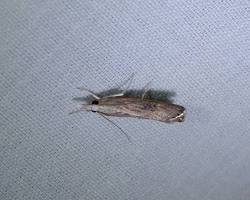
The Bluegrass Webworm Moth, commonly known as the Sod Webworm, is a small turf-damaging moth whose larvae feed on grasses commonly found in lawns, golf courses, parks, and athletic fields. These insects belong to the family Crambidae, a group of grass-feeding moths often associated with turfgrass problems throughout North America. While the adult moths are relatively harmless, the caterpillar stage can become highly destructive when populations increase.
Sod webworms are among the most common lawn pests in residential and commercial landscapes. Their feeding activity can create irregular brown patches in turf that resemble drought stress or disease damage. Because the larvae feed primarily at night and remain hidden during the day, infestations often go unnoticed until visible lawn damage appears.
Quick Facts
- Order: Lepidoptera
- Family: Crambidae
- Common Name: Sod Webworm
- Habitat: Lawns, parks, golf courses, sports fields
- Diet: Turfgrass blades and stems
- Status: Turfgrass pest
Identification
Adult bluegrass webworm moths are small, delicate insects with wingspans of approximately:
- 3/4 inch
Adults typically display:
- Tan or light brown wings
- Narrow elongated bodies
- Subtle darker wing markings
- Folded wings held tightly against the body while resting
When disturbed, adults often fly short distances in a zigzag pattern just above the grass surface.
The larvae are more damaging and easier to identify in infested turf.
Caterpillars are usually:
- Grayish
- Greenish
- Brown-tinted
- About 1/2 to 3/4 inch long when mature
Larvae create silk-lined tunnels or burrows near the soil surface where they hide during daylight hours.
Like many moths, the species undergoes complete metamorphosis.
Distribution and Habitat
Bluegrass webworms occur throughout much of North America wherever turfgrass is maintained.
Common habitats include:
- Residential lawns
- Golf courses
- Sports fields
- Parks
- Cemeteries
- Commercial landscapes
- Pastures
These insects prefer areas with:
- Dense turfgrass
- Warm summer conditions
- Moderate soil moisture
- Thatch accumulation
Heavily fertilized or poorly maintained lawns may become more vulnerable to infestation.
Life Cycle
The bluegrass webworm moth undergoes four developmental stages:
- Egg
- Larva
- Pupa
- Adult
Adult moths lay eggs directly within turfgrass areas.
After hatching, caterpillars begin feeding on grass blades and stems while remaining hidden in silk-lined tunnels near the soil surface.
Larvae are primarily nocturnal feeders and emerge at night to consume turfgrass tissue.
During the day they remain concealed within:
- Thatch layers
- Silk tubes
- Soil crevices
- Grass crowns
As larvae mature, they pupate within protective silk cocoons in the soil or thatch.
Multiple generations may occur annually depending on:
- Climate
- Temperature
- Geographic region
Behavior
Adult moths are most active during warm evenings.
They are frequently observed fluttering low across lawns shortly after sunset.
Larvae feed by chewing grass blades close to the crown of the plant.
Heavy feeding may produce:
- Brown patches
- Thinning turf
- Irregular dead spots
- Scalped-looking grass
Birds such as starlings may dig into turf while searching for larvae, creating additional lawn damage.
Damage and Pest Status
Bluegrass webworms are considered important turfgrass pests.
Larval feeding can seriously damage:
- Lawns
- Athletic fields
- Golf course greens
- Sod farms
Signs of infestation often include:
- Brown patches of grass
- Thin turf areas
- Irregular dead spots
- Grass that pulls up easily
- Visible silk tunnels in thatch
Damage is often most severe during:
- Hot summer months
- Drought conditions
- Periods of lawn stress
Healthy turf may tolerate light feeding, but severe infestations can rapidly weaken large lawn areas.
Signs of Infestation
Homeowners and turf managers may notice:
- Small moths flying from the grass when disturbed
- Silk-lined tunnels near soil level
- Brown lawn patches
- Caterpillars feeding at night
- Bird activity on lawns
A simple soap flush test can help reveal larvae hidden in turfgrass.
This involves pouring diluted soapy water onto the lawn surface, causing caterpillars to emerge from hiding.
Prevention
Preventative lawn care is one of the best ways to reduce webworm problems.
Recommended prevention methods include:
- Maintain proper mowing height
- Water deeply but infrequently
- Avoid excessive fertilization
- Reduce thatch buildup
- Monitor lawns regularly
- Encourage beneficial predators
Healthy turfgrass is generally more resistant to feeding damage.
Control
Integrated pest management strategies are commonly used to manage sod webworm infestations.
Control methods may include:
- Biological insecticides such as Bacillus thuringiensis (Bt)
- Beneficial nematodes
- Targeted insecticide treatments
- Improved irrigation practices
- Mechanical dethatching
Biological control methods are often preferred because they target larvae while minimizing impacts on beneficial insects.
Applications are usually most effective against young caterpillars.
Natural Predators
Numerous natural enemies help regulate webworm populations.
Predators include:
- Birds
- Ground beetles
- Parasitic wasps
- Spiders
- Predatory ants
Encouraging biodiversity within landscapes can help improve natural pest suppression.
Interesting Facts
- Sod webworms are among the most common lawn pests in North America.
- Adult moths are often mistaken for harmless grass moths.
- Larvae feed primarily at night.
- Silk-lined tunnels protect caterpillars from predators.
- Bird activity on lawns may indicate hidden infestations.
- Golf courses frequently monitor for sod webworm activity.