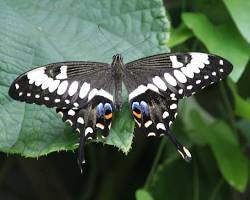
The Black Swallowtail Butterfly (Papilio polyxenes) is one of the most recognizable and admired butterflies in North America. Known for its elegant black wings, colorful markings, and graceful flight, this species is commonly found in gardens, meadows, open fields, parks, and roadsides where flowering plants and host vegetation are abundant. Black swallowtails are highly valued as important pollinators and are often intentionally encouraged in butterfly gardens and native landscapes.
The species belongs to the swallowtail butterfly family Papilionidae, a group known for the tail-like extensions on the hind wings that resemble the tails of swallows. Adult black swallowtails are striking insects with black wings decorated by yellow spots, blue highlights, and orange markings. Their beauty, combined with their role in pollination, makes them one of the most popular butterflies among gardeners and nature enthusiasts.
Although the caterpillars occasionally feed on garden herbs such as parsley, dill, fennel, and carrots, the overall impact is usually minor and many gardeners gladly tolerate their presence to support butterfly populations and biodiversity.
Quick Facts
- Scientific Name: Papilio polyxenes
- Family: Papilionidae
- Common Habitat: Gardens, meadows, roadsides, open fields
- Wingspan: Approximately 3 to 4 inches
- Diet: Nectar as adults; parsley-family plants as caterpillars
- Status: Beneficial pollinator
Identification
Black swallowtail butterflies are large, colorful butterflies with distinctive wing tails.
Adult identification features include:
- Black wings with rows of yellow spots
- Blue markings on hind wings
- Orange eyespots near the tails
- Tail-like extensions on hind wings
- Large graceful flight pattern
Females generally display:
- More blue coloration on the hind wings
- Slightly larger body size
Males often have:
- Brighter yellow spotting
- Narrower blue markings
The caterpillars change dramatically as they develop.
Young caterpillars resemble:
- Bird droppings
Mature caterpillars become:
- Bright green with black bands
- Decorated with yellow or orange spots
When threatened, caterpillars extend a defensive organ called an osmeterium, which releases a foul odor to deter predators.
Distribution and Habitat
The Black Swallowtail Butterfly occurs throughout much of North America.
It is commonly found in:
- Gardens
- Fields
- Roadsides
- Prairies
- Open woodlands
- Parks
- Backyard landscapes
The species prefers habitats containing:
- Nectar-producing flowers
- Host plants for caterpillars
- Sunny open areas
- Sheltered vegetation
Common host plants include:
- Parsley
- Dill
- Fennel
- Carrots
- Queen Anne’s lace
- Rue
Adult butterflies are highly mobile and may travel widely while searching for flowers and breeding sites.
Life Cycle
Black swallowtails undergo complete metamorphosis.
The life stages include:
- Egg
- Caterpillar
- Chrysalis
- Adult butterfly
Females lay eggs individually on host plants.
After hatching, caterpillars begin feeding immediately on plant foliage.
The caterpillars molt several times as they grow larger.
During development, caterpillars store energy needed for metamorphosis.
Once fully mature, the caterpillar forms a chrysalis attached to vegetation or nearby structures.
Inside the chrysalis, the insect transforms into the adult butterfly.
Depending on climate conditions, multiple generations may occur annually.
Behavior
Adult black swallowtails are active daytime pollinators.
They feed on nectar from flowers such as:
- Milkweed
- Zinnias
- Clover
- Thistles
- Coneflowers
- Phlox
While feeding, they help transfer pollen between plants.
Adults are strong fliers and may:
- Glide gracefully
- Hover near flowers
- Patrol gardens
- Search for host plants
Caterpillars feed openly on foliage and may occasionally defoliate individual herb plants in small gardens.
However, feeding damage is usually temporary and minor.
Pest Status
The Black Swallowtail Butterfly is generally considered highly beneficial.
Benefits include:
- Pollination of flowering plants
- Support of biodiversity
- Wildlife food source
- Educational and ecological value
Although caterpillars may feed on herbs and vegetables, the damage is usually:
- Localized
- Temporary
- Cosmetic
Most gardeners tolerate or encourage these butterflies because of their important ecological role.
Prevention
Prevention is usually unnecessary because black swallowtails are beneficial pollinators.
Gardeners who wish to protect herbs may:
- Inspect plants regularly.
- Relocate caterpillars by hand.
- Grow extra host plants for butterflies.
- Use companion planting strategies.
Many pollinator gardens intentionally include host plants to support swallowtail populations.
Control
Control is rarely recommended.
If caterpillar feeding becomes excessive:
- Relocate caterpillars to wild host plants.
- Protect individual herbs with mesh covers.
- Avoid broad-spectrum insecticides that harm pollinators.
Chemical treatment is strongly discouraged because it can negatively impact butterflies and other beneficial insects.
Interesting Facts
- Young caterpillars mimic bird droppings for protection.
- Adults can identify host plants using sensors on their feet.
- The tail-like wing extensions help distract predators.
- Caterpillars release a foul odor when threatened.
- Black swallowtails are important pollinators in gardens.
- The species is commonly raised in educational butterfly programs.