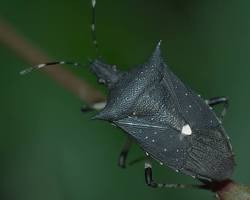
The Black Stink Bug refers to several dark-colored species within the shield bug family Pentatomidae. These insects are well known for their flattened shield-shaped bodies and their ability to release a strong defensive odor when disturbed, crushed, or threatened. Black stink bugs are commonly encountered in gardens, crop fields, orchards, forests, and residential landscapes where they feed on plant juices using specialized piercing-sucking mouthparts.
Although some stink bug species are considered minor garden insects, others can become significant agricultural pests capable of damaging fruits, vegetables, ornamental plants, and field crops. Their feeding may deform developing fruits, discolor leaves, and reduce crop quality. During cooler months, some species may also wander indoors while searching for sheltered overwintering sites.
Black stink bugs belong to the larger group of stink bugs, a family of insects recognized for their characteristic odor-producing glands. While the smell serves as an effective defense against predators, it also makes these insects unpleasant nuisance pests when they invade homes or are accidentally crushed indoors.
Quick Facts
- Family: Pentatomidae
- Common Habitat: Gardens, crop fields, forests, ornamental landscapes
- Size: Approximately 1/2 inch long
- Diet: Plant sap and juices
- Status: Agricultural and garden pest
- Defense Mechanism: Strong odor released when disturbed
Identification
Black stink bugs are medium-sized insects with flattened shield-shaped bodies.
Common identifying characteristics include:
- Dark brown to black coloration
- Broad shield-like body shape
- Triangular plate located behind the head
- Six legs and segmented antennae
- Piercing-sucking mouthparts
- Strong defensive odor
Adults generally measure:
- About 1/2 inch long
Some species may display:
- Metallic highlights
- Subtle green tones
- Brown markings
- Spotted wing edges
Nymphs often appear quite different from adults and may show:
- Rounded bodies
- Bright markings
- Red, orange, or white coloration
- Wingless immature forms
Like many other true bugs, stink bugs possess specialized mouthparts designed for piercing plant tissue and extracting fluids.
Distribution and Habitat
Black stink bugs occur widely throughout North America and many other temperate and tropical regions.
They commonly inhabit:
- Vegetable gardens
- Fruit orchards
- Crop fields
- Shrubs and ornamental plants
- Woodland edges
- Weedy fields
Preferred host plants vary depending on species but may include:
- Tomatoes
- Beans
- Corn
- Peppers
- Fruit trees
- Soybeans
- Wild plants and weeds
During colder seasons, some stink bugs seek protected overwintering locations such as:
- Attics
- Wall voids
- Sheds
- Garages
- Under bark
- Leaf litter
Life Cycle
Black stink bugs undergo incomplete metamorphosis.
The life stages include:
- Egg
- Nymph
- Adult
Females deposit clusters of barrel-shaped eggs on the undersides of leaves.
After hatching, nymphs begin feeding immediately on nearby plants.
Nymphs molt several times before reaching adulthood.
Depending on climate conditions, some species may produce:
- One generation annually
- Multiple generations per year
Adults are highly mobile and capable of flying long distances in search of food or overwintering sites.
Behavior
Black stink bugs feed using piercing-sucking mouthparts that penetrate plant tissue.
Feeding damage may result in:
- Discolored leaves
- Sunken fruit spots
- Distorted plant growth
- Premature fruit drop
- Seed damage
- Reduced crop quality
When threatened, stink bugs release a foul-smelling chemical from specialized glands located on the thorax.
The odor serves to:
- Deter predators
- Warn other stink bugs
- Protect the insect during attacks
Many predators avoid feeding on stink bugs because of this strong chemical defense.
Black stink bugs are usually slow-moving insects but can fly readily when disturbed.
Pest Status
Some black stink bug species are important agricultural pests.
Common problems associated with infestations include:
- Fruit deformities
- Crop yield reduction
- Vegetable damage
- Plant stress
- Indoor nuisance invasions
Garden plants frequently affected include:
- Tomatoes
- Peppers
- Beans
- Corn
- Squash
- Fruit trees
Although they rarely cause structural damage indoors, their odor and tendency to gather around windows and lights can make them nuisance pests inside homes.
Prevention
Preventive measures can help reduce stink bug populations around homes and gardens.
- Inspect plants regularly for eggs and nymphs.
- Remove weeds and plant debris.
- Encourage birds and beneficial insects.
- Seal cracks around windows and doors.
- Use row covers in gardens when practical.
- Reduce outdoor lighting that attracts insects.
Maintaining healthy plants may also reduce the severity of feeding damage.
Control
Control methods vary depending on infestation severity.
Common management approaches include:
- Hand removal
- Vacuuming indoor insects
- Insecticidal soaps
- Neem oil treatments
- Biological control
- Integrated pest management strategies
Natural enemies include:
- Parasitic wasps
- Birds
- Spiders
- Predatory insects
Crushing stink bugs indoors is generally discouraged because it releases their strong odor.
Interesting Facts
- Stink bugs release odor as a chemical defense against predators.
- Many species are excellent fliers.
- Nymphs often look dramatically different from adults.
- Some species gather indoors during winter.
- Stink bug eggs are often laid in neat geometric clusters.
- Certain stink bug species are beneficial predators rather than plant feeders.