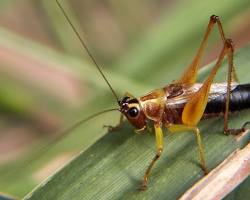
The Black-sided Meadow Katydid (Conocephalus nigropleurum) is a slender grasshopper-like insect belonging to the family Tettigoniidae. Katydids are closely related to crickets and grasshoppers, and are well known for the rhythmic chirping sounds they produce during warm summer evenings. This species is especially recognized for the dark stripe running along the sides of its otherwise green body.
The Black-sided Meadow Katydid is commonly found in meadows, marshes, wetlands, grassy fields, and roadside vegetation throughout North America. Its narrow body and green coloration allow it to blend effectively among grasses and reeds, making it difficult for predators to detect.
Although these insects feed on plant material, they rarely occur in large enough numbers to damage crops or ornamental plants. Most populations are considered harmless and are viewed as important members of natural meadow ecosystems.
Like many katydids, this species becomes most active during:
- Warm summer evenings
- Humid nights
- Late summer breeding periods
The species belongs to the larger group of katydids, which are known for their leaf-like appearance and nighttime calling behavior.
Quick Facts
- Order: Orthoptera
- Family: Tettigoniidae
- Habitat: Meadows, wetlands, marshes, grassy fields
- Diet: Plant material and soft vegetation
- Activity Period: Summer through early fall
- Status: Minor or non-pest insect
Identification
The Black-sided Meadow Katydid is a slender green insect with distinctive dark lateral markings.
Adults generally measure:
- Approximately 1/2 to 3/4 inch long
Key identifying features include:
- Bright green elongated body
- Dark stripe running along the sides
- Very long antennae
- Narrow cone-shaped head
- Long jumping hind legs
- Thin folded wings
The antennae may:
- Exceed the length of the body
These antennae help the insect:
- Navigate dense vegetation
- Detect vibrations
- Locate mates
- Sense predators
The dark stripe along the body sides is one of the easiest ways to distinguish this species from other meadow katydids.
Distribution and Habitat
The Black-sided Meadow Katydid occurs widely throughout North America.
Preferred habitats include:
- Wet meadows
- Marshes
- Prairie grasses
- Roadside vegetation
- Wetland edges
- Native grasslands
- Overgrown fields
The species prefers environments with:
- Dense vegetation
- Tall grasses
- Moist conditions
- Undisturbed plant growth
Katydids spend much of their time hidden among:
- Grass stems
- Flowering plants
- Wetland reeds
- Field vegetation
Their green coloration provides excellent camouflage against predators in these habitats.
Life Cycle
Like other orthopteran insects, the Black-sided Meadow Katydid undergoes incomplete metamorphosis.
The life stages include:
- Egg
- Nymph
- Adult
Females deposit eggs into:
- Plant stems
- Grass tissue
- Moist vegetation
- Protected grassy areas
Eggs often overwinter before hatching during warmer weather.
Young nymphs resemble:
- Small wingless adults
Nymphs molt several times as they grow and gradually develop:
- Adult wings
- Mature coloration
- Reproductive organs
Adults are usually most abundant during:
- Mid to late summer
- Early autumn
Behavior
Black-sided Meadow Katydids are primarily nocturnal or crepuscular insects.
During the daytime, they remain hidden within vegetation to avoid predators.
Common behaviors include:
- Climbing grasses and reeds
- Jumping when disturbed
- Producing nighttime chirping sounds
- Remaining motionless for camouflage
Males produce calls using a process called stridulation, which involves rubbing specialized wing structures together.
Their calls help:
- Attract females
- Establish territory
- Communicate with other katydids
Natural predators include:
- Birds
- Spiders
- Frogs
- Praying mantises
- Predatory insects
Their slender body shape and camouflage greatly reduce visibility to predators.
Pest Status
Black-sided Meadow Katydids are generally considered harmless insects.
Although they feed on plant material, they rarely:
- Cause serious crop damage
- Threaten gardens
- Damage ornamental plants
- Infest structures
Most feeding activity is:
- Minor
- Temporary
- Cosmetic only
In natural ecosystems, these katydids contribute to biodiversity and serve as prey for many wildlife species.
Prevention
Prevention is usually unnecessary because populations rarely become problematic.
Healthy ecosystems naturally regulate katydid populations through:
- Predation
- Weather conditions
- Habitat competition
If desired, property owners can:
- Maintain balanced garden ecosystems.
- Encourage birds and natural predators.
- Reduce dense overgrowth around sensitive plants.
Control
Control is rarely required because these insects typically cause little to no measurable plant damage.
If management becomes necessary, options may include:
- Manual removal
- Reducing dense vegetation near ornamental plants
- Encouraging natural predators
- Maintaining healthy plant growth
Broad insecticide use is discouraged because it may harm:
- Beneficial insects
- Pollinators
- Native predators
- Natural meadow ecosystems
Interesting Facts
- Katydids are more closely related to crickets than grasshoppers.
- Their antennae can exceed their body length.
- Males produce nighttime songs to attract mates.
- The species is well camouflaged among grasses.
- Katydids are important prey for birds and amphibians.
- The dark side stripe helps identify this species among meadow katydids.