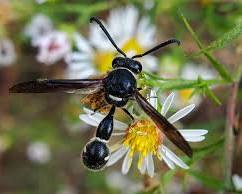
p>The Black Potter Wasp is a solitary wasp belonging to the subfamily Eumeninae, a fascinating group of wasps known for constructing small mud nests that resemble pottery or clay jars. These wasps are highly beneficial predators that help regulate populations of caterpillars and other soft-bodied insects in gardens, forests, and natural landscapes. Unlike social wasps such as yellowjackets or hornets, potter wasps live alone and are generally non-aggressive toward humans.
Potter wasps receive their name from the small clay nests constructed by females. These nests are carefully shaped from mud and attached to twigs, walls, rocks, stems, fences, and building surfaces. Inside each mud chamber, the female stores paralyzed prey insects that serve as food for developing larvae. This remarkable nesting behavior makes potter wasps some of the most interesting solitary wasps found in North America.
Although they possess stingers, Black Potter Wasps rarely sting humans unless directly handled or trapped. Their calm behavior and valuable predatory habits make them important beneficial insects within both natural ecosystems and home gardens.
Quick Facts
- Family: Vespidae
- Subfamily: Eumeninae
- Common Habitat: Gardens, forests, residential landscapes
- Size: Approximately 1/2 to 3/4 inch long
- Diet: Caterpillars and soft-bodied insects
- Status: Beneficial predator
Identification
Black Potter Wasps are slender solitary wasps recognized by their narrow waists and dark coloration.
Key identifying features include:
- Black or dark metallic body coloration
- Very narrow waist connecting thorax and abdomen
- Long dangling legs during flight
- Smooth shiny body surface
- Smoky or translucent wings
- Distinctive mud nests nearby
Adults typically measure:
- Between 1/2 inch and 3/4 inch long
Some species may display:
- Yellow markings
- White spots
- Reddish highlights
- Metallic blue-black coloration
Their thin waist gives them the classic appearance associated with many solitary wasps.
The mud nests themselves are often easier to notice than the insects.
Typical nest characteristics include:
- Small vase-shaped mud chambers
- Clay tube structures
- Grouped mud cells
- Nests attached to sheltered surfaces
Distribution and Habitat
Potter wasps occur widely throughout North America and many temperate regions worldwide.
They are commonly found in:
- Gardens
- Woodlands
- Parks
- Fields
- Residential yards
- Forest edges
Preferred habitats generally include:
- Flowering vegetation
- Available mud sources
- Sheltered nesting sites
- Areas rich in caterpillar populations
Nests are commonly attached to:
- Plant stems
- Tree branches
- Walls
- Fence posts
- Window frames
- Rock surfaces
- Outdoor structures
Adults are often seen visiting flowers for nectar while searching for prey insects to provision their nests.
Life Cycle
Black Potter Wasps undergo complete metamorphosis.
The life stages include:
- Egg
- Larva
- Pupa
- Adult
The female begins the nesting process by gathering mud and carefully constructing a small clay chamber.
After completing the nest, she hunts for prey such as:
- Caterpillars
- Leaf-feeding larvae
- Soft-bodied insects
- Small grubs
The prey is stung and paralyzed rather than killed.
Inside each mud chamber, the female deposits:
- Several paralyzed prey insects
- A single egg
After hatching, the larva feeds safely within the nest until development is complete.
The mature wasp eventually emerges by chewing through the mud chamber.
Behavior
Black Potter Wasps are solitary insects, meaning each female independently builds and provisions her own nest.
Unlike social wasps, they do not:
- Form large colonies
- Defend communal nests aggressively
- Swarm around food
- Attack humans routinely
Adults spend much of their time:
- Gathering mud
- Searching for prey
- Visiting flowers
- Constructing nests
- Provisioning larvae
Their predatory behavior helps naturally regulate populations of leaf-feeding caterpillars and other garden pests.
Because they are calm and non-aggressive, they are often considered desirable beneficial insects in landscapes.
Pest Status
The Black Potter Wasp is considered highly beneficial.
Benefits include:
- Natural caterpillar control
- Reduction of plant pests
- Pollination while feeding on nectar
- Support of ecological balance
Unlike aggressive stinging wasps, potter wasps rarely create nuisance situations.
Their nests are:
- Small
- Localized
- Non-destructive
- Usually temporary
Occasionally, homeowners may notice mud nests attached to structures, but these nests rarely cause any damage.
Prevention
Prevention is generally unnecessary because potter wasps are beneficial and non-aggressive.
However, to discourage nesting on structures:
- Remove old mud nests after emergence.
- Seal cracks and sheltered crevices.
- Reduce exposed mud sources near entryways.
- Clean protected surfaces regularly.
Many gardeners intentionally tolerate potter wasps because of their pest-control benefits.
Control
Control is rarely required.
If nests appear in inconvenient locations:
- Wait until the wasps emerge naturally.
- Remove abandoned nests manually.
- Relocate removable nesting materials if possible.
Chemical treatment is generally discouraged because it may harm other beneficial insects.
Interesting Facts
- Potter wasps build nests that resemble miniature clay pots.
- Each mud chamber usually contains one developing larva.
- These wasps help naturally control caterpillar populations.
- Potter wasps rarely sting humans.
- Adults also act as pollinators while feeding on nectar.
- Some species create highly elaborate multi-chambered nests.