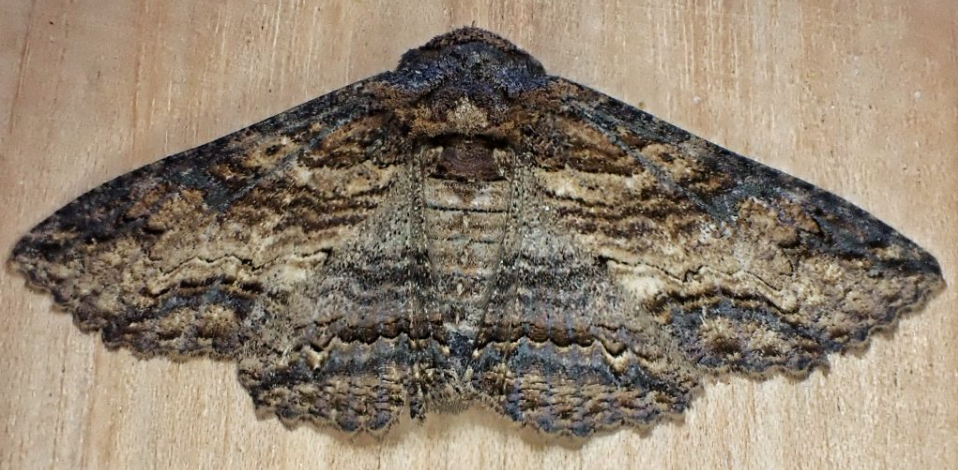
The Black Lunate Zale Moth (Zale lunata) is a nocturnal moth belonging to the family Erebidae, a large and diverse group of moths commonly associated with forests and woodland habitats. This species is recognized for its dark cryptic wing coloration and subtle curved markings that provide excellent camouflage against tree bark, dead leaves, and wooded environments. Like many woodland moths, the Black Lunate Zale Moth is primarily active at night and is frequently attracted to porch lights, security lights, and illuminated windows.
Although relatively inconspicuous during the daytime, this moth plays an important role in forest ecosystems as both a pollinator and a food source for birds, bats, spiders, and predatory insects. The caterpillars feed on the foliage of various hardwood trees but are rarely abundant enough to create serious defoliation problems. Because of this, the species is generally considered ecologically neutral or mildly beneficial rather than a destructive pest.
The dark coloration and bark-like wing patterns of the Black Lunate Zale Moth make it especially difficult to spot when resting on tree trunks. This camouflage helps protect it from predators during daylight hours when the moth remains inactive.
Quick Facts
- Family: Erebidae
- Scientific Name: Zale lunata
- Common Habitat: Forests, woodlands, shaded landscapes
- Wingspan: Approximately 1.5 to 2 inches
- Activity Period: Nocturnal
- Status: Minor foliage feeder and beneficial part of forest ecosystems
Identification
The Black Lunate Zale Moth is characterized by its dark, bark-like appearance and muted camouflage patterns.
Key identifying features include:
- Dark brown to black forewings
- Subtle curved or lunate markings
- Wavy crosslines on wings
- Excellent bark camouflage
- Broad triangular resting posture
- Scaled wings typical of moths
Adults typically have:
- Wingspans between 1.5 and 2 inches
- Robust bodies
- Feathery or thread-like antennae
- Muted woodland coloration
The caterpillars vary somewhat in color but are generally:
- Brown or gray
- Camouflaged to resemble twigs or bark
- Moderately slender
- Leaf-feeding larvae
Because of their coloration, adults are often mistaken for:
- Dead leaves
- Tree bark patches
- Other woodland noctuid moths
Distribution and Habitat
The Black Lunate Zale Moth occurs across much of North America, especially in areas with mature hardwood forests.
Common habitats include:
- Woodlands
- Forests
- Shaded parks
- Tree-lined residential areas
- Riparian woodlands
- Forest edges
The species is especially associated with environments containing:
- Oak trees
- Hardwood trees
- Dense foliage
- Leaf litter
- Natural woodland debris
Adults are frequently observed around:
- Outdoor lights
- Tree trunks
- Porches
- Forest clearings
Because the moth is nocturnal, sightings often occur during nighttime hours.
Life Cycle
Like other moths, the Black Lunate Zale Moth undergoes complete metamorphosis.
The life stages include:
- Egg
- Larva (caterpillar)
- Pupa
- Adult moth
Females deposit eggs on suitable host plants where caterpillars will have immediate access to food after hatching.
The caterpillars feed on tree foliage before eventually descending to protected areas for pupation.
Pupation commonly occurs in:
- Leaf litter
- Soil
- Loose bark
- Protected woodland debris
Adult moths emerge during warm months and become active at night in search of mates.
Depending on climate and geographic location, one or more generations may occur annually.
Behavior
The Black Lunate Zale Moth is primarily nocturnal.
Common behaviors include:
- Nighttime flight activity
- Attraction to lights
- Daytime camouflage on bark
- Nocturnal mating
- Leaf-feeding caterpillar activity
Adults remain hidden during daylight hours where their wing coloration provides effective protection from predators.
The caterpillars feed quietly on foliage and generally avoid detection because of their camouflage coloration.
Natural predators include:
- Birds
- Bats
- Spiders
- Predatory insects
- Parasitic wasps
Pest Status
The Black Lunate Zale Moth is not considered a major pest species.
While caterpillars feed on tree leaves, damage is usually:
- Minor
- Temporary
- Cosmetic
- Environmentally insignificant
Healthy mature trees can easily tolerate occasional feeding.
Unlike serious defoliators such as:
Black Lunate Zale caterpillars rarely occur in damaging numbers.
The species instead serves as an important part of natural woodland ecosystems.
Prevention
Preventive measures are generally unnecessary because this moth rarely causes significant damage.
However, property owners who wish to reduce caterpillar activity may:
- Monitor foliage during spring and summer.
- Encourage natural predators such as birds.
- Maintain healthy trees through watering and proper care.
- Reduce unnecessary nighttime lighting that attracts moths.
Healthy trees typically tolerate minor feeding without issue.
Control
Control is rarely needed for the Black Lunate Zale Moth.
If unusually high caterpillar populations occur, management options may include:
- Manual caterpillar removal
- Pruning heavily infested branches
- Biological insecticides such as Bacillus thuringiensis (Bt)
- Encouraging beneficial predators
Chemical treatments are usually unnecessary because outbreaks are uncommon and short-lived.
Interesting Facts
- The word “lunate” refers to the moon-shaped curved markings on the wings.
- This moth relies heavily on camouflage for survival.
- Adults are strongly attracted to outdoor lighting.
- The species belongs to the large moth family Erebidae.
- Caterpillars help support woodland food webs.
- The moth’s dark coloration allows it to blend almost perfectly with bark.