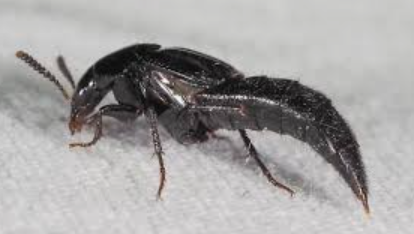
The Black Lordithon Staphylinid Beetle is a member of the rove beetle family Staphylinidae, one of the largest and most diverse beetle families in the world. Rove beetles are recognized by their elongated bodies and unusually short wing covers that leave much of the abdomen exposed. The genus Lordithon includes predatory beetles commonly associated with decaying organic matter, fungi, leaf litter, and moist woodland environments. Although their appearance may seem intimidating to some people, these beetles are considered highly beneficial because they prey on many small pest insects and contribute to natural decomposition processes.
Like many rove beetles, the Black Lordithon Staphylinid Beetle is extremely active and fast-moving. When disturbed, it may raise its flexible abdomen in a defensive posture similar to an earwig or small scorpion, though it lacks stingers and poses little threat to humans. These beetles are valuable predators within forest ecosystems where they help regulate populations of fly larvae, mites, soft-bodied insects, and other arthropods.
Rove beetles are commonly overlooked because they spend much of their time hidden beneath logs, stones, mulch, compost, fungi, or decaying vegetation. However, they play an important ecological role in maintaining soil health and controlling pest populations naturally.
Quick Facts
- Family: Staphylinidae
- Common Habitat: Forests, gardens, compost, leaf litter
- Size: Approximately 1/4 to 3/4 inch long
- Color: Black or dark brown
- Diet: Predatory on insects and small arthropods
- Status: Beneficial predator
Identification
The Black Lordithon Staphylinid Beetle has the classic appearance associated with rove beetles.
Key identifying characteristics include:
- Elongated slender body
- Short wing covers exposing the abdomen
- Glossy black or dark brown coloration
- Flexible abdomen capable of curling upward
- Strong running legs
- Fast-moving behavior
Unlike many other beetles, rove beetles do not completely cover their abdomen with hardened wing covers. This exposed abdomen gives them a distinctive appearance that many people mistake for:
- Earwigs
- Small scorpions
- Predatory wasps
However, rove beetles are harmless to humans and lack pincers or stingers.
Adults are typically:
- 1/4 to 3/4 inch long
- Narrow-bodied
- Highly mobile
The larvae resemble elongated predatory grubs and are often found in the same environments as adults.
Distribution and Habitat
Lordithon rove beetles occur widely throughout North America and many temperate regions worldwide.
They thrive in moist environments rich in organic material and prey insects.
Common habitats include:
- Woodlands
- Gardens
- Compost piles
- Leaf litter
- Mulch beds
- Fungi-covered logs
- Decaying wood
- Soil debris
Because they require moisture, these beetles are especially common in:
- Shaded areas
- Damp forests
- Moist garden soil
- Organic-rich environments
Occasionally, they may wander indoors accidentally, particularly during periods of heavy rain or environmental disturbance.
Life Cycle
The Black Lordithon Staphylinid Beetle undergoes complete metamorphosis.
The life cycle includes:
- Egg
- Larva
- Pupa
- Adult
Females lay eggs in moist organic material where food sources are abundant.
Larvae are active predators that feed on:
- Fly larvae
- Mites
- Small soft-bodied insects
- Organic debris organisms
After completing development, larvae pupate within protected soil or organic matter before emerging as adults.
Both larvae and adults are highly active hunters.
Behavior
Rove beetles are among the most active predatory beetles found in soil and decomposing environments.
Their behavior includes:
- Rapid running
- Nocturnal hunting
- Searching beneath debris
- Predation on small arthropods
When threatened, many rove beetles raise the abdomen upward in a defensive display.
Although they may look aggressive, they are generally harmless.
Their feeding behavior provides important biological control by reducing populations of:
- Fly maggots
- Mites
- Soft-bodied pests
- Decaying organic matter insects
Some species within the Staphylinidae family are also associated with fungi and decomposing plant materials.
Pest Status
The Black Lordithon Staphylinid Beetle is considered a beneficial insect rather than a pest.
Benefits include:
- Natural pest control
- Reduction of fly larvae
- Predation on harmful arthropods
- Contribution to decomposition cycles
- Support of healthy soil ecosystems
Unlike wood-boring beetles or pantry pests, rove beetles:
- Do not damage structures
- Do not infest stored food
- Do not destroy fabrics
- Do not attack healthy plants
Indoor appearances are usually accidental and temporary.
Prevention
Because these beetles are beneficial, prevention is usually unnecessary outdoors.
To reduce accidental indoor entry:
- Seal gaps around doors and windows.
- Reduce moisture near foundations.
- Remove excess leaf litter near entrances.
- Limit heavy mulch buildup near structures.
- Maintain dry crawlspaces and basements.
Most indoor encounters occur when beetles wander inside searching for moisture or prey.
Control
Control is rarely necessary because these beetles provide valuable ecological benefits.
If individuals appear indoors:
- Vacuum or manually remove them.
- Reduce indoor moisture levels.
- Seal entry points.
- Improve ventilation around foundations.
Chemical treatments are generally discouraged because they may also harm other beneficial insects.
Interesting Facts
- Staphylinidae is one of the largest beetle families in the world.
- Many rove beetles are important biological control predators.
- The exposed abdomen helps distinguish them from most beetles.
- Some species are associated with mushrooms and fungi.
- Rove beetles are extremely fast runners.
- They are often mistaken for earwigs because of their body shape.