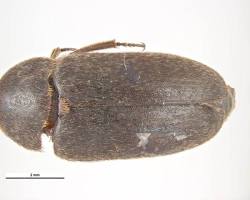
The Black Larder Beetle is a member of the dermestid beetle family Dermestidae, a group of insects known for feeding on dried animal products and organic materials. These beetles are closely related to carpet beetles and other scavenging dermestids commonly found in homes, storage facilities, museums, barns, and warehouses. Because they feed on protein-rich materials, black larder beetles are considered important pantry and stored-product pests.
Larder beetles have adapted extremely well to human environments where dried food products, pet food, animal remains, feathers, leather, and stored organic materials are available. In nature, these insects play a useful ecological role by helping break down dead animal matter and recycling nutrients. Indoors, however, they can contaminate food, damage stored products, and become difficult nuisance pests when infestations are allowed to develop.
The larvae are usually more destructive than adults. These hairy grub-like larvae feed aggressively on dried proteins and may bore into wood, insulation, cardboard, or stored materials while searching for pupation sites. Infestations are often discovered in kitchens, pantries, pet food storage areas, taxidermy collections, attics, or locations where dead rodents or birds are present.
Quick Facts
- Family: Dermestidae
- Size: Approximately 1/4 to 1/3 inch long
- Color: Dark brown to black
- Diet: Dried meats, animal products, stored foods
- Habitat: Pantries, barns, storage areas, homes
- Status: Pantry and household pest
Identification
Adult black larder beetles are oval-shaped insects with dark hardened wing covers.
Common identifying features include:
- Dark brown or black coloration
- Oval compact body shape
- Hard wing covers
- Short clubbed antennae
- Slow walking behavior
Adults typically measure:
- About 1/4 to 1/3 inch long
The larvae are easier to recognize because of their:
- Hairy elongated bodies
- Brown coloration
- Bristly appearance
- Strong chewing mouthparts
Larvae resemble small fuzzy grubs and are often confused with:
Distribution and Habitat
Black larder beetles occur widely throughout North America and many other regions worldwide.
Common habitats include:
- Homes
- Pantries
- Food warehouses
- Barns
- Pet food storage areas
- Garages
- Museums
- Taxidermy collections
These beetles thrive anywhere dried organic materials accumulate.
Typical infestation sources include:
- Stored meats
- Pet food
- Dead rodents
- Animal hides
- Feathers
- Dried fish products
- Bird nests
- Cheese and cured foods
Hidden infestations may also develop behind walls or inside attics if animals die within structures.
Life Cycle
Black larder beetles undergo complete metamorphosis.
Their developmental stages include:
- Egg
- Larva
- Pupa
- Adult
Females lay eggs directly near suitable food sources.
After hatching:
- Larvae begin feeding immediately
- Growth continues through several molts
Larvae are the most destructive life stage.
When mature, larvae often leave food sources and tunnel into:
- Wood
- Cardboard
- Insulation
- Packaging materials
This tunneling behavior creates protected areas for pupation.
Adults emerge afterward and continue the reproductive cycle.
Warm indoor environments may allow multiple generations each year.
Behavior
Black larder beetles are scavengers that specialize in feeding on protein-rich organic materials.
Adults and larvae may feed on:
- Dried meat
- Pet food
- Cheese
- Dead insects
- Animal skins
- Leather
- Hair and feathers
Larvae are highly mobile and often wander away from feeding sites when searching for places to pupate.
Homeowners frequently discover larvae crawling along:
- Walls
- Baseboards
- Pantry shelves
- Storage containers
Infestations may persist if hidden food sources remain undiscovered.
Pest Status
Black larder beetles are considered pantry and household pests.
Common problems associated with infestations include:
- Food contamination
- Damage to stored products
- Infested pet food
- Larval tunneling damage
- Museum specimen destruction
- Persistent indoor infestations
Larvae can damage:
- Animal hides
- Mounted specimens
- Stored wool
- Natural fiber products
Their presence indoors often indicates hidden organic debris or animal remains nearby.
Prevention
Prevention focuses primarily on sanitation and proper food storage.
- Store food in sealed containers.
- Inspect pet food regularly.
- Clean pantry shelves frequently.
- Remove dead insects and animal remains.
- Vacuum storage areas thoroughly.
- Inspect attics and crawlspaces for rodents.
- Dispose of infested products promptly.
Proper sanitation is one of the most important methods for preventing infestations.
Control
Successful control depends on locating and eliminating the infestation source.
Common control measures include:
- Removing contaminated food products
- Deep cleaning storage areas
- Vacuuming larvae and adults
- Discarding infested materials
- Sealing cracks and crevices
In severe infestations, pest control professionals may use:
- Residual insecticides
- Crack-and-crevice treatments
- Targeted monitoring programs
If animal remains are hidden inside walls or attics, removal of the source is critical to long-term control.
Interesting Facts
- Larder beetles help recycle dead animal material in nature.
- The larvae are more destructive than adults.
- Larvae may bore into wood while pupating.
- These beetles are closely related to carpet beetles.
- Infestations are common in pet food storage areas.
- Museum collections often require protection from dermestid beetles.