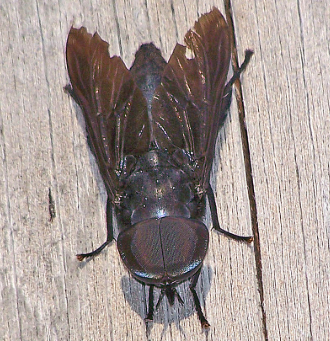
The Black Horse Fly is a large biting fly belonging to the family Tabanidae, a group of aggressive blood-feeding insects commonly associated with wetlands, forests, farms, and livestock environments. Horse flies are notorious for their painful bites, strong flight abilities, and persistent behavior around humans and animals. Female black horse flies require blood meals to produce eggs, making them major nuisance pests during warm seasons.
Black horse flies are among the largest flying insects commonly encountered outdoors in North America. Their dark coloration, loud buzzing flight, and painful biting behavior make them especially noticeable around:
- Horse barns
- Pastures
- Lakes
- Streams
- Forested trails
- Marshy landscapes
Unlike mosquitoes, which pierce skin with needle-like mouthparts, horse flies use sharp blade-like mouthparts to cut the skin and feed on blood from the wound. Their bites are often immediately painful and may leave behind:
- Swelling
- Redness
- Bleeding
- Persistent irritation
Although black horse flies are nuisance pests, they also contribute to ecosystems by serving as prey for birds, fish, amphibians, and predatory insects. Male horse flies, unlike females, feed primarily on nectar and do not bite.
Quick Facts
- Scientific Family: Tabanidae
- Common Names: Black Horse Fly, Horse Fly
- Size: Approximately 3/4 inch to over 1 inch long
- Habitat: Wetlands, pastures, forests, streams
- Diet: Blood (females), nectar (males)
- Status: Biting nuisance pest
Identification
Black horse flies possess several distinctive features.
Key identification characteristics include:
- Large robust body
- Dark black or brown coloration
- Massive compound eyes
- Strong transparent wings
- Short antennae
- Loud buzzing flight
Their eyes may display:
- Dark iridescent tones
- Greenish reflections
- Brown or bronze coloration
Female flies possess specialized cutting mouthparts adapted for blood feeding.
Like other flies, they have one pair of functional wings.
Distribution and Habitat
Black horse flies occur widely throughout:
- North America
- Canada
- Temperate forest regions
- Southern and eastern United States
Preferred habitats include:
- Marshes
- Wetlands
- Streams
- Ponds
- Flooded fields
- Woodland edges
Adults are commonly encountered near:
- Livestock
- Horses
- Cattle
- Humans in outdoor recreation areas
The moist environments surrounding water sources provide ideal breeding conditions for larvae.
Life Cycle
Black horse flies undergo complete metamorphosis.
The four developmental stages include:
- Egg
- Larva
- Pupa
- Adult fly
Females lay eggs on vegetation located near:
- Wet soil
- Marshes
- Streams
- Pond edges
After hatching:
- Larvae move into moist soil or shallow water
- They feed on organic material and small invertebrates
Horse fly larvae are predatory and may consume:
- Small insects
- Worms
- Aquatic organisms
Development may require:
- Several months
- More than one year in cooler climates
Adults emerge during warm weather and quickly begin feeding and reproduction activities.
Behavior
Female black horse flies are aggressive daytime feeders.
They locate hosts using:
- Movement
- Heat
- Carbon dioxide
- Dark colors
Horse flies are particularly attracted to:
- Moving animals
- Sweat
- Dark clothing
- Large mammals
Unlike mosquitoes, horse flies:
- Remain active during sunny daytime conditions
- Often chase hosts over long distances
Males do not bite and instead feed on:
- Flower nectar
- Plant juices
Horse Fly Bites
Black horse fly bites are painful because the insects:
- Slice the skin with blade-like mouthparts
- Create a bleeding wound
- Lap blood from the damaged tissue
Common symptoms include:
- Immediate sharp pain
- Swelling
- Red welts
- Itching
- Localized bleeding
Some individuals may develop:
- Large swollen reactions
- Allergic responses
- Secondary irritation from scratching
Impact on Humans and Livestock
Black horse flies are important nuisance pests around:
- Horse barns
- Cattle operations
- Outdoor recreation areas
- Campgrounds
Heavy infestations may:
- Stress livestock
- Reduce feeding activity
- Cause agitation in horses and cattle
- Interfere with outdoor activities
In agricultural environments, horse flies may also mechanically spread certain livestock diseases by feeding on multiple animals.
Pest Status
Black horse flies are considered significant outdoor nuisance pests because of:
- Painful bites
- Aggressive behavior
- Persistent swarming
- Livestock stress
Unlike indoor pests, they do not infest homes or structures.
Prevention
Several prevention methods may help reduce horse fly encounters:
- Wear long sleeves and protective clothing
- Use repellents labeled for biting flies
- Avoid wetland areas during peak fly activity
- Use fans in outdoor seating spaces
- Reduce standing water where practical
- Install screens around barns and outdoor structures
Horse flies are generally less active during:
- Cool weather
- Windy conditions
- Evening hours
Control
Horse fly control is difficult because adults are strong fliers and larvae develop in natural habitats.
Management methods may include:
- Horse fly traps
- Repellents
- Protective livestock coverings
- Habitat modification
- Drainage improvements
Large traps using dark moving objects are commonly used around:
- Pastures
- Horse facilities
- Outdoor recreation properties
Interesting Facts
- Horse flies are among the strongest flying biting insects.
- Females may pursue moving hosts over long distances.
- Only female horse flies bite.
- Larvae are predatory rather than plant-feeding.
- Horse flies rely heavily on vision to locate hosts.
- Some species are active only for short seasonal periods.