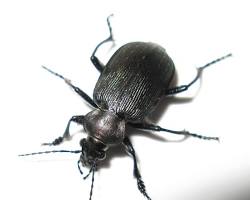
The Black Ground Beetle is a fast-moving predatory beetle belonging to the family Carabidae. Ground beetles are among the most beneficial insects found in gardens, agricultural fields, forests, and landscapes because they actively prey on many common pest insects. Most species are harmless to humans and play an important role in natural pest control by feeding on caterpillars, slugs, insect larvae, and other small invertebrates.
Black ground beetles are especially recognized for their:
- Glossy dark coloration
- Long legs
- Rapid running ability
- Nocturnal hunting behavior
Unlike many destructive beetles, ground beetles are primarily predators rather than plant feeders. Both adults and larvae actively hunt prey on the soil surface or beneath leaf litter. Because of this, gardeners and farmers often consider them highly valuable beneficial insects.
Although they occasionally wander indoors by accident, black ground beetles do not infest homes, damage wood, contaminate food, or reproduce indoors. Most indoor sightings occur when beetles enter through gaps around doors, windows, garages, or foundations while searching for prey or shelter.
Quick Facts
- Scientific Family: Carabidae
- Common Names: Black Ground Beetle, Ground Beetle
- Size: Approximately 1/2 inch to 1 inch long
- Habitat: Gardens, forests, fields, leaf litter
- Diet: Insects, slugs, caterpillars, larvae
- Status: Beneficial predator
Identification
Black ground beetles possess several distinctive features.
Common identification characteristics include:
- Dark black or dark brown coloration
- Elongated oval-shaped body
- Long slender legs
- Prominent mandibles
- Shiny hard wing covers
- Fast running movement
Most species have:
- Flattened bodies adapted for moving beneath debris
- Grooved wing covers
- Thread-like antennae
While many species can fly, most ground beetles prefer running quickly across soil surfaces rather than taking flight.
Distribution and Habitat
Ground beetles occur throughout:
- North America
- Europe
- Asia
- Many temperate ecosystems worldwide
They are commonly found in:
- Gardens
- Agricultural fields
- Forest floors
- Mulched landscapes
- Leaf litter
- Compost areas
Preferred hiding locations include:
- Under rocks
- Beneath logs
- Inside mulch
- Under stones
- Beneath boards or debris
Ground beetles thrive in moist environments with abundant prey and shelter.
Life Cycle
Black ground beetles undergo complete metamorphosis.
The life stages include:
- Egg
- Larva
- Pupa
- Adult beetle
Females deposit eggs in soil or protected ground locations.
After hatching:
- Larvae begin hunting small invertebrates
- They remain active predators throughout development
Ground beetle larvae are elongated and somewhat flattened with:
- Large jaws
- Segmented bodies
- Strong legs
Depending on species and environmental conditions, development may require:
- Several months
- One full year
Adults are most active during warm seasons and may overwinter beneath debris or in protected soil.
Behavior
Black ground beetles are primarily nocturnal hunters.
During nighttime hours they actively search for prey such as:
- Caterpillars
- Slugs
- Snails
- Cutworms
- Fly larvae
- Other insects
Their strong mandibles allow them to capture and consume soft-bodied pests efficiently.
During the daytime, they typically remain hidden beneath:
- Mulch
- Leaf litter
- Rocks
- Garden debris
Ground beetles are considered highly beneficial in:
- Organic gardens
- Agricultural systems
- Natural ecosystems
Pest Status
Black ground beetles are generally considered:
- Beneficial insects
- Natural pest controllers
- Helpful garden predators
Unlike destructive beetle species, they do not:
- Damage structures
- Eat stored foods
- Destroy fabrics
- Feed on wood
Occasionally they may wander indoors accidentally, particularly during:
- Heavy rains
- Seasonal temperature changes
- Periods of high outdoor populations
Indoor sightings are usually temporary and do not indicate infestation.
Benefits in Gardens
Ground beetles are valuable biological control agents because they naturally reduce populations of:
- Garden caterpillars
- Slugs
- Snails
- Cutworms
- Soil-dwelling pests
Many gardeners intentionally encourage ground beetles by:
- Using mulch
- Reducing pesticide use
- Maintaining natural habitats
Prevention
If ground beetles occasionally enter structures, several steps may help reduce indoor encounters:
- Seal cracks around foundations
- Install weather stripping around doors
- Reduce excessive outdoor lighting
- Keep garages and basements dry
- Remove debris near entry points
Outdoor lighting often attracts insects that ground beetles may follow indoors while hunting.
Control
Control is rarely necessary because black ground beetles are beneficial predators.
Indoor beetles can usually be managed through:
- Manual removal
- Vacuuming
- Exclusion methods
Chemical treatments are generally discouraged because they may eliminate helpful predator populations outdoors.
Interesting Facts
- There are thousands of ground beetle species worldwide.
- Many species are active only at night.
- Some ground beetles release defensive chemicals when threatened.
- Ground beetles are among the fastest-running insects in gardens.
- Larvae and adults are both predatory.
- Farmers often consider them natural allies against crop pests.