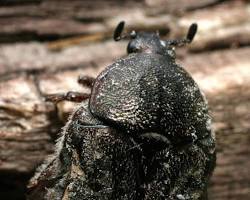
Black Flower Beetles are dark-colored beetles commonly associated with flowers, blossoms, and fruiting plants. Many species belong to the scarab beetle family Scarabaeidae, particularly within the flower beetle subfamily Cetoniinae. These beetles are frequent visitors to gardens, orchards, meadows, and flowering landscapes where they feed on nectar, pollen, sap, and soft fruit tissue. While most species are harmless or even beneficial pollinators, some may become nuisance pests when populations are unusually high.
Black flower beetles are especially active during warm weather when flowering plants are abundant. Their glossy dark coloration helps distinguish them from more brightly colored flower beetles, though some species may display subtle metallic green, bronze, or blue reflections in sunlight. Adult beetles are strong fliers and are often observed buzzing loudly between flowers during daylight hours.
Unlike many destructive wood-boring or root-feeding beetles, most black flower beetles spend their adult lives feeding on exposed plant material such as pollen, nectar, petals, or ripe fruit. Their larvae, commonly called white grubs, typically develop in soil, compost, rotting logs, or organic debris where they feed on decomposing material and contribute to nutrient recycling.
Quick Facts
- Scientific Family: Scarabaeidae
- Common Names: Black Flower Beetle, Dark Flower Beetle
- Size: Approximately 1/2 inch to 1 inch long
- Habitat: Gardens, orchards, meadows, flowering landscapes
- Diet: Nectar, pollen, flowers, fruit
- Status: Mostly beneficial pollinator with occasional nuisance potential
Identification
Black flower beetles possess several recognizable features.
Common characteristics include:
- Oval or slightly flattened body shape
- Shiny black or dark metallic coloration
- Hard wing covers known as elytra
- Strong legs adapted for climbing vegetation
- Clubbed antennae typical of scarab beetles
Depending on species, adults may appear:
- Glossy black
- Dark bronze
- Metallic green-black
- Velvety dark gray
Like many beetles, they possess chewing mouthparts used for feeding on plant tissue and organic materials.
Distribution and Habitat
Black flower beetles occur widely throughout:
- North America
- Central America
- Temperate and subtropical regions
They are commonly found in:
- Gardens
- Orchards
- Flower beds
- Wildflower meadows
- Forest edges
- Parks and landscapes
Adults are especially attracted to:
- Blooming flowers
- Overripe fruit
- Tree sap
- Fermenting plant material
Larvae develop in:
- Compost piles
- Decaying wood
- Mulch
- Organic-rich soil
- Leaf litter
Life Cycle
Black flower beetles undergo complete metamorphosis.
The four life stages include:
- Egg
- Larva (white grub)
- Pupa
- Adult beetle
Females typically lay eggs in moist organic material or soil.
After hatching:
- Larvae feed on decomposing organic matter
- They grow underground for several months
The grub stage is generally beneficial because it:
- Helps break down organic debris
- Contributes to soil nutrient cycling
Once fully developed, larvae pupate in the soil before emerging as adult beetles during warm seasons.
Behavior
Adult black flower beetles are active during daylight hours and are commonly seen:
- Crawling across flowers
- Flying between blossoms
- Feeding on fruit
- Resting on foliage
Many species are strong fliers with a loud buzzing sound.
Adults feed on:
- Pollen
- Nectar
- Flower petals
- Soft fruit tissue
- Plant sap
Because they visit flowers regularly, many species contribute to:
- Pollination
- Plant reproduction
- Garden biodiversity
Damage and Pest Status
Most black flower beetles are considered:
- Minor pests
- Beneficial insects
- Occasional nuisance species
Light feeding rarely harms healthy plants.
However, high populations may cause:
- Damaged flower petals
- Scarring on soft fruit
- Reduced ornamental appearance
- Premature fruit decay
Beetles feeding on overripe fruit may also attract:
- Wasps
- Fruit Flies
- Other scavenging insects
In most residential gardens, damage remains cosmetic rather than economically significant.
Ecological Importance
Black flower beetles provide several ecological benefits.
These include:
- Pollination of flowering plants
- Decomposition of organic matter
- Soil nutrient recycling
- Food for birds and reptiles
The larval stage plays an important role in:
- Breaking down compost
- Recycling decaying vegetation
- Supporting healthy soil ecosystems
Prevention
If beetles become overly abundant around gardens or fruiting plants, several management practices may help:
- Harvest ripe fruit promptly
- Remove fallen fruit from the ground
- Reduce fermenting organic material
- Maintain healthy flowering plants
- Encourage natural predators
Birds, reptiles, and predatory insects naturally help regulate beetle populations.
Control
Control is rarely necessary for black flower beetles.
When management is needed, common approaches include:
- Hand removal
- Fruit sanitation
- Garden cleanup
- Simple trapping methods
Chemical treatments are generally discouraged because:
- Many species are beneficial pollinators
- Broad-spectrum insecticides may harm bees and other beneficial insects
Interesting Facts
- Many flower beetles can fly without fully opening their wing covers.
- Their metallic coloration may help camouflage them among flowers and foliage.
- Some species mimic bees during flight.
- Larvae are commonly found in compost piles and mulch.
- Flower beetles are closely related to June beetles and scarabs.
- Most species are active during sunny daytime conditions.