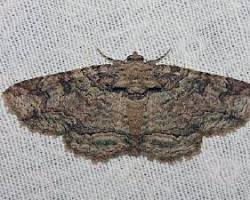
The Black-eyed Zale Moth (Zale undularis) is a nocturnal moth species belonging to the family Erebidae. This moth is known for its dark wavy wing markings and distinctive eye-like spots that help camouflage it against bark, dead leaves, and woodland surfaces. Like many forest moths, it is primarily active at night and is commonly attracted to porch lights and outdoor lighting in wooded environments.
The Black-eyed Zale Moth occurs throughout much of eastern North America where deciduous forests and mature woodland habitats are present. Although caterpillars feed on the foliage of trees and shrubs, this species rarely causes severe plant damage and is not considered a major pest in residential or agricultural environments.
Like many members of the order Lepidoptera, this moth undergoes complete metamorphosis with egg, larval, pupal, and adult stages. The caterpillars are leaf-feeding larvae that help recycle plant material within forest ecosystems while also serving as prey for birds and predatory insects.
The species belongs to the larger group of moths, many of which are important pollinators and components of healthy woodland ecosystems.
Quick Facts
- Order: Lepidoptera
- Family: Erebidae
- Habitat: Forests, woodland edges, suburban landscapes
- Diet: Tree and shrub foliage (larvae)
- Activity Period: Nocturnal
- Status: Minor or non-pest moth species
Identification
The Black-eyed Zale Moth is a medium-sized moth with cryptic coloration that helps it remain hidden during daylight hours.
Adults generally have:
- Wingspans between 1.5 and 2 inches
- Brown, gray, or charcoal-colored wings
- Dark wavy lines across the forewings
- Eye-like dark markings that inspire the common name
- Scaled wings with subtle texture
The dark eye spots and irregular markings help the moth blend into:
- Tree bark
- Dead leaves
- Forest debris
- Wooded backgrounds
When resting, the moth folds its wings flat over the body, making it difficult for predators to detect.
Like many nocturnal moths, adults possess:
- Feathery or thread-like antennae
- Large compound eyes adapted for low light
- Soft hair-like body scales
Distribution and Habitat
The Black-eyed Zale Moth is distributed widely throughout eastern North America.
Common habitats include:
- Mixed deciduous forests
- Woodland edges
- Suburban landscapes with mature trees
- Parks and natural areas
- Forest clearings
- Shrub thickets
The species is strongly associated with areas containing:
- Deciduous trees
- Leaf litter
- Dense vegetation
- Protected resting surfaces
Adults are commonly observed around:
- Porch lights
- Streetlights
- Outdoor security lighting
- Campground lights
Because the species is nocturnal, it is most active during:
- Warm evenings
- Humid nights
- Late spring and summer
Life Cycle
Like other moth species, the Black-eyed Zale Moth undergoes complete metamorphosis.
The four life stages include:
- Egg
- Caterpillar (larva)
- Pupa
- Adult moth
Females deposit eggs on host plants where newly hatched larvae begin feeding on foliage.
The caterpillars feed on:
- Tree leaves
- Shrub foliage
- Native woodland vegetation
Larvae molt several times as they grow before eventually pupating.
Pupation usually occurs within:
- Leaf litter
- Protected bark crevices
- Soil debris
- Woodland ground cover
Adult moths emerge after development is complete and begin searching for mates during nighttime hours.
Behavior
Black-eyed Zale Moths are nocturnal insects that remain hidden during the day.
Their camouflage helps protect them from:
- Birds
- Bats
- Small mammals
- Predatory insects
Adults are attracted to:
- Artificial lighting
- Moist environments
- Wooded habitats
- Nectar sources
Caterpillars serve as an important food source for:
- Birds
- Predatory beetles
- Parasitic wasps
- Spiders
The species plays a valuable ecological role within forest food webs.
Pest Status
The Black-eyed Zale Moth is not considered a major pest species.
Reasons include:
- Low population densities
- Minimal feeding damage
- Natural predator control
- Limited impact on ornamental plants
Although caterpillars feed on foliage, damage is usually:
- Temporary
- Cosmetic
- Limited to isolated leaves
Healthy trees can easily tolerate minor feeding activity from caterpillars.
Prevention
Prevention is rarely necessary because infestations are uncommon.
If caterpillar feeding becomes noticeable:
- Monitor tree foliage regularly.
- Encourage birds and beneficial predators.
- Maintain healthy tree growth.
- Reduce unnecessary outdoor lighting if desired.
Healthy forest ecosystems naturally regulate moth populations through predation and environmental pressures.
Control
Control measures are rarely required for this species.
If caterpillar numbers become unusually high, management options may include:
- Manual caterpillar removal
- Pruning affected branches
- Biological insecticides such as Bacillus thuringiensis
- Encouraging natural predators
Broad-spectrum insecticides are usually discouraged because they may harm:
- Beneficial insects
- Pollinators
- Butterflies
- Native moth populations
Interesting Facts
- The species name “undularis” refers to the moth’s wavy wing markings.
- Eye-like spots help confuse predators and improve camouflage.
- Adults are strongly attracted to lights at night.
- The moth blends extremely well into tree bark during daytime resting.
- Caterpillars help recycle nutrients within forest ecosystems.
- The species is part of the large and diverse Erebidae moth family.