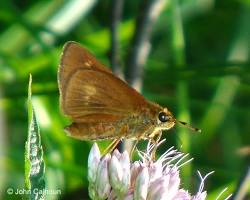
The Black Dash Butterfly (Euphyes conspicua), also known as the Black Dash Skipper, is a small butterfly species belonging to the family Hesperiidae. This fast-moving butterfly is commonly found in wet meadows, marshes, grassy wetlands, and open fields throughout parts of North America. Although modest in appearance compared to brightly colored butterflies, the black dash is an important native pollinator that contributes to the health of natural ecosystems.
The species receives its common name from the distinctive black streak or “dash” found on the forewings of male butterflies. Like many skipper butterflies, black dash butterflies are known for their rapid, darting flight patterns and tendency to perch low among grasses and flowering plants. Their quick movements and relatively small size often cause them to be overlooked by casual observers.
Unlike agricultural pests or plant-damaging insects, black dash butterflies are considered entirely beneficial. Their caterpillars feed mainly on grasses and sedges, while adults visit flowers for nectar and help support pollination within wetland and meadow ecosystems.
Quick Facts
- Scientific Name: Euphyes conspicua
- Family: Hesperiidae
- Common Name: Black Dash Butterfly
- Also Known As: Black Dash Skipper
- Wingspan: Approximately 1–1.5 inches
- Habitat: Wet meadows, marshes, grasslands
- Diet: Nectar and grasses
- Status: Beneficial pollinator
Identification
The black dash butterfly is a small, compact butterfly with features typical of skipper species.
Important identification characteristics include:
- Dark brown wings
- Orange or golden markings
- Stocky body shape
- Hooked antennae tips
- Rapid flight behavior
Males display the species’ signature feature:
- A bold black streak across the forewing
This streak is used in:
- Mating displays
- Species recognition
Females are generally:
- Slightly larger
- Less distinctly marked
Like other skippers, black dash butterflies often hold their wings:
- Partially open while resting
Distribution and Habitat
The black dash butterfly occurs across portions of:
- Eastern North America
- Central North America
- The Great Lakes region
- Wet prairie systems
Preferred habitats include:
- Wet meadows
- Marsh edges
- Prairie wetlands
- Roadside grasslands
- Sedges and tall grass habitats
The species depends heavily on:
- Native grasses
- Sedges
- Moist open environments
Habitat loss from drainage and development has reduced suitable environments in some regions.
Life Cycle
Like all butterflies, the black dash undergoes complete metamorphosis.
The life stages include:
- Egg
- Caterpillar
- Chrysalis
- Adult butterfly
Females lay eggs on host plants such as:
- Sedges
- Native grasses
After hatching:
- Caterpillars feed on foliage
- Larvae construct protective shelters from folded leaves
The caterpillars later pupate before emerging as adults during warmer months.
Adult butterflies are most active during:
- Sunny daytime conditions
Behavior
Black dash butterflies are active and agile fliers.
Common behaviors include:
- Darting between flowers
- Basking in sunlight
- Perching low in grasses
- Rapid escape flights
Adults feed primarily on nectar from:
- Milkweed
- Clover
- Thistles
- Wetland flowers
- Native wildflowers
While feeding, they contribute to:
- Pollination
- Plant reproduction
- Ecosystem biodiversity
The species is often difficult to observe because of its:
- Fast movement
- Camouflaged coloration
- Low flight pattern
Ecological Importance
Black dash butterflies provide several important ecological benefits.
These include:
- Pollination of native plants
- Support for wetland biodiversity
- Food source for birds and predators
- Contribution to native insect populations
The caterpillars also help maintain natural food chains within grassland ecosystems.
Pest Status
The black dash butterfly is not considered a pest.
Unlike some caterpillar species that damage crops or ornamental plants, black dash caterpillars feed primarily on native grasses and rarely cause noticeable damage.
Most gardeners and conservationists consider the species:
- Beneficial
- Environmentally valuable
- Desirable in pollinator gardens
Conservation Concerns
In some areas, black dash populations have declined due to:
- Wetland drainage
- Habitat fragmentation
- Pesticide exposure
- Loss of native grasses
Protecting natural wetland habitats helps support:
- Native butterfly populations
- Pollinators
- Grassland ecosystems
Prevention
No prevention measures are necessary because this species is beneficial.
To encourage black dash butterflies:
- Plant native flowering species
- Preserve wetland habitats
- Reduce pesticide use
- Maintain native grasses and sedges
- Create pollinator-friendly landscapes
Control
Control is not recommended.
Black dash butterflies provide ecological value and rarely create any conflict with landscaping or agriculture.
If caterpillars are present, their feeding is usually:
- Minimal
- Temporary
- Environmentally beneficial
Interesting Facts
- Skipper butterflies are named for their skipping, darting flight style.
- The black streak on male wings helps distinguish the species.
- Black dash butterflies are most common in moist grassland habitats.
- Caterpillars build shelters by folding leaves together with silk.
- The species contributes to pollination in wetland ecosystems.
- Many skipper butterflies are mistaken for moths because of their stout bodies.